
Schneider Electric pitches citywide smart water meters and phased wastewater plant upgrades
Get AI-powered insights, summaries, and transcripts
Subscribe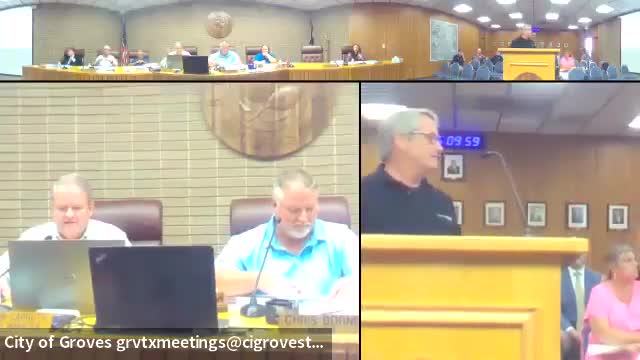
Summary
Schneider Electric presented a two-part plan to Groves City Council on July 28 proposing a citywide advanced metering infrastructure (AMI) rollout for roughly 7,000 meters and staged upgrades to the wastewater treatment plant, including new blowers, fine-bubble diffusers and modern controls; no council vote was required at the presentation.
Schneider Electric told the Groves City Council on July 28 that it can replace the city’s aging water meters with an advanced metering infrastructure system and carry out a phased rehabilitation of the wastewater treatment plant.
The company’s presenter, Craig Messenberg of Schneider Electric, said the AMI program would replace older meters and on-site read heads with sonic meters that communicate via a low‑power cellular-style network. “It’s gonna be in constant communication through an antenna and a cell like network,” Messenberg said, explaining the system can deliver multiple reads per day and allow customers and staff to detect leaks faster.
The presentation emphasized customer and operations features: remote reads, a customer app with alarm thresholds, administrator dashboards for the utility and an option for a guaranteed-performance pilot that would compare removed meters to new meters and quantify expected gains. Messenberg said Schneider typically pulls about 200 meters for a pilot and that the company’s crews can install 200–300 residential meters per week under a full rollout. He estimated a per‑meter installed cost closer to $5,700 depending on the meter mix, and said the company can start an investment‑grade audit within three to four months.
On the wastewater side, Messenberg outlined three priority areas carried over from prior engineering work: aeration (blowers and fine‑bubble diffusers), digestion upgrades, and plantwide controls and automation. He said much of the earlier 2020–22 engineering and an existing 20‑year repair plan can be reused but should be reverified to current specifications and equipment lead times. “The condition of the bubbles that are coming to the surface make it seem like…they’re not doing their intended job,” Messenberg said when describing existing diffusers.
Council members and staff asked operational and procurement questions. City staff (identified in the transcript as Lamar) and operators (Troy, Glenn and Toby were referenced) discussed the current number of manual reads and failing AMR batteries; Lamar requested a contractual commitment for battery replacement events to avoid repeating previous mass battery failures. City staff said about 700 meters require manual reads in Zone 1, with fewer issues in Zones 2 and 3.
On costs already paid, Messenberg said Schneider’s prior investment‑grade audit work (about $145,000 paid previously) would be made available and not billed again; the firm said much of that work has been consumed internally but would be handed to the city and folded into any new audit at a reduced price. On schedule, Schneider proposed starting an investment‑grade audit in August if council approves, with construction for AMI beginning around year’s end and meter changeouts potentially completed in 2026; lead times for major wastewater equipment such as blowers could be six to nine months.
No formal council action was required for the presentation. Council members asked for a follow‑up workshop, and Schneider requested a site visit for the wastewater plant so its technical team could re‑verify scope and provide a turnkey investment‑grade proposal.
Why it matters: The AMI project would change how the city bills and detects leaks and could improve revenue accuracy; the wastewater upgrades are intended to restore treatment capacity, reduce emergency repairs and improve energy efficiency, items that affect utility operations and long‑term capital planning.
Details and next steps: Schneider proposed an investment‑grade audit contract for AMI and a separate workshop and site walk for the wastewater plant prior to returning a fixed proposal. Staff and council did not vote on any contract or allocation on July 28.