Get Full Government Meeting Transcripts, Videos, & Alerts Forever!
Get email alerts on the Infectious Disease Prion Disease topic
No spam. Unsubscribe anytime.
Middletown health department briefs board on Creutzfeldt–Jakob disease after one local case
Summary
At the Aug. 12 Board of Health meeting, Dr. Genowy gave an educational presentation on Creutzfeldt–Jakob disease; Medical Director Dr. Dunnewein reported one July case in a 70‑year‑old whose diagnosis arrived after death.
At the Aug. 12 meeting of the City of Middletown Board of Health and Environment, Dr. Genowy delivered an educational presentation on Creutzfeldt–Jakob disease (CJD), and Medical Director Dr. Dunnewein reported the department had one confirmed case in July. Dr. Dunnewein said “that patient was 70 years old, and it was a month from when they started seeing symptoms” before the diagnosis was returned after the patient died.
The presentation summarized what speakers described as the key clinical facts about CJD, a rare prion disease that the presenter said “is a 100 percent fatal incurable, disorder with a very rapid progression.” The board heard that CJD belongs to a family of transmissible spongiform encephalopathies; it may occur spontaneously, be inherited, be acquired by exposure, or present as the variant form linked to bovine spongiform encephalopathy.
Why this matters: CJD is uncommon but severe, progresses quickly, and poses specific infection‑control challenges because standard hospital sterilization does not reliably inactivate the abnormal prion protein, board members and staff said. The department emphasized that diagnosis typically requires history, brain imaging and testing, and that definitive confirmation rests on tissue examination. The presentation noted that there is no effective treatment and that most spontaneous cases are fatal within months.
Details from the presentation and medical director’s report: presenters described typical early symptoms — confusion, memory loss, speech changes and twitching — progressing rapidly to dementia, hallucinations, seizures and death. The board was told that MRI and EEG can show characteristic changes, lumbar puncture may detect prion‑associated proteins, and “the final diagnosis has to be by tissue biopsy either after death or before death,” according to Dr. Genowy. Dr. Genowy told the board there is no curative therapy; care is supportive and often transitions to hospice.
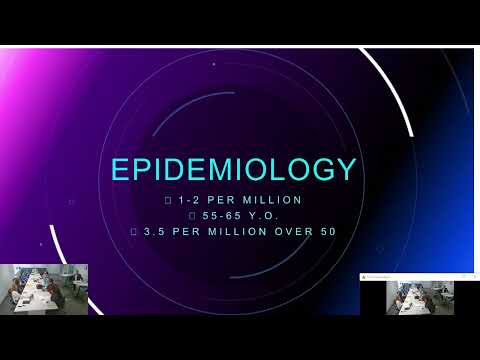
Speakers summarized published epidemiology: spontaneous CJD historically occurs at roughly 1–2 cases per million people annually, with most patients diagnosed between about ages 55 and 65; genetic forms can run longer on average. The variant form linked to contaminated beef is uncommon in the United States; presenters told the board that the U.S. has not had a confirmed domestic beef‑linked case and that a handful of variant cases in U.S. residents have been associated with prior travel abroad.
Board members asked questions during and after the presentation about detection, past local clusters and infection control in clinical settings. Dr. Dunnewein described the July patient’s clinical course: family members initially suspected a urinary tract infection, the patient was evaluated with imaging and EEGs, was discharged to hospice, and “the results came back at the end of the month, but he had already passed 2 days after discharge.” No additional cases were reported at the meeting.
The presentation was educational only; the board did not take action related to CJD at the meeting. Staff said they would continue routine surveillance and follow existing infection‑control guidance for prion diseases.
Board members and staff urged the public to rely on clinical evaluation and testing when progressive, rapidly worsening neurologic symptoms arise, and to follow guidance from treating clinicians and the Ohio Department of Health for questions about rare prion diseases.