Get Full Government Meeting Transcripts, Videos, & Alerts Forever!
Get email alerts on the Budget Finance topic
No spam. Unsubscribe anytime.
Dixon USD 170 board adopts FY25 amended budget showing $2.8 million deficit, cites reserves and one-time federal funds
Summary
The Dixon USD 170 Board of Education approved an amended fiscal year 2025 budget that shows a $2.8 million deficit; administrators said prepaid expense accounting, federal one-time funds and strong cash reserves reduce immediate risk, but long-term structural steps are needed.
The Dixon USD 170 Board of Education approved the district's amended fiscal year 2025 budget at its June 25 meeting, recording a $2.8 million deficit but noting large cash reserves and one-time federal funding that administrators say soften immediate fiscal pressure.
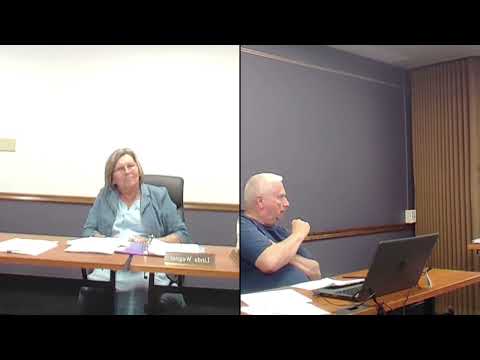
The amended budget had been on public display for 30 days as required by law, Board President said at the start of the hearing. Mark, a district staff member who presented the amendment, summarized the arithmetic and the accounting assumptions behind the deficit and answered trustees' questions.
Mark told the board the budget shows a $2,800,000 deficit but stressed that several line items are timing or accounting issues rather than permanent shortfalls. "We do have a $700,000 prepaid expense reserve," he said, explaining the district expects to classify some costs as prepaid expenses in the Annual Financial Report (AFR) and recover the amounts in FY26. He said a similar prepaid expense of about $500,000 is included in the LCSEA fund as an expense now but likely to be reduced in the AFR process.
Administrators also pointed to $24 million in cash reserves at fiscal year end and an expected roughly $25 million in upcoming tax-levy revenue over the next four months. At the same time, the presentation listed long-term pressures: enrollment has declined by more than 400 students (about 13 percent since 2020), special-education population is higher than the state average by roughly 6 percentage points, and health-insurance costs this year reached about $6.5 million (projected around $6.4 million next year under current enrollment and plan participation).
The presenter framed the outlook in part as the aftereffect of significant, one-time federal and state pandemic-era funding. "Over the last 5 or 6 years, the federal government and the state government gave us $16,000,000 that we will never get again," Mark said. He noted the district received more than $8 million in ESSER dollars that had to be spent in recent years and warned that federal programs such as Title II had been cut; the district received about $117,000 in Title II in FY25 and the presenter said that funding had been eliminated in state allocations.
Board discussion touched on mechanics that make the budget appear worse on paper than cash flow indicates: the ISBE cash-page rules prevent a negative cash entry, so the district included a working-cash loan entry for transportation to make the cash page balance for filing. Mark said the district does not intend to draw that loan immediately; instead, the AFR will show final numbers and the district will then plan any reserve reductions.
After public hearing procedures and a roll call, the board voted to close the hearing and then approved the amended budget as presented. Trustees also approved a short-term budget-spending resolution to allow payments before the FY26 budget is adopted in September.
Administrators told the board they will initiate a comprehensive operational review this summer and fall to identify savings in salaries, staffing, insurance, procurement and third-party contracts, and to prepare three- to five-year projections. The presenter said the district will continue to pursue grant funding but that those revenues also carry matched or associated expenses.
Board President closed the item by noting the legally required public notice and file availability. The approval vote followed a standard roll call by the secretary.