Get Full Government Meeting Transcripts, Videos, & Alerts Forever!
Get email alerts on the Instructional Materials Policy topic
No spam. Unsubscribe anytime.
Catalina Foothill board adopts updated instructional‑materials policy after public comments on library content
Summary
The Catalina Foothill School District Governing Board approved revisions to policy IJ and regulation IJR to clarify parental access to instructional materials following public comment that included student concerns about fees and a resident's objection to certain library books.
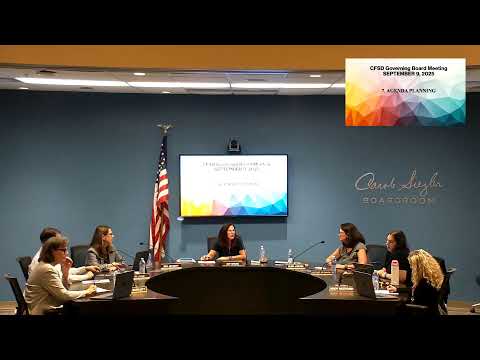
The Catalina Foothill School District Governing Board voted 5-0 Tuesday to adopt revisions to policy IJ and regulation IJR, changes the district says align procedures for parent or legal guardian access to instructional materials with the Mahmood v. Taylor decision. Cheryl Castro, executive director of curriculum and assessment, presented the revisions and the board adopted them on the second reading.
The policy changes add language clarifying that a parent or legal guardian may object to an activity or learning material if they assert it is harmful, including because it would “question the family’s beliefs or practices in morality or religion,” Castro said. The regulation adds process clarifications including that requests for access to currently adopted instructional materials must be submitted in writing to the principal’s office and that digital resources may be viewed on school premises during school hours.
Castro told the board the regulation was edited to clarify that parent permission is required to use video, audio or electronic materials that may be age‑inappropriate and noted the district’s ratings standard: Grades K–5, rating of G; Grades 6–8, G, PG or TV‑PG; Grades 9–12, G, PG, TV‑PG, PG‑13 or TV‑14. She said student presentations are not considered instructional materials after legal review.
The public comment period included two student speakers who urged the district to support clubs, arts and civic education and to teach students “what it means to be part of a global society.” A separate member of the public, identified in the record as Mr. Pemberton, read excerpts from books he described as “pornographic and inappropriate for minors” and asked the board to inform parents when such materials are available in school libraries.
Board members asked administration to maintain clarity on the difference between adopted instructional materials and student‑produced content and to ensure the written objection process is easy to follow. Castro said the revisions were added after legal review and to reflect the Mahmood decision.
The board’s motion to approve the revisions passed unanimously and the new language will appear in the district’s policy and regulation manuals. The board did not reverse or remove any specific books or materials during the meeting; those actions would require a separate process under the adopted procedures.
The board’s packet lists the policy sections changed and highlights the regulation edits; Castro said the same revised language appears in both the policy and the regulation packet pages.