Get Full Government Meeting Transcripts, Videos, & Alerts Forever!
Get email alerts on the Housing Blight topic
No spam. Unsubscribe anytime.
Chelsea community group urges Atlantic City to use abandoned‑property tools; supports motel ordinance
Summary
A community development presenter urged enforcement of the Abandoned Properties Act and other local tools to address blight and vacant properties in Chelsea, citing more than 100 vacant parcels and a $500 vacant‑property fee on the books.
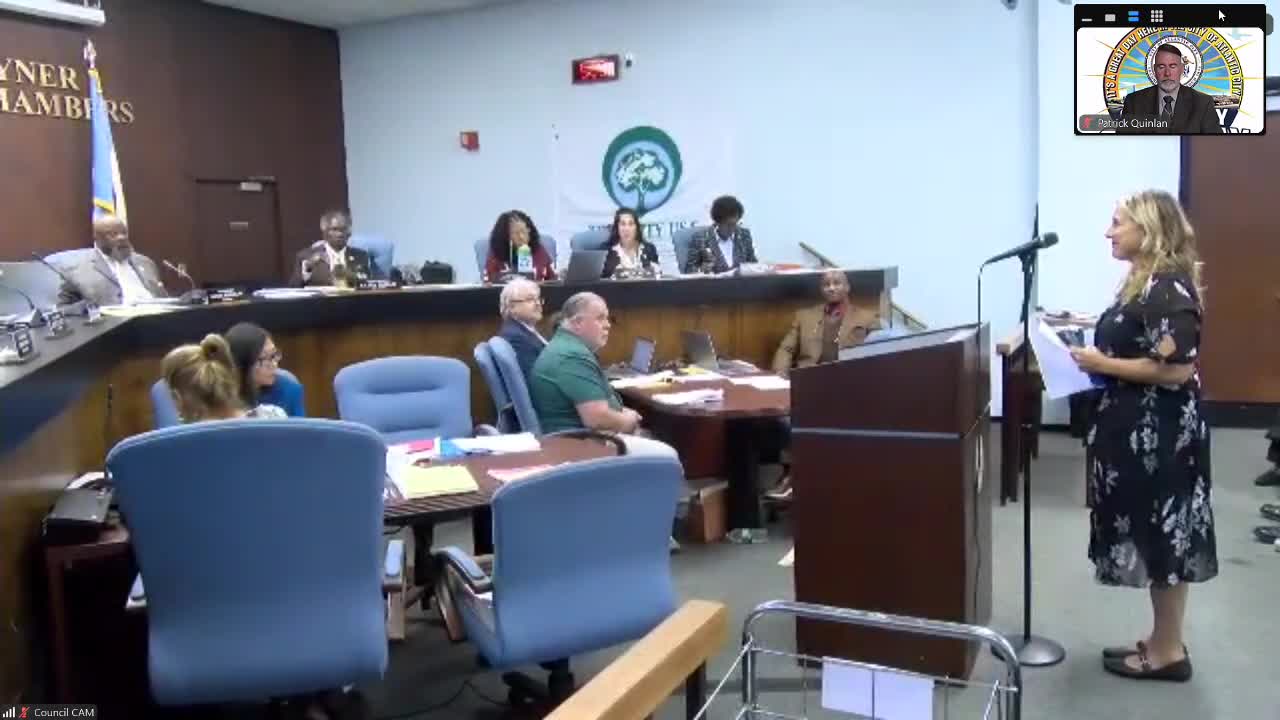
Elizabeth Taranick, representing a community development group focused on the Chelsea area, urged the council to enforce existing city laws and to use the Abandoned Properties Act to address vacant and blighted properties that she said burden taxpayers and attract crime.
"Taxpayers are paying the cost to maintain these properties as they demand additional services from police, code, public works, and fire," Taranick said during public comment. She said one limited liability company owns 31 vacant properties in the Chelsea District and that "we have a 100, about a 103 vacant" properties in the neighborhood she represents.
Why it matters: The group framed the issue as both a public‑safety and fiscal concern, saying vacant and blighted properties impose service costs on the city and depress neighboring property values. Taranick urged the council to use existing tools, including the Abandoned Properties Act, a vacant property fee (identified in the presentation as $500) and tax‑foreclosure mechanisms to force remediation or transfer to responsible owners and developers.
Details from the presentation: Taranick listed several tools she urged the city to use: - Abandoned Properties Act — she described it as allowing the city to take control of property, fix it or redevelop it and to lien other properties owned by the same owner if improvement costs exceed the property value. - Vacant property fee — described in the presentation as a $500 fee per vacant property (the presenter said enforcement has been limited because of litigation). - Foreclosure for unpaid taxes — she cited an example of a property on Pacific Avenue that had not paid taxes since 2017.
She said Chelsea has about 103 vacant properties on the city's abandoned list and that many owners do not live in Atlantic City. Taranick said local CDCs are sharing lists and that some CDCs are actively purchasing and rehabbing properties.
Council follow‑up and Q&A: Council members asked clarifying questions about the definition of "abandoned" and the city's process. Staff and the presenter explained that a property can be listed as abandoned after being vacant for six months plus meeting one of the statutory criteria (e.g., repeated code violations, open windows, chronic dumping), and that the city must follow a set legal process before taking title or exercising lien authority. One council member asked for the city's tax‑assessed values used in the presentation; Taranick said those values came from the city tax assessor and offered to provide additional copies of the packet used for the presentation.
Ending: Taranick said the group supports a motel ordinance on the day's agenda and offered the CDC's assistance to the city. Council members thanked her for returning to present the status of vacant properties in Chelsea.