Get Full Government Meeting Transcripts, Videos, & Alerts Forever!
Get email alerts on the Cannabis Regulation topic
No spam. Unsubscribe anytime.
Atlantic City council sets cap on retail cannabis dispensaries in ordinance first reading
Summary
On first reading the council moved forward an ordinance capping retail cannabis dispensaries (Class 5) at 16 licenses — 12 full annual and 4 micro licenses — and councilmembers sought a copy of the report underlying the cap before second reading.
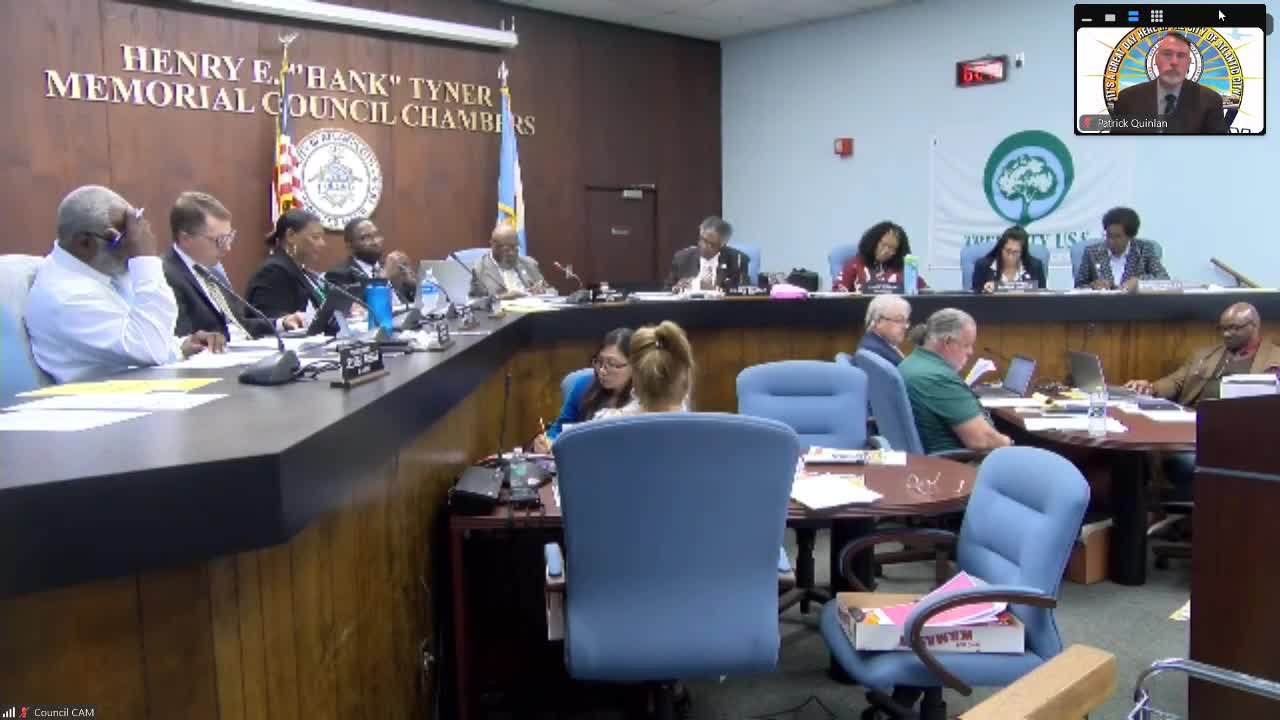
The Atlantic City Council on Sept. 17 advanced an ordinance on first reading that would cap the number of retail cannabis dispensaries in the city.
Under the ordinance as discussed in council chambers, the cap would apply to retail (Class 5) licenses and the city would limit them to a total of 16 — 12 full annual licenses and 4 micro licenses restricted by space and staffing. City staff told the council the recommendation they received was to cap retail at 16, split as 12 annual and four micro licenses.
Councilmembers asked for the analytical report cited in the ordinance to be circulated to the full council ahead of second reading. “Can we please have all council a copy of the report that's referenced in this ordinance before second reading?” one councilmember asked during the meeting.
City officials clarified how delivery services operate in state law and how a delivery license (Class 6) relates to retail dispensaries. Staff explained that delivery is a distinct class and that a delivery business could operate independently of the retail cap; retail license holders can also offer delivery, and out‑of‑city delivery businesses can deliver into Atlantic City under state rules.
Officials noted the cap proposal applies only to the retail class. The ordinance’s first reading moved forward; council votes recorded during the meeting showed a majority in favor. Council staff and members subsequently clarified vote counts; one roll‑call review indicated seven affirmative votes on the first reading with at least one member not voting on the measure.
Councilmembers asked for clearer language to reflect which license classes the cap affects and requested the supporting report and data well before the second reading so council members could review the basis for the limit.
Ending: The ordinance passed first reading; the council requested the administration supply the referenced report and explicit language about which license classes are capped before second reading.