Get Full Government Meeting Transcripts, Videos, & Alerts Forever!
Get email alerts on the Housing Blight topic
No spam. Unsubscribe anytime.
Community group urges Atlantic City to use abandoned‑property tools, cites 100+ vacant parcels in Chelsea
Summary
A presenter representing a Chelsea neighborhood plan urged the council to enforce the city’s abandoned‑property tools — including the Abandoned Properties Act and a vacant‑property fee — saying roughly 103 vacant parcels in Chelsea burden taxpayers and neighborhoods.
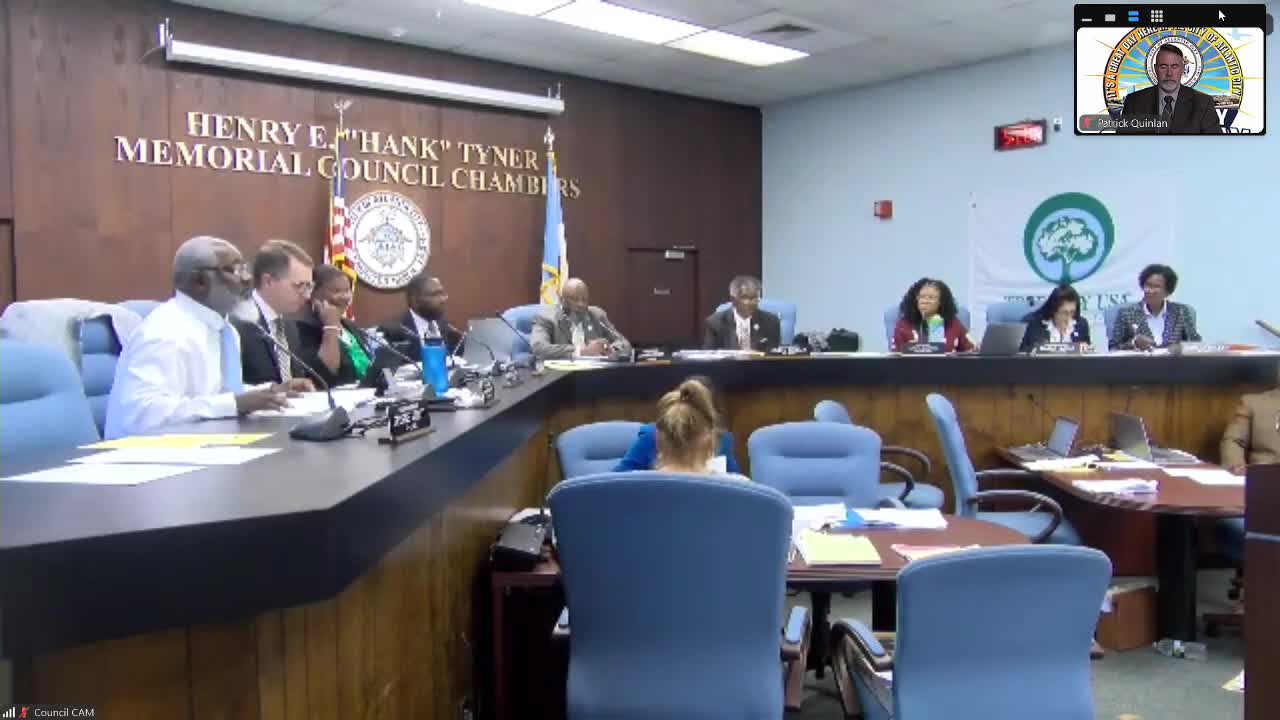
A representative speaking about abandoned and vacant properties told the Atlantic City Council on Sept. 17 that the city should use existing legal tools more aggressively to address blight, delinquent taxes and safety concerns in the Chelsea neighborhood.
Elizabeth Taranick, identified in the meeting as a presenter for a Chelsea planning effort, told council members that Chelsea contains about 103 vacant parcels and that individual nonresident owners and LLCs hold multiple vacant properties — she said one LLC owns 31 properties and another owner has seven. She urged the city to use the Abandoned Properties Act, a vacant‑property fee and tax foreclosure to clean and redevelop properties.
Taranick said the costs of maintaining vacant and blighted properties fall on taxpayers through additional calls for police, code enforcement, public works and fire responses, and through unpaid municipal, school and county taxes. She described nuisance conditions — break‑ins, trash, weeds, graffiti — and said property owners who do not live in Atlantic City are a major part of the problem she described.
Taranick highlighted three enforcement tools discussed in the meeting. She said the Abandoned Properties Act allows the city to take control of property to repair and redevelop it and, where the cost to improve a property exceeds its value, to place liens on other properties owned by the same owner. She also said the city has a $500 vacant‑property fee on the books that the presenter believes is not currently being enforced because of litigation. Finally, she urged using foreclosure for tax‑delinquent properties, citing a Pacific Avenue parcel whose taxes had not been paid since 2017.
Council members asked about coordination with community development corporations and whether lists of problem properties are shared across neighborhoods; Taranick said CDCs share information and that some CDCs have already begun acquiring and rehabbing properties. Council members also pressed for clarity on the abandoned‑property standard; the presenter said the city must apply statutory criteria (for example, property vacant at least six months and meeting additional nuisance criteria) before placing a property on an abandoned list.
Taranick and the group said they support a motel ordinance on the council agenda and offered to be a resource to the city in enforcement and outreach. The council did not take immediate enforcement action during the Sept. 17 meeting; the presentation was received and discussed during the public‑comment/presentation portion of the agenda.