Get Full Government Meeting Transcripts, Videos, & Alerts Forever!
Get email alerts on the Solid Waste Management topic
No spam. Unsubscribe anytime.
Council discusses higher solid‑waste tipping fees and state reimbursement mechanism
Summary
Council members questioned a budget amendment that showed a higher solid‑waste expense; staff explained tipping fees remain similar to last year but state reimbursement and timing can change how the line item appears in the city budget.
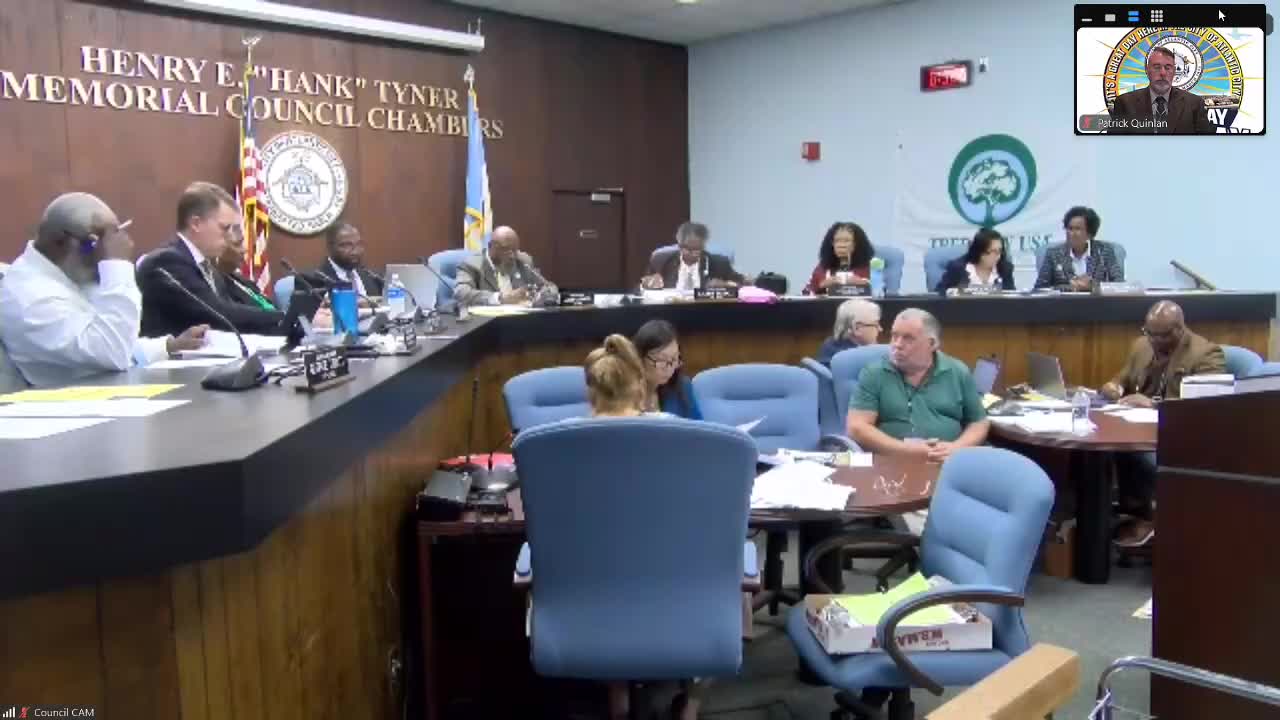
Council members pressed city finance staff on Sept. 17 about an amendment related to solid‑waste disposal noting the year‑to‑date actual exceeded an earlier estimate. The item appears as an amendment to resolution 1‑57 (introduced as 6‑28) regarding tipping fees and grant transfers. A council member asked whether the higher figure reflected increased volume, a county fee hike or other causes. A city finance official explained the underlying disposal cost was comparable to last year but that the budget timing and the state’s reimbursement authority can make the city’s local budgeted line appear lower at first. Staff said the state has in past years authorized payments that make up the difference between an initial municipal appropriation and the actual fees billed by the regional authority (ACUA). The finance staff urged councilmembers interested in a deeper discussion to attend upcoming ACUA meetings, where tipping‑fee pressures and regional disposal capacity challenges are discussed in detail. Council members asked for future briefings so they could follow the evolving statewide and regional dynamics affecting municipal waste costs. No additional fee changes were adopted at the meeting; the resolution amendment was described by staff as an accounting move to reconcile budgeted versus actual amounts and to reflect a state reimbursement mechanism when applicable.