Get Full Government Meeting Transcripts, Videos, & Alerts Forever!
Get email alerts on the Blight And Vacant Properties topic
No spam. Unsubscribe anytime.
Community group urges Atlantic City to use Abandoned Properties Act to tackle blight in Chelsea
Summary
A local community development group told the City Council the city should enforce the Abandoned Properties Act, collect unpaid taxes, and use vacant‑property fees and foreclosure tools to address more than 100 vacant and blighted properties in the Chelsea neighborhood.
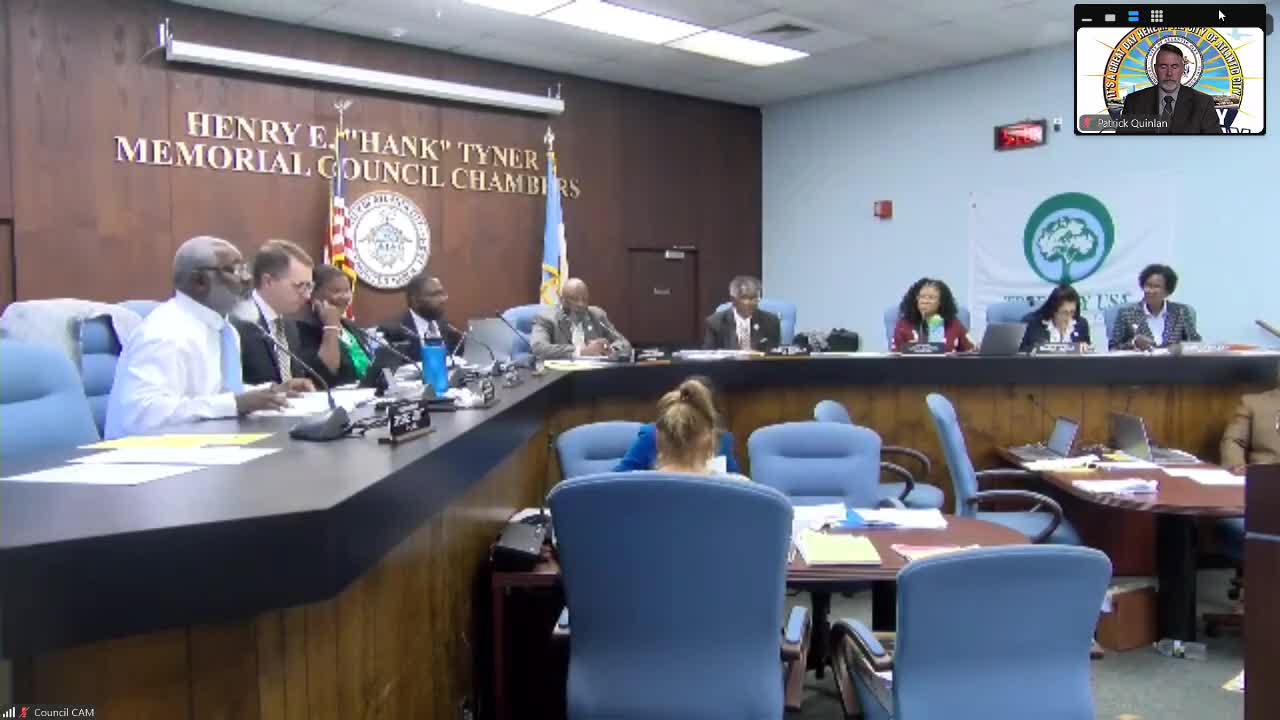
A community development leader urged the Atlantic City Council on Sept. 17 to step up enforcement of existing ordinances and statutory tools to address vacant and blighted properties in the Chelsea neighborhood.
Elizabeth Taranick, representing neighborhood community development efforts, said property owners who do not live in Atlantic City hold dozens of vacant sites and that the condition of those properties imposes costs on taxpayers and public services. “Taxpayers are paying the cost to maintain these properties as they demand additional services from police, code, public works, and fire,” Taranick said.
Taranick told the council that one limited‑liability company owns 31 vacant properties in the Chelsea district and that another owns seven. She said Chelsea’s abandoned properties list contains roughly 103 entries and that similar problems exist elsewhere in the city. “These properties attract crime. They create stress for residents, and they send a message that Atlantic City does not care,” she said.
Taranick urged the council to use the city’s Abandoned Properties Act, which allows the city to take control of properties to fix or redevelop them and to lien other properties owned by the same owner when improvement costs exceed property value. She also cited a city vacant‑property fee — she said it is $500 — and said foreclosure for unpaid taxes is another underused tool.
“Last third is foreclosure on properties that aren't paying taxes,” she said, noting a property on Pacific Avenue that had not paid taxes since 2017. Taranick said the city already has “very effective ordinances” and asked the council to continue to enforce them; she offered the community development corporation as a resource and said local CDCs are coordinating and sharing inventories.
Council members asked clarifying questions about the abandoned‑property designation, enforcement criteria and the data sources for property valuations. When a councilmember asked how the city determines an abandoned property, Taranick and city staff explained the ordinance requires a property to be vacant for six months and to meet one of additional criteria such as repeated nuisance code calls, open windows, ongoing dumping or significant maintenance neglect.
Taranick said the city tax assessor’s valuations appeared in her group’s packet and she offered to share another copy with council members who misplaced it. She also said community groups have met with owners to explain enforcement processes and that some owners had received offers to maintain or redevelop properties.
Ending: Taranick concluded by urging stronger enforcement and support for a motel ordinance on the council agenda; she said addressing blight would create safer streets and yield much‑needed housing in Atlantic City.