Get Full Government Meeting Transcripts, Videos, & Alerts Forever!
Get email alerts on the Abandoned Properties topic
No spam. Unsubscribe anytime.
Chelsea neighborhood group urges Atlantic City to enforce abandoned‑property rules, citing public costs and blight
Summary
A Chelsea neighborhood community representative told the council that absentee owners and vacant properties are imposing service costs and safety risks on taxpayers and urged fuller enforcement of the city's abandoned‑property tools and a vacant‑property fee.
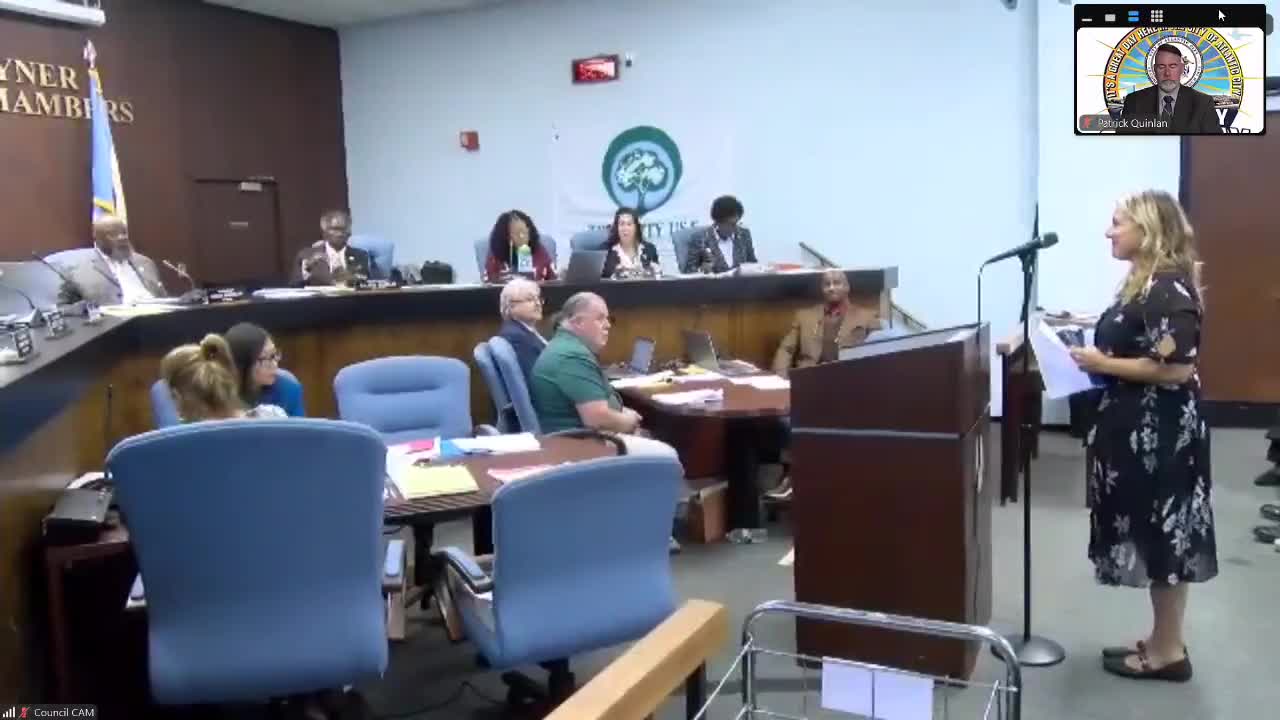
Atlantic City — A community representative from the city’s Chelsea neighborhood urged the City Council on Sept. 17 to use existing ordinances to hold absentee owners accountable for vacant and blighted properties, saying taxpayers bear the cost of maintaining and policing those sites.
Speaking during public comment, Elizabeth Taranick (identified in the meeting as a local community representative) described more than 100 vacant properties in Chelsea and said owners frequently do not live in Atlantic City. She told the council that those properties “require additional services from police, code, public works, and fire,” and that unpaid taxes shift the burden to other taxpayers.
Taranick described tools on the books that she said the city could use, including the “abandoned properties act,” a vacant‑property fee and tax foreclosure. She said the abandoned‑property authority allows the city to take control of property, fix it up and, when costs exceed property value, place liens on other properties owned by the same owner. She also said the city has a $500 vacant‑property fee that she believes is not currently being enforced.
Taranick said community development corporations across the city are sharing information and that some CDCs have begun purchasing and rehabbing properties. She asked the city to continue enforcement of existing ordinances and to use the abandoned‑property authority where appropriate. “By addressing this issue, we'll have safer streets, stronger neighborhoods, and much needed housing,” she told the council.
Council response and clarifications: Council members asked follow‑up questions about how the city classifies an abandoned property. A city official explained that a property must generally be vacant for six months and meet additional nuisance criteria (open windows, recurring trash, repeated code calls, unsafe conditions) before it is placed on the abandoned list; simply being unoccupied does not by itself trigger the designation.
Taranick also said the city tax assessor’s office supplied property valuations used in the community’s packet, and she offered to provide additional copies of the materials to council members who lost their copies. She also said the Chelsea network has spoken directly with some owners to explain the city's options and legal tools.
What the city can and cannot do: At the meeting, Taranick urged enforcement of existing law but did not present a specific council motion. The transcript records support for using the city’s ordinances and indicates ongoing legal and administrative steps are required before the city can take title or demolish properties.