Get Full Government Meeting Transcripts, Videos, & Alerts Forever!
Get email alerts on the Housing And Blight topic
No spam. Unsubscribe anytime.
Chelsea CDC asks council to enforce abandoned‑property laws and supports proposed motel ordinance
Summary
A representative from the Chelsea community development corporation urged the council to use existing local ordinances — including the Abandoned Properties Act, a vacant-property fee and foreclosure authority — to address dozens of vacant and blighted properties in the neighborhood and expressed support for a motel ordinance on the agenda.
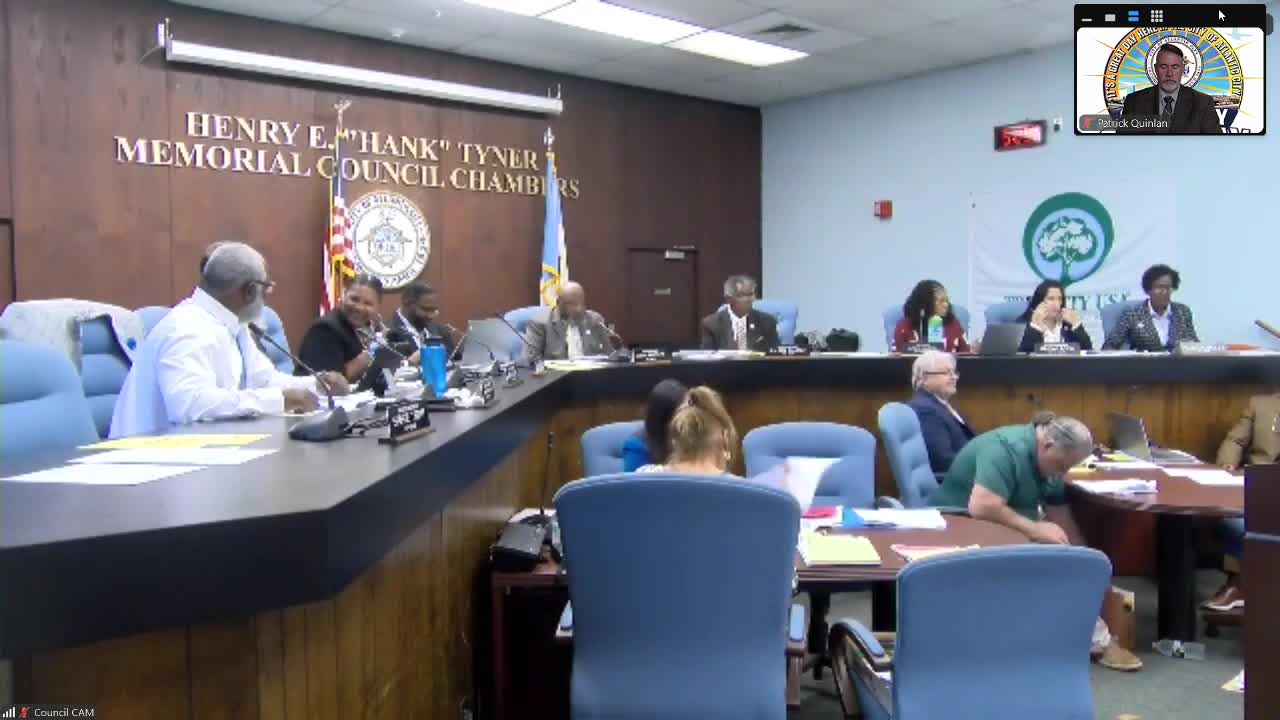
Elizabeth Taranik, a representative of the Chelsea Community Development Corporation, told the council that her organization has documented roughly 103 vacant properties in the Chelsea neighborhood and urged more vigorous enforcement of existing city laws to address blight. Taranik said owners of many vacant properties do not live in Atlantic City, own multiple parcels and repeatedly allow lots and buildings to deteriorate. “Taxpayers are paying the cost to maintain these properties,” she said, listing increased demands on police, code enforcement, public works and fire services and noting unpaid property taxes that shift costs to neighbors and the city. She reviewed tools already on the books that the CDC urges the city to use: the local abandoned‑property ordinance (referred to at the meeting as the Abandoned Properties Act), the city’s vacant‑property fee and the city’s tax‑foreclosure process for properties that have not paid taxes. Taranik said the Abandoned Properties Act allows the city to take control of properties and to lien other properties owned by the same owner when the cost of rehabilitation exceeds a property’s value. Taranik said the CDC has been meeting with some owners to explain the city’s enforcement options and asked for continued enforcement of existing law. She also said the group supports a motel‑inspection and maintenance ordinance that appeared on the council’s agenda that day. Council members asked questions about how the city determines whether a property is classified as abandoned. Taranik and city staff said a property must be vacant for six months and meet at least one of several additional statutory criteria or code conditions (for example repeated nuisance complaints, open windows or fire damage) before being placed on the abandoned list. Taranik said the city tax assessor’s valuations were used in the CDC’s packet. Taranik offered the CDC as a partner in enforcement and redevelopment, saying neighborhood CDCs share information and sometimes acquire and rehab properties themselves. She asked the council to consider more active use of tools targeting “bad actors” — owners who repeatedly leave properties vacant or blighted — rather than increasing fees across the board. What happens next: The council heard Taranik’s presentation during public comment and committee discussion; she urged the administration to continue enforcing the city’s abandoned‑property laws and to pursue available remedies. The motel ordinance discussed that day was on the agenda for council consideration in later minutes.