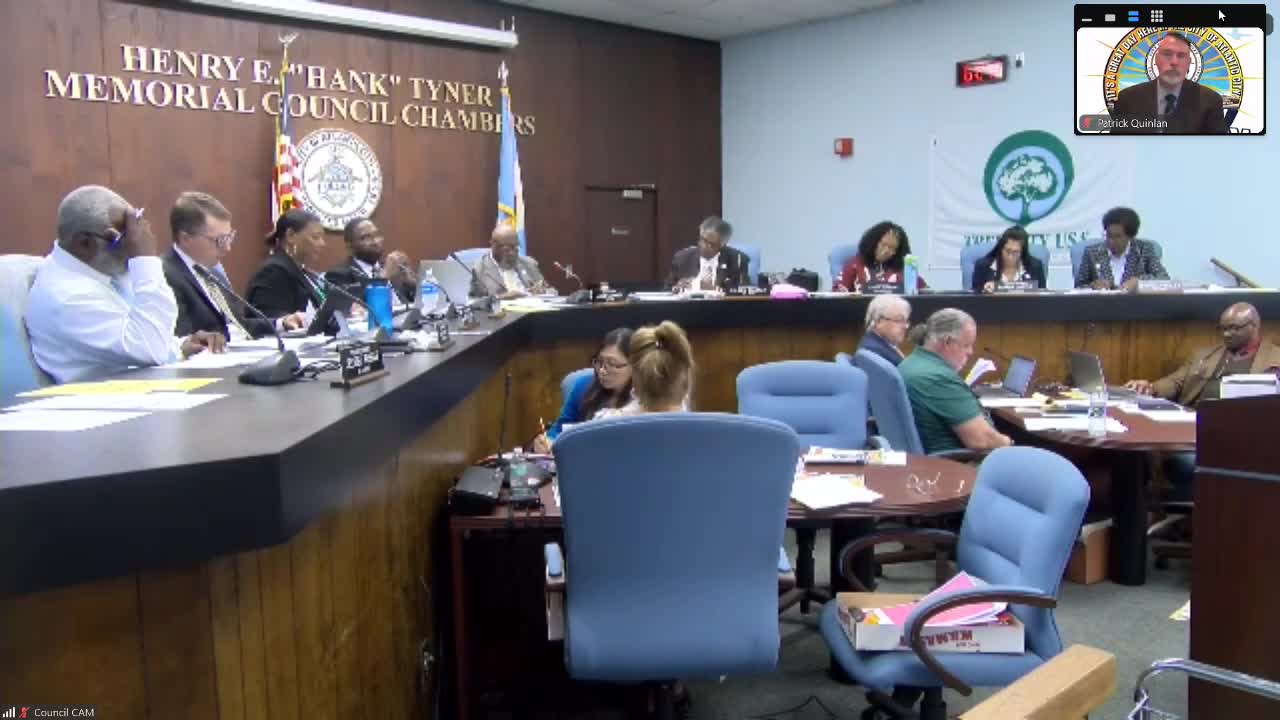
Council advances ordinance to cap retail cannabis dispensaries; delivery services remain uncapped
Loading...
Summary
On first reading, the council advanced an ordinance to limit the number of retail (Class 5) cannabis dispensary licenses in Atlantic City, recommending a cap of 16 total retail outlets: 12 full annual licenses and four micro licenses. The meeting included discussion about delivery (Class 6) services and how they interact with a retail cap.
The Atlantic City Council advanced an ordinance on first reading to cap retail cannabis dispensaries in the city and asked for a follow-up report before the second reading. Council members discussed a recommendation to limit retail (Class 5) dispensaries to a total of 16: 12 full annual retail licenses and four micro retail licenses, a split the administration said reflected space and staffing considerations. City staff warned that delivery-only businesses (Class 6) operate differently and are not limited by this proposed cap; deliveries may originate outside the city and be made into the city under state rules. Councilman Kurtz requested that council receive the report cited in the ordinance before second reading so members can review the data behind the recommendation. City staff explained the difference between license classes: a full retail license authorizes a fixed retail location; a micro retail license is smaller in footprint and operations; delivery operations can be run by retail licensees or as standalone delivery entities under separate license types. Why it matters: Limiting retail dispensaries affects where and how many storefront cannabis businesses can open in the city and has implications for neighborhood impacts, tax revenue and public safety oversight. The discussion also highlighted a regulatory gap in which delivery services, which can pick up product outside the city and deliver to city addresses, are not capped by the ordinance as written. Procedure: The ordinance was introduced on first reading; council members asked for the referenced report and clarifications before second reading. City staff said the recommendation on the cap came from an internal review and suggested the 12/4 split for full and micro retail licenses, respectively. What council did not do: Council did not set a final numeric cap on delivery licenses or adopt a final ordinance without additional review; members asked for the supporting report to be provided before second reading.