Get Full Government Meeting Transcripts, Videos, & Alerts Forever!
Get email alerts on the Housing And Blight topic
No spam. Unsubscribe anytime.
Chelsea CDC urges city enforcement of abandoned-properties tools, cites more than 100 vacant parcels in district
Summary
Chelsea Community Development Corporation asked the council to enforce the city's abandoned-properties tools, saying at least about 103 vacant properties in the Chelsea district require action and supporting a pending motel ordinance.
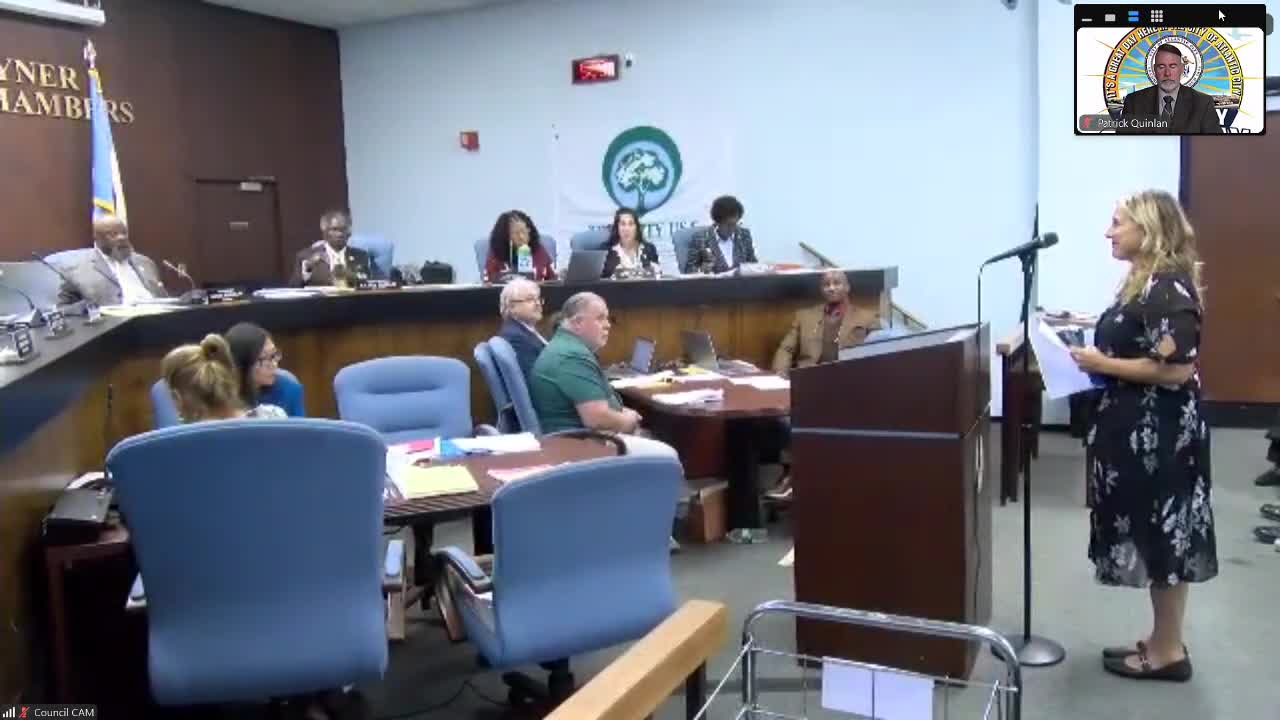
Elizabeth Turenik of the Chelsea Community Development Corporation told the council the organization is five years into a 10-year neighborhood plan and urged the city to use existing ordinances more aggressively to address vacant and blighted properties.
"Taxpayers are paying the cost to maintain these properties as they demand additional services from police, code, public works, and fire," Turenik said, describing the public-service burden and the effect on neighborhood property values. She told the council that one owner-controlled LLC holds 31 vacant properties in Chelsea and another owner holds seven, and she estimated "about a 103" vacant parcels in her area.
Nut graf: Turenik asked the city to enforce the Abandoned Properties Act and other local tools — including a vacant-property fee and tax-foreclosure mechanisms — to bring vacant property into productive reuse. She also signaled support for a motel ordinance on the council agenda.
Turenik described the Abandoned Properties Act as allowing the city to take control of properties and, when improvement costs exceed a property's value, to lien other properties owned by the same owner. She said the city has a $500 vacant-property fee on the books that has seen litigation and that foreclosure is another option the city can use when taxes are unpaid; she gave an example of a property on Pacific Avenue with unpaid taxes since 2017. "We are here for as a resource in any way, shape, or form," she said.
Council members asked clarifying questions about the abandoned list criteria and the property valuation source. Turenik said the city's tax assessor provided the assessed values listed in the group's packet. In response to a question about definitions, city staff explained the abandoned list uses a six-month vacancy threshold combined with additional criteria such as recurrent code complaints, open windows, ongoing dumping, or other nuisance conditions.
Turenik said local CDCs are sharing information and that Midtown has begun purchasing and rehabbing properties; she urged the city to use tools such as liens and the vacant-property fee to force remediation when owners are nonresponsive. She framed the issue as public safety, housing opportunity and neighborhood investment.
Ending: Turenik offered CDC support for the city's enforcement efforts and asked the council to hold a government-focused visioning session the following week; she said the Chelsea CDC would provide outreach and resources to connect owners to redevelopment options.