
Salem County commissioners reject plan amendment to add Giordano waste-recycling facility
Get AI-powered insights, summaries, and transcripts
Sign Up Free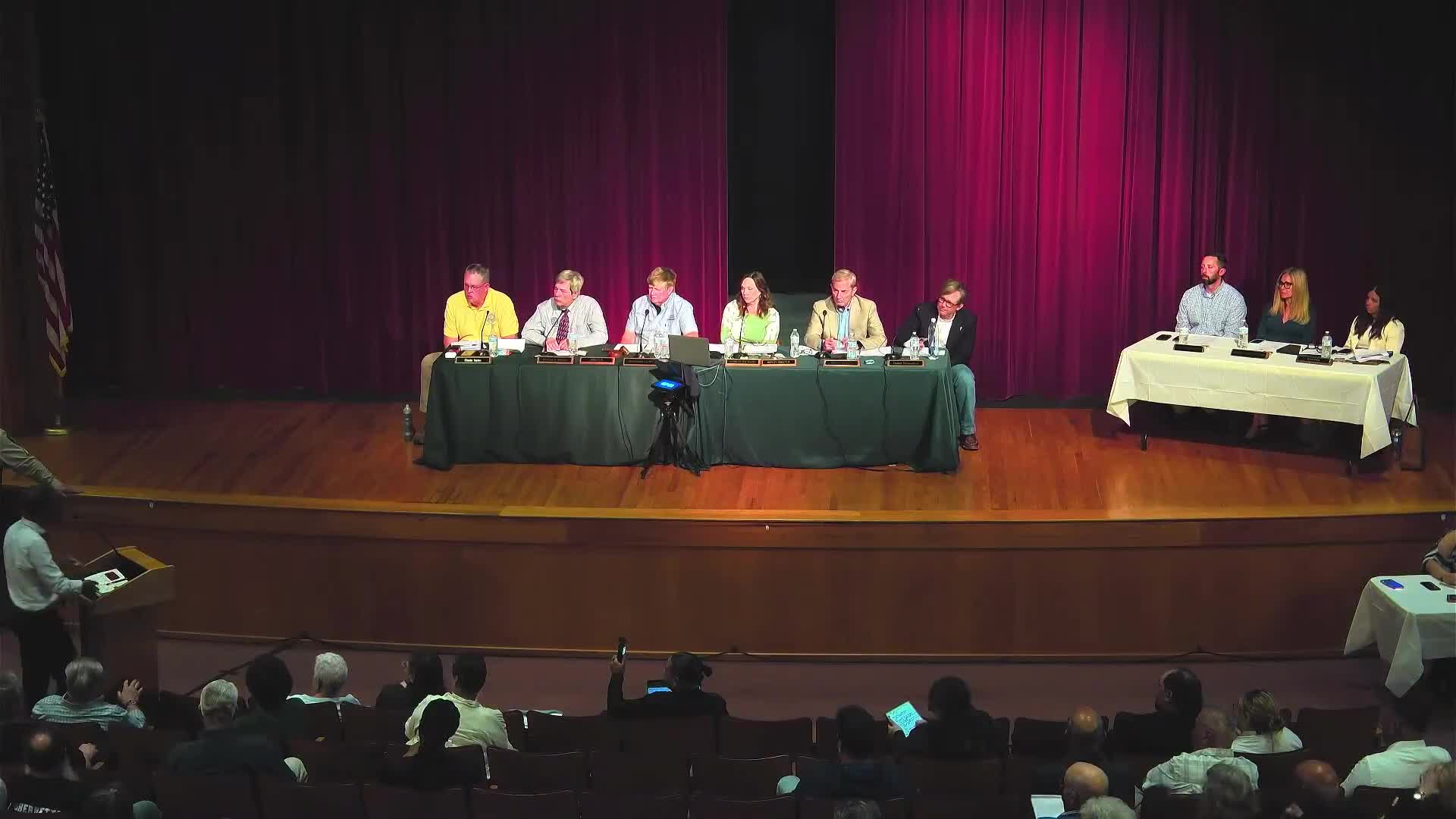
Summary
After a three-hour public hearing with dozens of speakers, the Salem County Board of County Commissioners voted unanimously against amending the county Solid Waste Management Plan to permit Giordano Vineland Scrap Material LLC to build a recycling/transfer facility on a capped landfill in Salem City.
The Salem County Board of County Commissioners voted no on May 29 to amend the county Solid Waste Management Plan to allow a proposed Giordano recycling and transfer facility on the capped Tilbury landfill in Salem City. The vote followed a three-hour public hearing at Salem Community College during which residents, environmental groups, municipal leaders and the applicant debated the proposal’s environmental, traffic and economic impacts.
The vote was the culmination of months of review and of two Solid Waste Advisory Council hearings. Still, the board’s five commissioners — Cordy Taylor, Micky Ostrom (deputy director), Dan Timmerman, Ed Ramsey and Director Lawrie — each said they would not support the amendment; the motion therefore failed. Commissioner Cordy Taylor said, “The environmental, public health, economic, and social concerns it raises far outweigh its potential benefits,” and announced her no vote during the roll call.
The hearing drew more than 70 public commenters. Opponents emphasized risks tied to siting an industrial, truck‑intensive operation on top of a closed landfill and near wetlands, private wells and residential neighborhoods. Trudy Spence Parker, a Woodstown resident, told commissioners she spoke “for myself as well as a large number of neighbors” and said the facility would bring heavy truck traffic that could damage historic homes and threaten schoolchildren’s safety. Environmental advocates and local fishermen urged the board to consider potential runoff, leachate, and threats to tributaries of the Salem River and to the Delaware Estuary.
Speakers cited technical and regulatory gaps in the application. Attorneys and engineers for opponents pointed out the absence of permits or final technical data in the public record for stormwater, wetlands delineation, endangered-species review and a New Jersey Department of Environmental Protection (NJDEP) NPDES/stormwater permit. Several commenters referenced federal and state laws and guidance discussed during the hearing, including the Clean Water Act (NPDES), the Freshwater Wetlands Protection Act, NJAC 7:8 (New Jersey stormwater rules), the federal Endangered Species Act, and the NJDEP Environmental Justice guidance. The Delaware Riverkeeper Network, represented by Shailen Parker, urged rejection, citing proximity to a tidally influenced tributary and the risks of narrowing riparian buffers below commonly recommended widths.
Opponents also highlighted truck traffic estimates and landfill concerns that appeared in the record. Commenters repeated an applicant-cited figure that up to 200 trucks per day could be associated with the operation; other speakers described routing, 300 round trips and the possibility that trucks would use local two‑lane roads such as Hook Road, Route 45 and Tilbury Road. Witnesses warned those routes are prone to flooding and not engineered for sustained heavy truck volumes. Several speakers raised the landfill’s remaining capacity and a date sometimes cited in the record (2047) at which the county landfill reaches final cell capacity, asking whether accepting outside material would accelerate closure or require new landfill siting and taxpayer-funded infrastructure work.
The applicant’s representatives defended the project as an opportunity for jobs and redevelopment. Keith Davis, the attorney for Giordano Vineland Scrap Material LLC, told the board the company had agreed to conditions recommended by the Solid Waste Advisory Council and stressed that further state and local permits would be required if the board approved the plan amendment. “We ask you to follow the recommendation of the council that you formed, that we had two hearings before, and adopt this amendment to allow this facility,” Davis said. Company family members and supporters said the firm would bring local jobs and investment and described operational controls they would implement on traffic and site management.
Commissioners repeatedly noted the narrow scope of the board’s decision: whether to include the facility in the county’s Solid Waste Management Plan. But several said that because the proposed site sits on a capped, flood‑prone landfill and near residences, schools and wetlands, the application as submitted did not justify placing the facility in that location. Deputy Director Micky Ostrom, who visited similar facilities, said the Tilbury parcel “is prone to flood” and that planned engineered controls would not remove the county’s enforcement and maintenance obligations. Commissioner Dan Timmerman and Commissioner Ed Ramsey also said they would vote no; Director Lawrie said he shared the same concerns and voted no.
The board took two formal procedural actions during the meeting: opening and later closing the public hearing on the proposed amendment. Both motions carried; the substantive motion to amend the Solid Waste Management Plan failed when the board voted no.
What happens next: because the board did not adopt the amendment, Giordano’s proposal will not advance under the county plan at this time. The company has the option to revise its application, propose alternate locations, or pursue other avenues of review, but any future submission would again require review by the county and likely the NJDEP and other permitting authorities. Several public commenters urged the county and Salem City to pursue alternative redevelopment strategies for the capped landfill, including solar arrays, capped‑landfill reuse for non‑truck‑intensive industry, and green‑space buffers.
The commissioners thanked the public and adjourned the meeting following the vote.
Ending: The meeting closed after nearly three hours of public comment and commissioner deliberation; the board’s decision preserves the county’s current solid-waste plan by declining to add the Tilbury site for this type of recycling/transfer operation at this time.