Lifetime Citizen Portal Access — AI Briefings, Alerts & Unlimited Follows
Army Corps outlines extended radioactive cleanup at DuPont Chambers Works, estimates excavation through 2032
Loading...
Summary
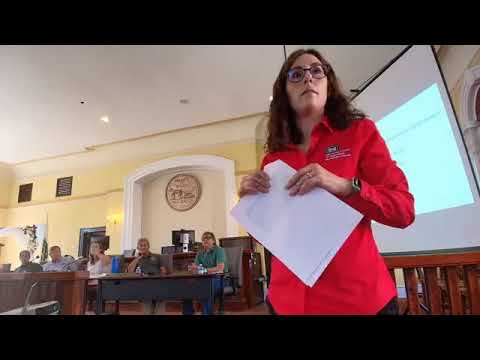
Lindsey Keller, project manager for the U.S. Army Corps of Engineers' FUSRAP work at DuPont Chambers Works, told Salem County commissioners that excavation and off-site disposal of radiologically contaminated soils is ongoing and will likely continue through 2032.
Lindsey Keller, project manager for the U.S. Army Corps of Engineers' FUSRAP work at the DuPont Chambers Works, told Salem County commissioners that excavation and off-site disposal of radiologically contaminated soils is ongoing and will likely continue through 2032.
Keller said the formerly utilized sites remedial action program (FUSRAP) was created to address Manhattan Project contamination and that the Army Corps’ objective at Chambers Works is “to ensure that formerly used Manhattan Project sites are made safe and can be reused, specifically safe to the public.” She said the Corps has completed excavation and disposal of “over 93,000 cubic yards of material” and currently estimates about 54,000 cubic yards remain, though that amount could increase as the work continues.
The Corps’ geologist and technical manager, Dan Serkis, described how contamination at Chambers Works is “randomly distributed” within areas where DuPont historically used building materials and soil as fill and stressed that uranium in groundwater is typically not highly mobile. Serkis said the Corps sampled more than 125 Chemours wells across the site and found only two with uranium that appeared related to Corps source areas. He repeated the Corps’ position that “uranium has to have a certain environment necessary for it to be moving in groundwater” and that, in their view, groundwater transport has been limited to tens or a few hundred feet from source areas.
Keller and Serkis described the program’s history at Chambers Works: DuPont supported Manhattan Project work at the site from 1942–1947; earlier surface assessments declared the site clean for unrestricted use based on then-available technology; later investigations identified residual radiological contamination. The Corps completed a remedial investigation in 2011, issued a record of decision in 2013 selecting excavation and off-site disposal, began remediation in 2014, and issued an explanation of significant differences (ESD) in 2024 to add a previously unaddressed area (AOC 4) to the cleanup scope.
Keller said the Corps treats construction water on-site in a temporary treatment plant and that limited uranium concentrations have been identified in on-site groundwater but, in the Corps’ judgment, are not migrating beyond localized contamination areas. She said the Corps will return remediated areas to the landowner (Chemours) and ultimately transfer long-term management back to the U.S. Department of Energy; the Corps projects administrative and groundwater monitoring tasks will continue after active excavation ends and that the Corps would transfer the site back to DOE around 2038.
During a question-and-answer period, Keller said the Corps maintains an administrative record at the Pennsville Public Library and posts project materials on the Philadelphia District website; she identified the Corps’ public affairs contact for the project as Steve Rochette. Keller said the Corps conducts perimeter and worker air monitoring and that those perimeter monitors have not detected chemicals or radiological constituents migrating off-site. Serkis described technical sampling methods, use of historic aerial photography, and specialized geophysical techniques to locate subsurface radiation signals.
No formal action or vote by the commissioners followed the presentation. Commissioners thanked the presenters and opened the floor for the regular business portion of the meeting.
The Corps’ presentation and follow-up discussion included statements of program purpose, excavation quantities, project timeline projections, monitoring practices, and where the public can review records and reports. The presenters repeatedly framed the work as fulfilling a historical federal obligation under FUSRAP to remove radiological source material and make the site safe for reuse.