
Weaver gives Conroe ISD a clean audit for fiscal 2024 ACFR; auditors report no material weaknesses
Get AI-powered insights, summaries, and transcripts
Sign Up Free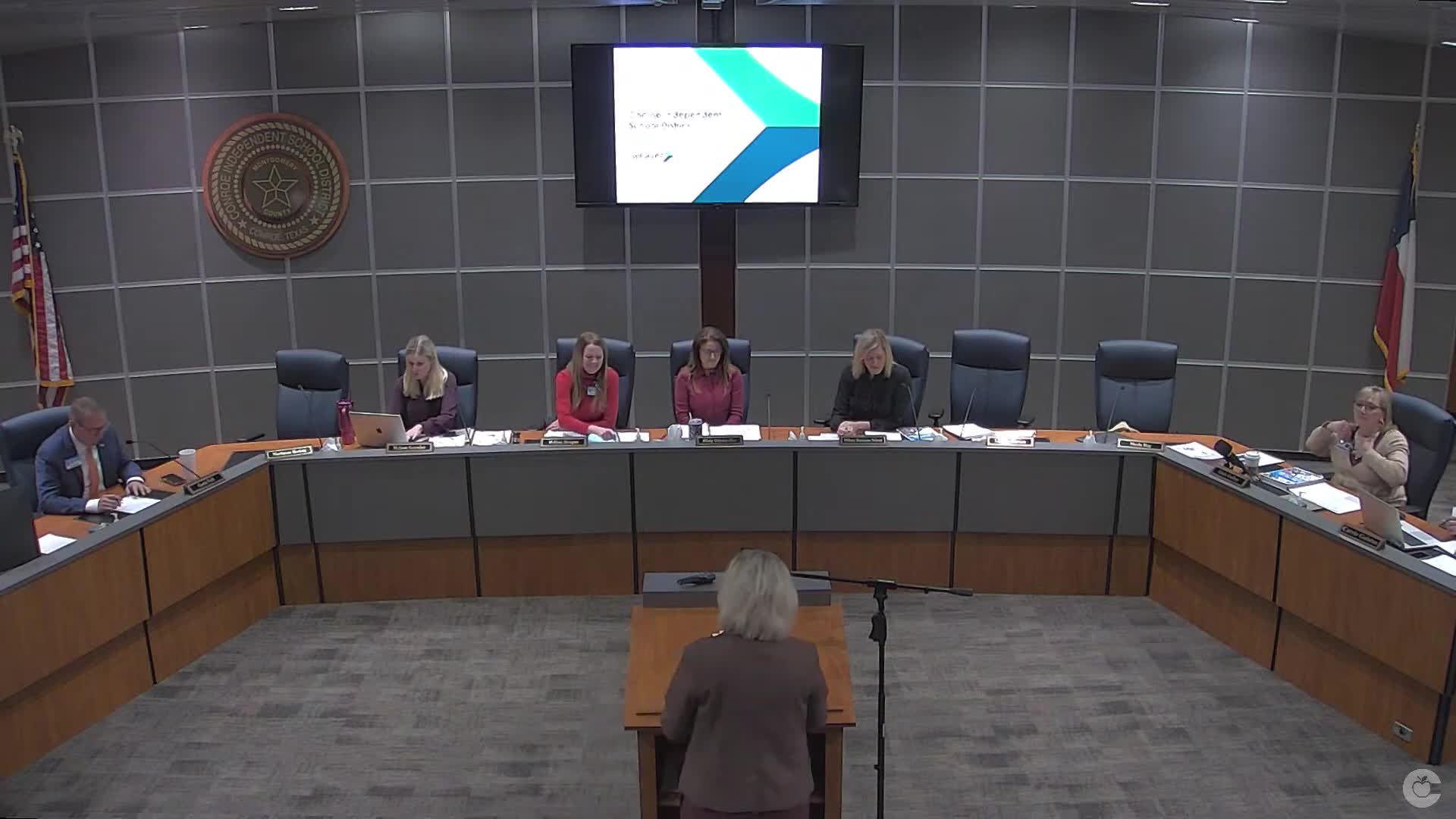
Summary
Weaver presented Conroe ISD’s fiscal 2024 annual comprehensive financial report (ACFR) and issued an unmodified (clean) opinion on the financial statements and on federal awards; auditors reported no material weaknesses or significant deficiencies.
Weaver, the district’s independent audit firm, issued an unmodified opinion on Conroe Independent School District’s fiscal year 2024 financial statements and a clean opinion on compliance for major federal programs, the firm reported at the audit committee meeting.
Sarah Roberts, partner with Weaver, told the committee the audit found no material weaknesses or significant deficiencies in internal controls and no instances of material noncompliance. Roberts said the firm “expressed an unmodified opinion on the financial statements,” and that “we did not identify any material weaknesses or significant deficiencies in internal controls.”
Roberts said the district’s major federal program for the single-audit component was the Child Nutrition Program, with total expenditures of $22,000,000 and representing roughly 32% of the district’s total federal expenditures of $68,000,000. She told the committee Weaver issued a clean opinion on compliance for federal award major programs and identified no reportable questioned costs, fraud, or material noncompliance.
The report includes standard disclosures about pension and other postemployment benefit liabilities. Roberts noted the district reports large actuarial liabilities on the government-wide statement — a teacher retirement system pension liability and an OPEB liability — and explained those entries typically produce a negative unrestricted net position for Texas school districts. The transcript records Roberts saying pension and OPEB liabilities were approximately "$274,000,000 and $111,000,000 respectively," and that unrestricted net position would be positive if those liabilities were excluded.
On fund-level results, Roberts said the general fund’s total fund balance was about $165,000,000 with an unassigned fund balance near $156,000,000 (about 22% of annual expenditures). Total general fund expenditures were reported at about $710,000,000; the net change in general fund balance was a $1,600,000 increase for the year, aided by an $18,800,000 transfer in from capital projects.
Roberts reminded the committee that board policy CFA (legal) requires the ACFR approved by the trustees be submitted to the Texas Education Agency no later than 150 days after the fiscal year end, putting the TEA submission deadline at January 28, 2025, and that the staff will request the committee recommend approval of the ACFR to the full board at the next regular meeting. She said the district participates in voluntary enhanced reporting programs with the Government Finance Officers Association and the Association of School Business Officials and that the district had historically received those awards.
The committee voted to recommend approval of the district’s 2024 ACFR to the full board at its next regular meeting; the motion passed by voice vote with no roll-call tally recorded in the transcript.
Weaver also described the audit scope and standards: the financial-statement audit was performed under generally accepted auditing standards and Government Auditing Standards (the “yellow book”), and the single-audit federal awards component was performed under the Uniform Guidance (2 CFR 200). Roberts confirmed auditor independence and said the firm requested management representation letters as a customary closing procedure.