
Supervisors debate adding fourth juvenile detention bed with Linn County amid access and service concerns
Get AI-powered insights, summaries, and transcripts
Subscribe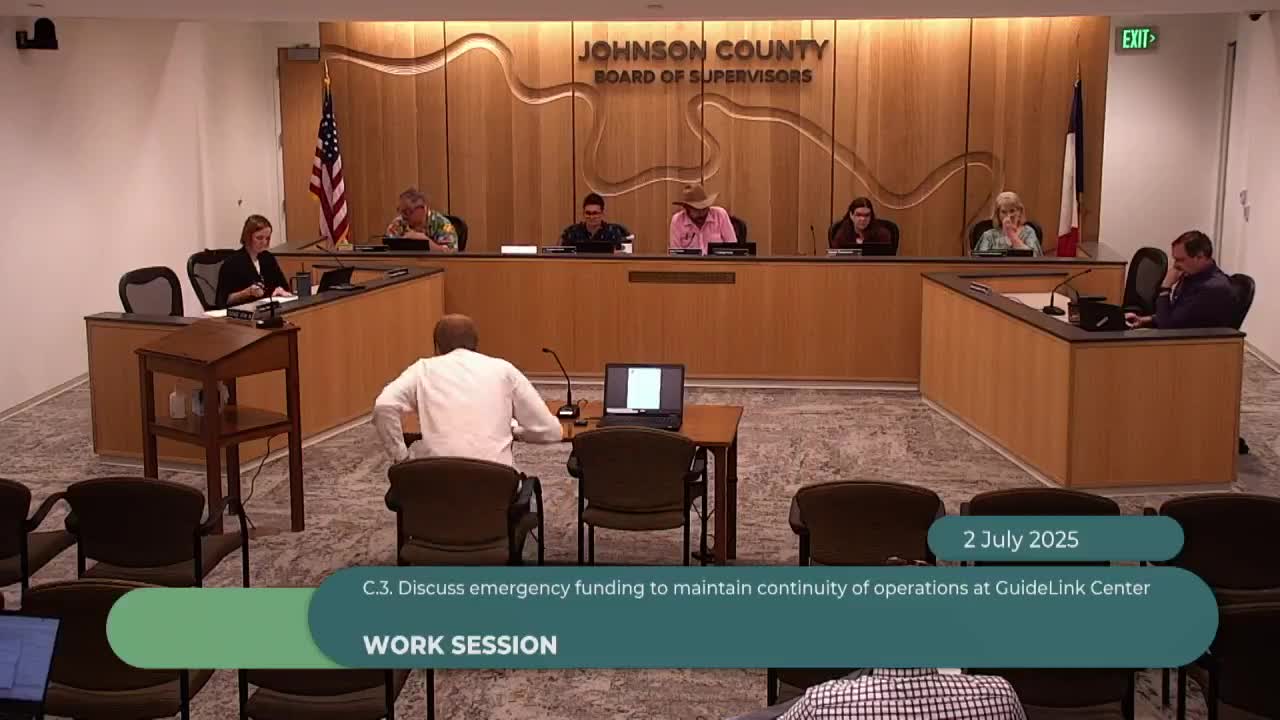
Summary
Johnson County supervisors spent more than an hour debating whether to increase a proposed contract with Linn County from three to four juvenile detention beds, with law enforcement, juvenile court staff and defense attorneys urging a fourth bed for local access and others urging caution and further investment in diversion and treatment.
Johnson County supervisors debated whether to increase the county's contract with Linn County for juvenile detention beds from three to four, with law enforcement, juvenile court staff and defense attorneys urging an extra locally available bed and some supervisors urging caution while pursuing longer-term diversion and treatment options.
The discussion matters because contracted local beds affect where detained youth are held, how quickly lawyers and family can see them, and county transportation and staffing costs. County officials said a shortage of staffed beds at several detention centers has pushed placements farther away and sharply increased the county's out-of-county bed days this fiscal year.
Supervisor Sullivan, who sponsored the item, said the board had previously approved three contracted beds but that some staff recommended four and she was “concerned about that.” She said Linn County offers closer and better services than many alternatives, and questioned whether the board should commit to expanding capacity while pursuing other reforms. “We ended up approving 3 beds. I am concerned about that,” Sullivan said.
Several people who work directly with detained youth urged the board to add the fourth bed to keep youths closer to home. Sarah Strainlander, an attorney with the Linn County Advocate who represents juveniles from Johnson County, said she currently has six clients in detention, five at Linn County and one at Eldora, and described the practical harms when youth are moved out of the area. “When you move them to Eldora, to Cherokee, to even Scott County, I cannot see them. I cannot visit them. I cannot talk to them in person and tell them what is happening,” Stainlander said, and she added, “I really encourage you looking at adding this bed because it will make our system function much better for the children.”
Juvenile Court Supervisor Justin Montgomery described the county's use of diversion programs and screening, but said placement decisions and emergency transports require accessible local beds for the county to operate effectively. “We are one of few counties in the state that offers pre‑charge diversion,” Montgomery said, noting that staff visit detained youth weekly and prioritize returning them to less restrictive placements when possible.
The sheriff described operational burdens when local beds are not available, including long overnight drives to place youths in distant detention centers and the staffing and safety risks involved. The sheriff said officers sometimes must drive to distant facilities for initial appearance and then return for transport again. “If we don't have those beds locally that we've contracted... we have to find that bed somewhere else,” the sheriff said.
County finance and juvenile services staff presented data showing an increase in out‑of‑county bed days. County staff said last year the county billed for roughly 106 out‑of‑county bed days; through April of the current year the county had recorded about 404 out‑of‑county bed days and multiple invoices from several distant facilities were pending. Staff also said transport and overtime costs for law‑enforcement trips to distant facilities are not included in many placement invoices.
Other supervisors and some panelists urged the board to weigh long‑term impacts of detention on recidivism and to pursue more local treatment and diversion capacity rather than expanding detention commitments. One supervisor cited research and argued that detention increases the likelihood of future offending, and advocated exploring contracting beds at regional treatment providers while keeping the county's standing contract at three beds.
No formal contract amendment was approved at the work session. The board agreed to place the amendment to the fiscal year 2026 agreement with Linn County on the formal agenda for the next meeting so members could take a final vote after further consideration and after visits to local detention facilities. Staff also reported plans to visit Linn County Detention to review programming and capacity.
The discussion underscored tensions supervisors face between short‑term operational needs—keeping detained youth close to family, counsel and services—and longer‑term policy goals of reducing detention through diversion and treatment.
Looking ahead, supervisors asked staff and juvenile system stakeholders to continue providing monthly and ad hoc data on placements, staffing constraints at regional centers, transport costs and availability of treatment beds so the board can evaluate contract size and complementary investments in diversion and services.