
OTHS social work team reports expanded counseling, therapy dog visits and 46% student reach this year
Get AI-powered insights, summaries, and transcripts
Subscribe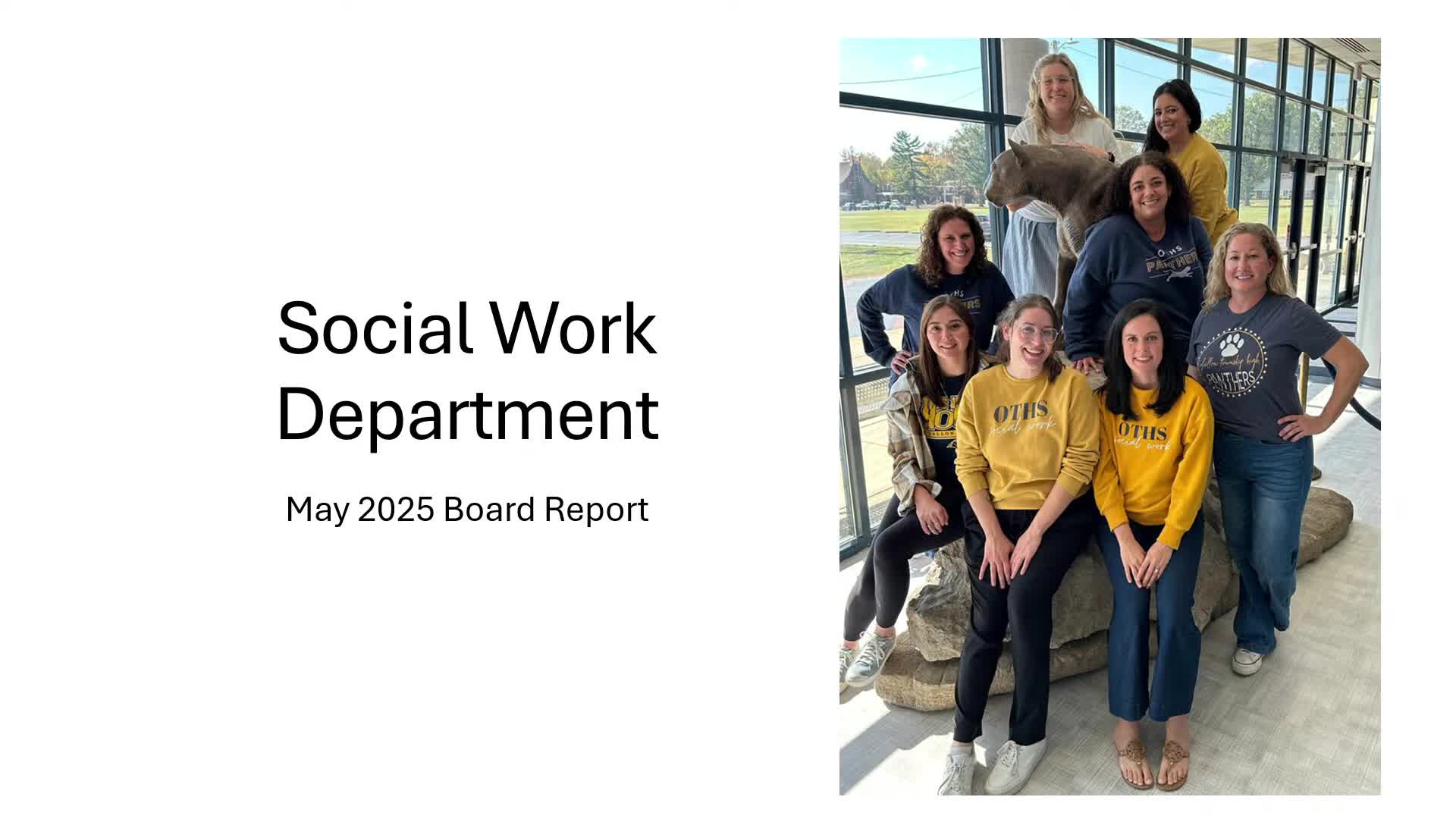
Summary
Social work staff summarized services, partnerships, mental-health supports and program statistics, including the therapy-dog program and 1,183 unique students served (about 46% of the student population). The department flagged long community waitlists for outpatient therapists and plans to explore grant funding to increase access.
The O'Fallon Township High School District 203 social work department briefed the board on this year's services, referral work and new programs, saying the team reached 1,183 unique students and expanded on-site supports including a therapy dog program.
Social work lead provided an overview of the staff and services and described increasing demand for counseling: "We have seen a trend over the last couple years of us becoming more the front line... providing a lot more in-depth counseling to kids because there are long wait lists," the lead said. The department described common presenting concerns as anxiety, depression, trauma, grief and academic motivation.
Key programs and numbers: The social work team said it saw 1,183 unique students this year, which the presenter described as "about 46% of the student population." The department runs social-skills groups and life-management classes across campuses and holds restorative circles to address peer conflicts. Social workers collaborate with community therapists, the O'Fallon Police Department and local agencies and provide brief solution-oriented counseling on campus.
Therapy dog program: The department credited the therapy-dog program for classroom and grief-support visits. "This is Sylvie Hart Golden," the social work presenter said, introducing the dog used in visits; staff reported that Sylvie and handler visits happened in 31 classrooms and 26 therapy-dog Thursdays this year. Donations from local organizations fund parts of the program and the district plans to continue scheduling classroom and bereavement visits.
Mental-health days and access: Under Illinois law the district notifies students about available support after multiple mental-health absences. Social work staff described changing the district's contact policy from two to three mental-health-day absences before scheduling outreach because many absences were not mental-health related. The social work team also reported wait times of one to two months for outpatient therapy, even for families with private insurance, and said it will explore grant-funded teletherapy partnerships to shorten access times.
Next steps: The department plans to pursue grant options to increase access to therapists and psychiatrists with faster turnaround, continue community fundraising for student supports and maintain partnerships to support continuity of care for students outside school.
Ending: Board members asked for usage breakdowns and the social work lead agreed to provide additional details on session counts per student and program participation.