Get Full Government Meeting Transcripts, Videos, & Alerts Forever!
Get email alerts on the Transportation Traffic Signals topic
No spam. Unsubscribe anytime.
Peoria tests adaptive signal timing across two major corridors to reduce congestion
Summary
Peoria traffic engineers are programming and testing an adaptive signal control system across 29 intersections on the Deer Valley and Lake Pleasant corridors, using a Miovision system funded by a federal grant to coordinate signals across multiple jurisdictions and improve traffic flow.
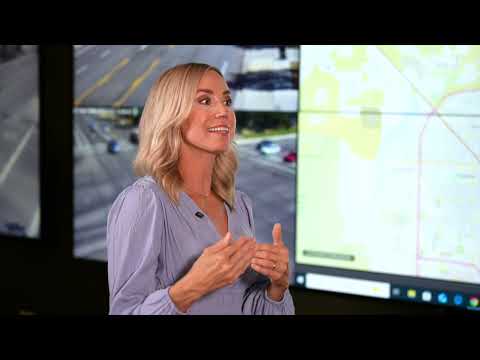
Peoria traffic engineers are testing an adaptive signal control system on two major corridors after a federally funded installation at 29 intersections, officials said. Jody McKenzie, a traffic engineer at Peoria's Traffic Management Center, said the Miovision system has replaced detectors and installed processors at the sites and is now in the programming and testing phase. “They've already replaced the detection and upgraded it at all 29 intersections. They've installed their processors, and we're currently in that programming and testing phase,” McKenzie said. The initiative covers the Deer Valley corridor from 100th Avenue and Seventh to 80 Third and the Lake Pleasant Parkway corridor from Loop 303 to 80 Third, McKenzie said, and builds on existing adaptive corridors that include Bell and Olive avenues. Peoria operates a network of 151 traffic signals and 149 cameras from the Traffic Management Center, which staff use to “monitor how the signals are performing” and to respond to incidents or construction in real time, McKenzie said. Why it matters: adaptive signal control uses sensors and video detection to adjust timing across multiple intersections so traffic volumes and incidents—such as crashes or seasonal surges—cause fewer delays, McKenzie said. “Adaptive, signal control technology is used to make adjustments in real time to fluctuations in the traffic volumes… They’re working together to minimize those delays,” she said. The system is multi-jurisdictional: McKenzie said corridors include intersections controlled by Peoria as well as by the Arizona Department of Transportation (ADOT), the Maricopa County Department of Transportation (MCDOT), Glendale, Surprise and Phoenix. She noted that one intersection, “80 Third and Bell,” is controlled by Glendale but is part of the coordinated corridor. That coordination is intended to allow “a traveler [to] traverse the entire corridor without realizing… I've left this jurisdiction,” McKenzie said. The city described the recent work as the first adaptive deployment “with two crossing corridors,” and identified Miovision as the vendor that won the federally funded project. McKenzie said the upgraded detection and processors are installed and that staff are “looking forward to what will happen once that is finally deployed.” This interview was informational: no policy votes or formal council actions were discussed or taken during the conversation. The segment emphasized the technical steps already completed (detection replacement and processor installation) and that the system remains in programming and testing; no deployment timeline or performance metrics after full deployment were specified. Peoria communications framed the work as a resident benefit; the host said, “I think it's just exciting for residents to know that there are action steps like this being taken to continue to improve every road,” and McKenzie said the Traffic Management Center seeks ways to “make those drives smoother for the residents and see those changes immediately.”