
Interim director outlines staffing shortfalls, technology upgrades and rising population at Oklahoma County Detention Center
Get AI-powered insights, summaries, and transcripts
Subscribe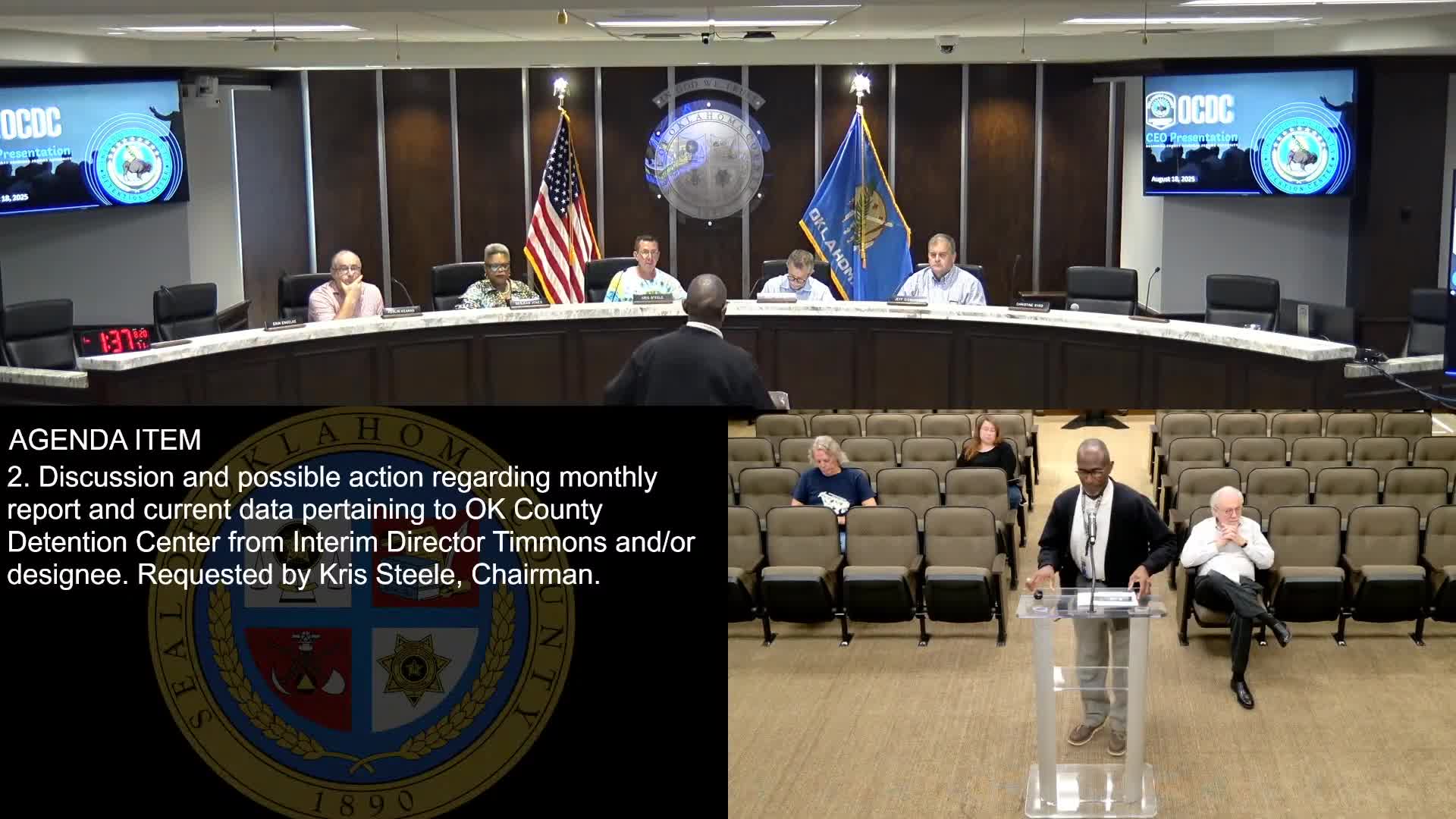
Summary
Interim director Greg Timmons told the Citizens Advisory Board that staff pay and retention are the detention center’s top operational challenges, described technology and facility upgrades under way, and said daily bookings and average length of stay have trended up this year. The board accepted the monthly report by unanimous vote.
Interim director Greg Timmons told the Oklahoma County Citizens Advisory Board that pay and staffing shortfalls are impairing recruitment and retention at the county detention center and that the facility’s average daily bookings and length of stay have trended upward this year.
Timmons said the county ranks “number 6 within the state” on a recent pay comparison and that the center is losing staff: “We constantly lose people to other facilities or other jobs even because of what our pay is.” He reported an overall loss rate of about 23% across positions and roughly 31% in detention-only positions and said the center has lost more than 1,000 employees since 2020.
The report outlined several operational responses. The facility plans an academy beginning Sept. 8 with eight weeks of classroom training plus two weeks of on-the-job instruction, partnerships with regional colleges (including a corrections internship with UCO, outreach to Indian Meridian VOTEC, Francis Tuttle and Langston University), expanded use of its JailTracker records system and installation of radar-based monitoring on its mental-health floors. Timmons said JailTracker currently shows about 1,800 user accounts and that the county intends to expand training and permissions to reduce paper records and improve incident reporting.
Timmons also described facility upgrades and maintenance work. An HVAC replacement project is intended to reduce large temperature swings cell-to-cell; part of that work is being held until the September budget meeting. Pest-control tickets have fallen from a high in the July–September quarter last year (about 140 tickets) to a much lower level this year, he said. Timmons said staff painted and refreshed the receiving area and that staff-led improvements had a visible effect on the facility’s appearance.
On population and cost metrics, Timmons said May was the recent peak month and that the facility’s intake questionnaire shows roughly 33% of booked individuals self-identify as homeless, 16% report being under the influence and 19% report a mental-health disorder. He said the facility averages “just over 62 bookings per day,” releases “about 1,900 per day,” and an average length of stay of “just over seven days.” Using an independent vendor’s daily-cost figures, he said the self‑reported homeless population produced an estimated cost of about $900,000 over an 11‑month period based on about 4,500 self‑reports.
Timmons reported criminal‑investigations activity (31 investigations, 24 charges filed, 29 open and 21 closed cases) and said top charges include firearm-possession by a felon and possession of a controlled‑dangerous substance. He noted a high recidivism rate — “just over 76 percent” for females and “just over 80 percent” for males — and said the facility is setting up more in‑custody programming (GED and job‑readiness classes, Urban League and OIC partnerships and Prison Fellowship programs).
Board members asked detailed follow-ups about who sets starting pay, academy washout rates (Timmons said about 20 percent), how JailTracker data is entered and permissioned, the radar system’s alert routing (Timmons said alerts will be sent to control, ship commanders, captains and medical staff), and why May’s population spiked (Timmons said he had heard of a special enforcement event in Oklahoma City that generated many arrests). The board voted 5–0 to accept the director’s report.
Discussion-only items from the presentation included staffing targets and budget timing: Timmons said the operations chief estimated about 200 detention officers would be needed for best practice coverage of detention units and that the facility currently needs roughly 80 more staff to reach that level.