
Judge grants most automated red‑light and school‑bus camera appeals, offers resets and payment time for some defendants
Get AI-powered insights, summaries, and transcripts
Subscribe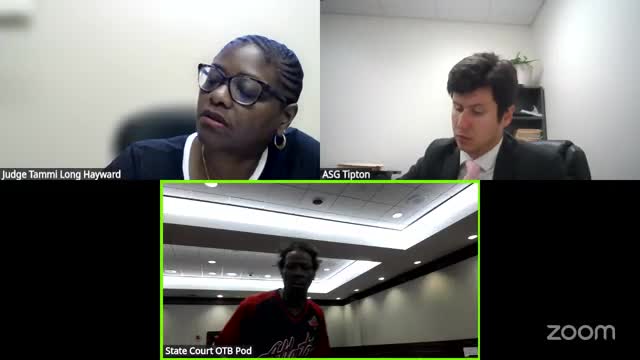
Summary
On the automated‑ticket calendar, a Clayton County judge granted many video‑review appeals, denied one, and reset others while offering a 60‑day reset plus a 90‑day payment window in some cases; the court noted statutory penalties and civil enforcement options for unpaid fines.
A Clayton County State Court judge reviewed automatic red‑light and school‑bus camera appeals and granted a majority of the appeals the state reviewed while denying or resetting others. Where fines remained, the court offered short postponements and limited payment windows to some defendants.
The calendar reviewed camera evidence and affidavits in dozens of automated citation appeals; the court treated each on the video record and told defendants how to proceed if they could not pay immediately.
The court opened the automated‑ticket calendar and explained the procedure for appeals based on automated camera evidence. Prosecutors often told the court they had reviewed video or affidavits and recommended whether an appeal should be granted. For example, the state asked that Ahmad Asir Alkazai’s appeal be denied because "No 1 has answered." On other matters the state said review of the footage supported granting appeals. The judge granted appeals for Keisha Buchanan, Marie Marjorie Celestin, Juliana Chestnut and William Paul Hunt after the state said the video or affidavit did not support a finding of liability.
School‑bus cases: where school‑bus arm position or vehicle identification was unclear, the court granted appeals. The judge granted appeals for Tamika Owolabi and Britina Renee White after the state said the footage did not clearly identify their vehicles or the bus arm was not fully extended. In one contested school‑bus matter, Latricia Joseph asked for leniency, saying, "It was a complete mistake" and explaining personal circumstances. The prosecutor, Mr. Tipton, told the court that the civil penalty for not paying could include a suspension of registration or inability to renew tags. The judge offered to reset Joseph's case roughly 60 days out and give additional time for payment: "I'll give you 90 days to pay," the judge said. The court also accepted a request to reset other contested matters — including Jeanne Stevens and Britney (Britina) White — so prosecutors could review body‑cam or camera footage further.
Penalties and payment options: the judge reminded defendants that, for high‑and‑aggravated‑nature school‑bus violations (which the court said carry a statutory minimum fine of $1,000 and possible jail exposure), the legislature's changes limit judicial discretion; nonetheless, the court offered practical payment accommodations in individual cases. The state noted civil remedies for nonpayment; Mr. Tipton specifically described the civil penalty as potentially including a registration suspension.
Procedural notes: the court took testimony and video review on the record; when defendants reported technical difficulties viewing evidence remotely, the judge and counsel used screen sharing so defendants could see footage in court. The clerk and the solicitor general's office also handled requests to review discovery and camera footage.
Less critical details: several appeals were granted without further action after prosecutor review; others were reset so the state could re‑examine footage or so defendants could secure counsel or work out a payment plan. The calendar closed with the judge adjourning court.