Get Full Government Meeting Transcripts, Videos, & Alerts Forever!
Get email alerts on the Second Amendment Assault topic
No spam. Unsubscribe anytime.
Appeals court weighs whether showing firearm in doorway can support assault charge
Summary
A defendant who stepped to his doorway and armed himself after being served papers was tried for assault with a dangerous weapon; on appeal the court heard arguments about probable cause, the scope of Second Amendment protection in a home confrontation and whether jurors should be instructed about a constitutional right to possess firearms.
In Commonwealth v. Howard (Docket 24-P-1128) counsel for the defendant appealed a conviction for assault by means of a dangerous weapon after an encounter between the defendant and a constable who had come to serve court papers.
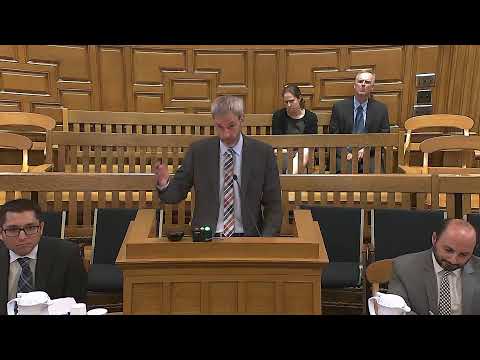
Defense counsel urged the panel that the defendant was standing in the doorway of his own home and had a constitutional right to possess a firearm within the home. He argued that possession at the doorway — with no words constituting a threat and with the gun not pointed at anyone — did not establish the intent to intimidate necessary for assault. "He has a right to possess a firearm in his own home," defense counsel told the panel, and he urged the court to consider the interplay between that right and the state’s assault statutes.
The Commonwealth described a different frame: the constable testified that after being served the papers the defendant threw the paperwork back, shouted at him, turned away, and then returned holding a long gun. Prosecutors said a reasonable person in the constable’s position could have felt immediate fear for personal safety when the defendant armed himself mid‑encounter, and that the totality of the circumstances supported probable cause and the subsequent conviction. "When someone is actively yelling at you, they've already thrown the materials you were there to provide. They're saying, effectively, I don't accept service," a prosecutor told the panel, arguing that grabbing a firearm at that moment sent an unmistakable menacing signal.
The panel asked detailed questions about whether the defendant’s conduct — stepping into a doorway, failing to point the weapon or utter an explicit verbal threat — was enough to put the constable in “reasonable apprehension of an immediate battery,” the legal standard for assault by threatened battery. The judges also probed whether the trial court erred by refusing a jury instruction referencing the defendant’s Second Amendment right to possess and carry firearms in case of confrontation.
Counsel for the defense said that a tailored instruction explaining the constitutional context and the defendant’s right to possess a firearm could have shaped the jury’s assessment of intent. The Commonwealth countered that existing assault instructions already required jurors to evaluate whether the defendant intended to create immediate fear and that separate Second Amendment language was unnecessary and could mislead jurors.
The court completed argument and took the matter under advisement. No ruling was issued from the bench at the sitting.
Discussion vs. action: Argument only; the court took the appeal under advisement and did not announce a decision.