Get Full Government Meeting Transcripts, Videos, & Alerts Forever!
Get email alerts on the Criminal Defense Trial Issues topic
No spam. Unsubscribe anytime.
Appeals court hears claim that trial counsel failed to pursue medical expert in OUI case and disputed prosecutor closing remarks
Summary
The court heard an appeal in Commonwealth v. Mainie over whether trial counsel’s refusal to pursue a medical expert on sleep‑related conditions required an evidentiary hearing and whether the prosecutor’s closing argument improperly referenced the defendant’s right not to testify.
The Massachusetts Appeals Court heard argument in Commonwealth v. Mainie (Docket 24-P-989) on whether trial counsel’s decision not to investigate and present an emergency‑room physician’s affidavit about sleep disorders and related medical conditions required an evidentiary hearing on ineffective assistance of counsel.
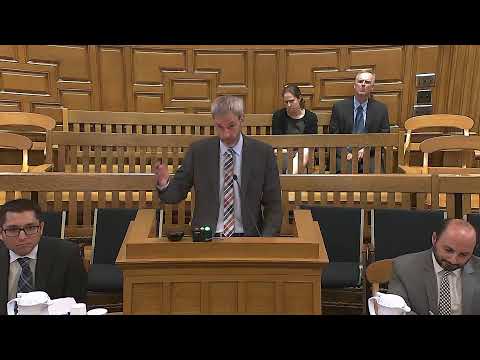
Appellant counsel argued that the affidavit from Dr. Rosenbaum — which discussed central sleep apnea, sleep deprivation and how arousal from deep sleep can produce slurred or confused speech — raised a substantial question that counsel should have investigated and could have led to a new trial. "This is the exact sort of factual issue that causes us to need an evidentiary hearing," counsel said, pointing to gaps in the trial record.
Counsel for the Commonwealth pushed back that the trial lawyers reasonably decided not to present the expert, that the physician’s affidavit as filed lacked the detail that would have made it admissible without further proof, and that the defense affidavits describing trial counsel’s post‑trial view that the evidence would have been "helpful" do not establish the required showing of prejudice.
The panel also considered a separate claim that a prosecutor’s closing argument improperly referenced the defendant’s failure to testify. Appellant counsel relied partly on the state statute barring reference to a defendant’s refusal to testify and urged that the prosecutor’s phrasing — telling jurors the defendant “has an absolute right not to testify” — was a prosecutorial invocation that risked prejudice. The Commonwealth countered that the prosecutor was accurately summarizing the defendant’s legal rights in context and that the closing did not violate the statute.
The court also asked both parties to provide the body‑worn camera footage used at trial; counsel told the panel they would file the footage the court requested within a week. The panel completed argument and submitted the matter for decision.
Discussion vs. action: Argument only; court took the case under advisement and did not announce a decision from the bench.