Get Full Government Meeting Transcripts, Videos, & Alerts Forever!
Get email alerts on the Policing Arrest Searches topic
No spam. Unsubscribe anytime.
Appeals court hears challenge to police wellness check, inventory and arrest in Walpole stop
Summary
Attorneys argued at the Massachusetts Appeals Court over whether a 2019 wellness check in Walpole became an unlawful search and arrest after officers opened a car, smelled alcohol and impounded the vehicle; appellant urged suppression and a hearing on racial-profiling data.
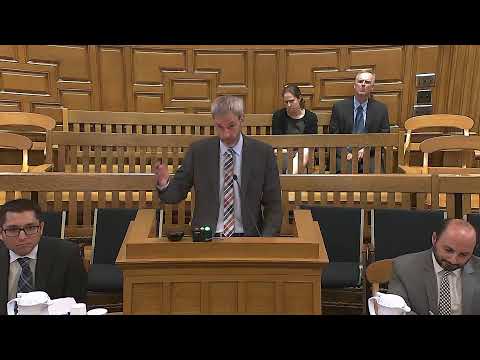
Attorney Ian Kahanowitz, arguing for the appellant in Commonwealth v. Lewis (Docket 24-P-825), told an Appeals Court panel that a 2019 stop in Walpole began as a community caretaking “wellness check” and became an unconstitutional search and seizure when officers opened a car, turned off the engine and ultimately arrested his client. "There was no probable cause to think that a crime was being committed to begin with," Kahanowitz said, and he argued the subsequent arrest and inventory flowed from that allegedly unreasonable intervention.
Counsel for the Commonwealth, Caleb Schoelter, urged the court to uphold the trial judge’s factual findings and to treat the initial response as a proper community caretaking function. He told the panel the record supported the judge’s conclusion that the vehicle was “partially blocking the north side entrance,” officers smelled alcohol when they approached and no one else was available to take possession of the car, justifying an impound and inventory. "The decision to impound the vehicle was reasonable under all of the circumstances," Schoelter said.
The appeal mixes Fourth Amendment questions with a contested claim that the police stop and later arrest were motivated by race. Kahanowitz asked the court to consider statistical evidence gathered for a hearing under Commonwealth v. Long that the appellant says shows disparities in how the arresting officer handled stops of white, Black and Hispanic motorists. Kahanowitz described studies he said showed higher rates of arrest and searches against Black and Hispanic motorists in the officer’s post-stop outcomes.
The Commonwealth responded that the early stages of the encounter were noninvestigatory caretaking and that the trial judge had the benefit of an evidentiary suppression hearing, which the judge incorporated when denying relief. Schoelter told the court the Long analysis was considered by the judge and that the statistics submitted to the lower court did not persuade the judge that they established the kind of inference Long requires.
Both sides also debated the legal import of a then-recent Supreme Judicial Court opinion addressing inventory searches; the Commonwealth said that decision may alter some of the suppression-policy arguments but did not change the factual record the trial judge credited. The court asked several questions about the factual findings the judge made at the suppression hearing and whether counsel were challenging those findings or only the judge’s legal rulings.
The panel accepted argument and submitted the case for decision.
Discussion vs. action: The session consisted of oral argument only; the appeals court heard argument and took the case under advisement. No decision was announced from the bench.