Get Full Government Meeting Transcripts, Videos, & Alerts Forever!
Get email alerts on the Property Deeds Competency topic
No spam. Unsubscribe anytime.
Appeals court hears challenge to trial judge’s ruling that deed transfers were void due to incapacity and other defects
Summary
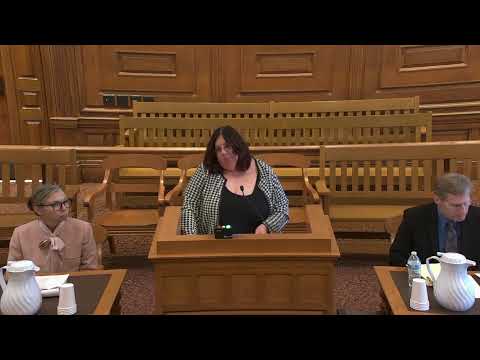
In Postale v. Mitchell, counsel for the appellant argued the trial court erred in invalidating an October 2020 deed, citing issues of the grantor’s competence, lack of proper acknowledgment by a notary, and alleged procedural irregularities in the trial; the appellee said the record and expert medical opinion supported the trial court’s ruling.
Postale v. Mitchell (deed validity): The Massachusetts Appeals Court heard argument over whether a trial judge correctly invalidated a deed executed October 23, 2020 and declared subsequent deed transfers to be void. Appellant counsel argued the evidence did not support findings of legal incompetence and alleged procedural irregularities at trial; appellee counsel said the trial court correctly relied on medical opinion, lack of proper acknowledgment by a notary, and documentary evidence to find the deed invalid for incapacity and other defects.
Why it matters: The appeal implicates property-law principles (proper acknowledgment and notarial formalities), the standard for proving incapacity or undue influence, and procedural issues about necessary parties and whether the trial court should have added defendants or joined parties before concluding title disputes.
Arguments from the appellant: Attorney Adam Tepper argued the trial record was incomplete and that the judge relied on a clinician’s review (not an in-person cognitive exam) and on a finding that the notarial acknowledgment was insufficient. Tepper also argued that Patricia Postale’s later transfers (to Anthony and then to a trust) and post‑judgment actions (including a later transfer) showed material factual inconsistency or at least raise factual questions about competence. He said trial counsel lacked the opportunity to present certain documentary communications and that the absence of a joined, necessary party (Anthony) prejudiced the defense.
Arguments from the appellee: Catherine Bagdas, representing Patricia Postale, told the panel the trial court relied on admissible expert medical opinion (Dr. Nassar) and found no contradictory expert evidence. Bagdas emphasized that Massachusetts law limits lay opinion about competency to recognized medical experts and pointed to the absence of evidence undermining the doctor’s evaluation. The appellee also said the absence of certain discovery in the appellate appendix complicated the appellant’s position and that the trial record supported the judge’s factual findings.
Court questioning and procedure: The panel pressed counsel on preservation and the appellate record — specifically whether the appellant tried to call Patricia Postale at trial and whether the alleged communications and discovery failures were preserved for appeal. Justices asked whether the judge’s declaration that “all deeds executed after this deed are void” required a clearer explanation or a narrower formulation to avoid leaving a cloud on title for bona fide purchasers.
Documentary & remedial posture: The trial court’s judgment invalidated the October 2020 deed, found defects in acknowledgement formalities, and reallocated property interests consistent with the court’s findings. The judgment also incorporated pretrial and contempt‑related monetary orders, which the trial court combined into a final monetary judgment for waste, unpaid HELOC amounts, taxes, and other charges referenced in the judgment.
What to watch next: The court’s opinion will examine whether the trial judge’s findings were supported by admissible expert evidence, whether procedural safeguards (joinder of necessary parties, evidentiary opportunities) were observed, and whether the trial court’s remedies were properly stated.