Get Full Government Meeting Transcripts, Videos, & Alerts Forever!
Get email alerts on the Criminal Procedure topic
No spam. Unsubscribe anytime.
Appeals court hears challenge to stop and frisk in Commonwealth v. Mitchell
Summary
Attorneys argued whether officers had reasonable suspicion to stop Markel Mitchell after surveillance video, an Instagram feed, and a CJIS check; the panel heard dueling readings of case law on "dual suspicion," collective knowledge and whether possession of a firearm alone justifies a stop.
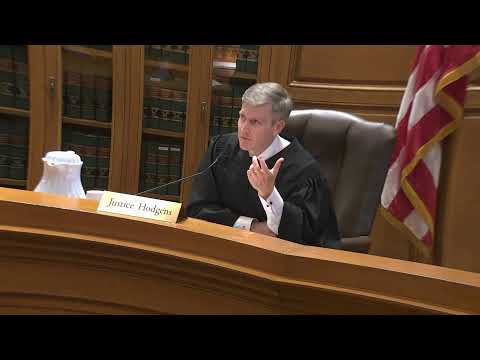
An appellate panel of the Massachusetts Appeals Court heard oral argument Tuesday in Commonwealth v. Mitchell over whether police had reasonable suspicion to stop and frisk Markel Mitchell and whether the motion judge erred in denying suppression of evidence. The parties asked the court to decide whether officers reasonably suspected both criminal activity and dangerousness before the stop and whether information from a CJIS check could be imputed to the arresting team.
Why it matters: the case tests how courts apply the state’s ‘‘dual suspicion’’ line of cases and the collective-knowledge doctrine when officers rely on social-media surveillance and team-based investigations to justify stops and frisks.
At argument, defense attorney Daniel Di Maria urged the panel to reverse the denial of the suppression motion, saying the judge relied on outdated precedent and that the record lacks proof Mitchell was illegal to possess a firearm or impaired at the time officers stopped him. Di Maria told the court the officer who ran the CJIS (criminal history/license) check was not present at the scene and ‘‘there’s nothing in the record showing that the arresting team was aware of the CJIS check,’’ so the defense argued there was no basis to impute that knowledge to the officers who stopped Mitchell.
Assistant District Attorney Cynthia Payne told the court the totality of circumstances supported reasonable suspicion. Payne cited an Instagram live feed showing Mitchell near Luke McKinney, the officers’ experience identifying a ‘‘weighted’’ object they believed was a firearm, past incidents involving McKinney and associates, and testimony that the defendant made a furtive movement when the car stopped. Payne said the motion judge credited officer testimony and that the surveillance team and support detectives were ‘‘working together’’ in a coordinated investigation.
The parties disputed how the court should apply SJC precedents the attorneys referenced at argument, including Narcisse and Martin (defense), Crowder and Alvarado (defense), and cases addressing collective knowledge and proof of licensure. The panel asked multiple questions about whether mere association with a person who appears with a firearm or a prior arrest, or mere possession of a firearm, suffices for a stop absent proof a firearm was unlicensed or that the subject was impaired.
The court did not announce a ruling from the bench at argument and took the case under advisement.
Future steps: the panel will issue a written opinion resolving whether the suppression denial must be affirmed or reversed and clarifying how the dual-suspicion and collective-knowledge doctrines apply on facts like these.