Get Full Government Meeting Transcripts, Videos, & Alerts Forever!
Get email alerts on the Consolidated Plan topic
No spam. Unsubscribe anytime.
Bloomington holds public hearing on 2025–2029 consolidated plan, highlights housing affordability and voucher shortages
Summary
The redevelopment commission heard a staff presentation on the city's 2025'2029 consolidated plan and 2025 annual action plan, which identifies housing affordability, voucher wait lists and public facility needs as top priorities.
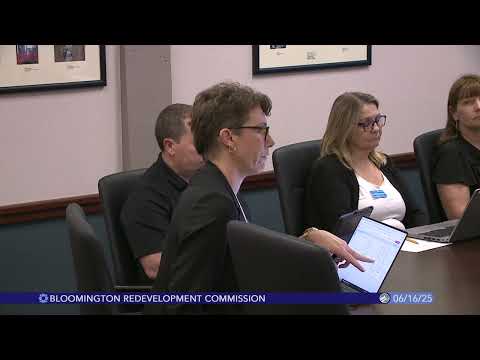
Bloomington Redevelopment Commission members heard a staff presentation June 16 on the city's 2025'2029 consolidated plan and the 2025 annual action plan, documents that guide Community Development Block Grant (CDBG) and HOME Investment Partnerships spending.
The consolidated plan, presented by a staff member, identifies housing affordability as the city's most pressing issue and recommends strategies including tenant-based rental assistance, new unit production, preservation and rehabilitation of existing housing, and public facilities investments. The presenter said Bloomington is an entitlement community that receives HUD funding and must align allocations with community needs identified through outreach, market study and needs assessment.
Why it matters: the consolidated plan directs HUD-funded programs that serve low- and moderate-income residents; the plan shapes which neighborhoods receive infrastructure, rental assistance and supportive services funding. The plan noted that Bloomington has high housing cost burden and that some new rental development is being targeted to students, which pressures the rental market for nonstudent households.
Key findings and priorities
The plan says Bloomington's population has declined in recent Census counts despite rising Indiana University enrollment, in part because IU provides only about 13,000 beds on campus. The presenter said newer rental housing in the city is often higher-priced and student-focused, increasing competition for affordable units.
The plan quantified selected program needs discussed in the hearing: there were 987 households on the wait list for Housing Choice Vouchers and 2,168 on the wait list for project-based vouchers at the time the plan was prepared. The presenter described the distinction between tenant-based vouchers (attached to the tenant) and project-based vouchers (attached to a unit).
Other priorities listed in the presentation include: - Public facilities and infrastructure (streets, sidewalks, water and sewer, parks) targeted to low- and moderate-income areas; - Services for seniors, people with disabilities, survivors of domestic violence, youth exiting foster care, and people experiencing or at risk of homelessness; - Workforce development, food access, child care affordability and broadband access; and - Preservation of subsidized units as affordability restrictions expire.
The presenter said rehabilitation costs are similar across neighborhoods but private return on investment is often lower in distressed areas, making preservation more difficult without public subsidy. The plan proposes neighborhood stabilization, homelessness prevention, expanded housing supply and improved access to services as implementation priorities.
Public participation and next steps
The presenter said nine public meetings informed needs assessment topics, and that the annual action plan and CAPER (performance report) will continue to document how federal funds are used. The presenter invited public comment during the hearing; none were offered in person or online at the meeting.
The commission did not take a formal vote on the consolidated plan at this meeting; the presentation was provided to commissioners and staff for follow-up and posting.
Ending: Staff said program years begin June 1; the city experienced a federal delay in allocations this year and will post plan materials and slides online and include them in the minutes.