Get Full Government Meeting Transcripts, Videos, & Alerts Forever!
Get email alerts on the City Budget Millage topic
No spam. Unsubscribe anytime.
Stuart commission approves balanced budget plan, directs staff to return with adjusted millage to add four firefighters
Summary
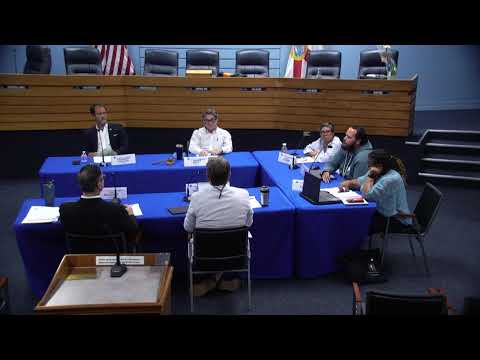
The City of Stuart commission held a budget workshop Aug. 25 and voted 4–1 to ask staff to return at the Sept. 8 TRIM hearing with a balanced budget based on a 4.75 millage amended to include four additional fire-rescue positions; staff will present the exact millage to fund those positions at the hearing.
The City of Stuart Commission on Aug. 25 directed staff to return to the Sept. 8 TRIM (Truth in Millage) hearing with a balanced budget based on the advertised 4.75 millage rate but amended to include four additional fire-rescue positions, after a 4–1 roll-call vote.
The motion, moved by Vice Mayor Collins and seconded by Commissioner Clark, passed with Commissioners Gioby, Clark, Vice Mayor Collins and Commissioner Reid voting yes and Mayor Rich voting no.
City Manager Mike (city manager) opened the workshop saying the proposed budget staff presented is balanced at a 4.75 millage and noted staff would return to the required TRIM hearings on Sept. 8 (tentative millage and tentative budget) and Sept. 22 (final millage and final budget). “Absent direction from staff or from the commission, we’re at 4.75 and the budget will be balanced and we’ll move forward,” the city manager said during the presentation.
Why it matters: the commission’s decision directs staff to incorporate four additional full-time fire-rescue positions into the fiscal 2025–26 budget and to show the revised millage that would fund those hires at the statutory TRIM meeting. Fire staffing and overtime were recurring themes in the workshop, with Vice Mayor Collins and the fire department urging incremental hires and a “floater” model to reduce overtime and minimum-staffing gaps.
Staff presentations and key numbers
Finance staff explained the difference between the advertised “not to exceed” 5 mills and the proposed 4.75 mills. Staff said tax notices included both (1) a not-to-exceed 5.0 mills figure and (2) a rollback figure (about 4.7014 mills) that would hold total ad valorem revenue equal to the prior year’s revenue if property values had not changed. The city manager told the commission that reducing the millage by 0.25 from 5.0 was estimated in earlier materials to reduce ad valorem revenue by roughly $913,950; after the city’s Community Redevelopment Agency (CRA) allocation the net reduction to the general fund was stated as about $761,006.
Managers also described actions already taken to balance the budget: consolidated cuts across departments, deferral of some vehicle and capital replacements (for example, a $250,000 grapple truck deferral with estimated $30,000 short-term repairs), and an anticipated reduction in full‑time positions over the coming year by roughly 16 positions through a mix of immediate cuts and attrition. Staff said enterprise funds and bond-required budgets remain balanced separately.
Public safety staffing
Commissioners and public safety leaders discussed a staffing plan that would add one firefighter to balance each shift and three additional “floaters” assigned to shifts (a total of four hires was the proposal discussed). Fire-management speakers explained minimum-staffing dynamics, Kelly-day comp-time scheduling, and frequent overtime driven by routine staffing gaps; they said floaters would be used across shifts to reduce overtime and improve resilience when personnel are out for PTO, work comp or other reasons.
Cost estimates and fiscal trade-offs
Speakers gave differing year‑one cost estimates for a new firefighter; the discussion referenced a figure near $96,050 per hire for first‑year full cost (salary plus benefits and employer contributions) and a separate metric equating the four positions to a roughly 0.00386 mill increase in the millage base in staff calculations. Staff cautioned that personnel costs increase over time (step increases, certifications) and that adding permanent positions raises future-year budget pressures.
Commissioners’ debate and public comment
Vice Mayor Collins framed the motion as a trade-off: accept a slightly lower millage trajectory now while prioritizing incremental public‑safety hires so the city avoids larger tax increases later. Opponents, including Mayor Rich and some members of the public, urged caution about cutting services and argued that many residents — especially lower‑value tax parcels and seniors who rely on city services — would see minimal direct tax savings while potential service reductions could affect day‑to‑day maintenance and programming.
Residents’ remarks at public comment emphasized concerns about service levels (parks, sanitation, senior programs) and asked the commission to weigh the small per‑household tax change against potential service impacts. Two members of the public, Helen McBride and Mark Breckville, spoke at the meeting; McBride said she was willing to pay a small increase to preserve services, and Breckville urged temporary or targeted cuts where possible.
Formal action and next steps
The commission’s motion directs staff to return on Sept. 8 with a balanced budget document and a millage figure that funds the four fire‑rescue positions; Sept. 8 remains the statutorily required tentative‑millage TRIM hearing (advertised on tax notices), and a final hearing is expected Sept. 22. Staff told the commission they will present the updated budget sub‑budgets and show the public‑safety line items increased to reflect the new positions while maintaining an overall balanced budget.
Ending
The commission workshop concluded after the vote; staff will prepare the updated budget and the specific millage calculation for the Sept. 8 TRIM hearing and then return for the final adoption meeting in late September. The commission and staff repeatedly noted that state revenue certifications were delayed this year and that final state numbers could still require future budget amendments.