
Judge Hayward outlines pleas, rights and CDL warnings at Clayton County arraignment
Get AI-powered insights, summaries, and transcripts
Subscribe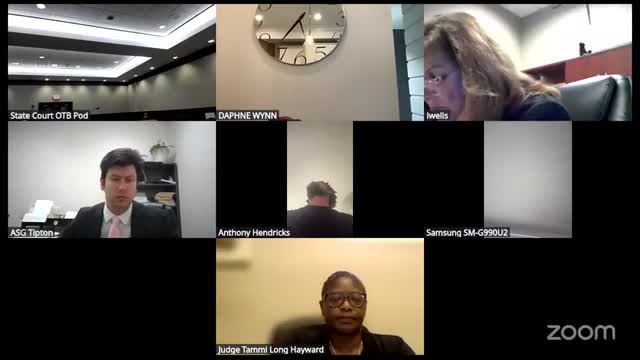
Summary
State Court Judge Tammy Long Hayward opened the Aug. 28 arraignment calendar with a detailed explanation of defendantsrights, plea options and procedural warnings, including guidance on CDL consequences and payment procedures for fines.
Judge Tammy Long Hayward opened the Aug. 28 arraignment calendar in State Court of Clayton County with instructions for people appearing by video, describing the legal options they would face and the court's procedures. The judge told defendants they could enter pleas of guilty, not guilty or nolo contendere ("nolo") and that everyone is "entitled to have an attorney represent them." She repeatedly cautioned about the difficulty of representing oneself at trial and explained appellate rights, including that an appeal must be filed within 30 days after a verdict. Why it matters: The arraignment is often the first formal hearing in a criminal case and sets immediate procedural choices that affect defendants' liberty, driving privileges and ability to work. Judge Hayward summarized the core rights and risks: the state bears the burden to prove guilt beyond a reasonable doubt; defendants have a Fifth Amendment right against self-incrimination; and entering a not-guilty plea preserves the right to a future trial. She explained that a nolo plea means the defendant does not contest the state's evidence but is not admitting guilt, noting that nolo eligibility for traffic matters is limited to once every five years for the same or similar offenses. On commercial driver's licenses, Judge Hayward gave an explicit warning: "If you are a commercial driver and you have a CDL ... we cannot advise you as to what might happen to your CDL." She said the court cannot "mask" charges to protect a CDL and urged drivers to research state and federal rules before pleading. The judge also described the court's payment process for fines: defendants may receive an email from Amanda Wright, the court clerk, with instructions for paying online or by phone or for paying in person at 9151 Tara Boulevard. She repeatedly cautioned that missing a payment deadline can result in an arrest warrant. What the court directed: Judges and staff repeatedly told defendants to change their Zoom names to first and last names so their presence could be recorded; to use private chat for sending identifying information (for example, driver license numbers); and to follow bond conditions to avoid revocation. The judge said she would place litigants in breakout rooms for attorney conferences when needed. The arraignment portion concluded after the judge took case-specific announcements and arranged breakout conferences to let defense counsel and prosecutors present plea offers or set trial dates.