
Cumberland planners, council and public parse new state density law LD 1829
Get AI-powered insights, summaries, and transcripts
Subscribe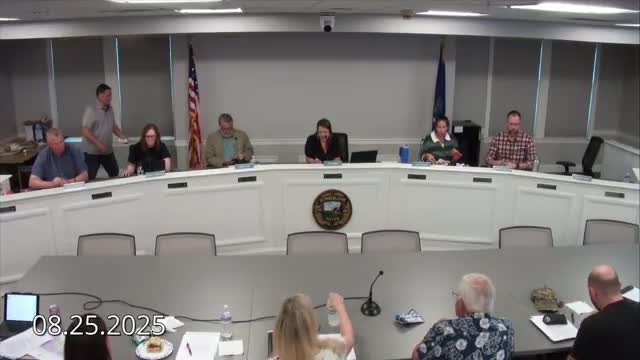
Summary
At a joint Aug. 25 workshop, Cumberland officials and residents reviewed LD 1829the state housing-density law that changes where and how many dwelling units towns must allow, and set a 07/01/2026 municipal compliance date. Staff and the comp plan committee were directed to map growth areas against water/sewer service and return recommendations.
Cumberland held a joint workshop of the Planning Board, Comprehensive Plan Committee and Town Council on Monday, Aug. 25, to review state law L.D. 1829 and discuss what changes the town must make to ordinances and its comprehensive plan.
The law matters because it changes where towns must allow additional dwelling units and tightens rules tying density to public water and sewer. Town Attorney Mary Costigan, who led the presentation, told the group that the bill builds on earlier housing law and that Cumberland must plan now to meet the implementation deadline.
Costigan summarized the lawincluding its most consequential requirements for Cumberland: "anywhere in town where residential use is allowed, anyone can have 3 dwelling units," she said, and "in areas that are served by public water or in growth areas, they can have 4 units." She added that, for lots in designated growth areas served by public water and sewer, the municipality "cannot set a minimum lot size greater than 5,000 square feet," and that the law limits the land area per dwelling for the first four units to roughly 1,250 square feet per unit. Costigan also told attendees the statute contains an implementation timeline: "it is to become implemented here 07/01/2026."
Why this matters: those provisions together mean zoning that today requires large minimum lots in parts of Cumberland could allow much denser residential development where lots are in designated growth areas and connected to public water and sewer. Workshop participants repeatedly pressed staff and the town attorney to clarify where those changes will apply in Cumberlandand how the town should respond in its comprehensive plan and ordinance updates.
Key points from the workshop - Categories and lot-size rules: Costigan walked through three categories used in the statute. In short: 1) lots in a designated growth area with public water and sewer can have up to four units and the town may not require lots larger than 5,000 square feet; 2) lots outside a growth area but served by public water and sewer also face a 5,000-square-foot minimum lot-size cap, and the statute allows at least two dwelling units there; and 3) the bill treats lots in a designated growth area without public water or sewer differently, with a 20,000-square-foot per-lot standard discussed in the text. Costigan repeatedly cautioned that the statute's drafting is unclear in spots and urged caution in applying it until state guidance is published. - Subdivision and units in a building: Costigan said the statute raises the trigger at which dividing units within one structure becomes a subdivision. "The subdivision trigger for units within the same building" now becomes five units (i.e., a building can be divided into up to four units without triggering subdivision review), she explained. - Accessory dwelling units (ADUs): the law clarifies the definition of ADU and makes explicit that municipalities may not require owner-occupancy as a condition for an ADU. Costigan noted an ADU continues to be exempt from additional per-unit density requirements, but the statute now clarifies you may only claim that ADU exemption once per lot. - Rate-of-growth ordinances and caps: Costigan said municipalities may not adopt a rate-of-growth ordinance that limits residential development inside designated growth areas, though towns retain authority to limit permit rates in rural areas not in growth areas. - Implementation timing and guidance: Costigan explained the text of the law will appear when the reviser's office publishes the updated statutes (shortly after the legislative adjournment), but cities and towns with council forms of government will not be required to comply with the substantive changes until 07/01/2026; town-meeting municipalities have until 07/01/2027. State representatives told the meeting they expect clarifying guidance and encouraged towns to submit identified drafting mistakes for correction.
Public and committee concerns Several residents and planning board members asked how the new rules would affect Cumberlandparticularly the towns rural residential zones with existing two- and four-acre minimums. Steve Moriarty, chair of the Comprehensive Plan Committee, asked Costigan to identify the specific statute sections as she spoke: "It might be helpful for us to follow if you were to identify which section you're speaking about," he said. Several residents said the town would benefit from overlays that show zoning, growth-area boundaries and the location of public water and sewer together; Ed Libby asked for "some sort of overlay" map so residents can see the practical effect of the categories.
Next steps and staff direction The comp plan committee and town staff were told to: (1) map the town's designated growth areas against the existing public water and sewer footprints; (2) assess which parcels would be affected by LD 1829 under the three categories described by Costigan; and (3) return with ordinance recommendations and proposed timing. Town staff and committee members reported a target to have the comprehensive plan completed by April 2026 so ordinance updates can be drafted and adopted before the July 1, 2026, compliance date. State Rep. Christina Mitchell and staff encouraged towns to send drafting errors and points of confusion to state housing staff for a possible "fix-it" bill or clarifying guidance.
Ending Workshop participants emphasized the urgency of mapping and analysis but also repeatedly cautioned that the statute contains drafting errors and ambiguous language. Costigan and staff advised the council and planning bodies to plan conservatively while preparing to revise zoning and subdivision standards in specific locations where the law will require changes.