
Iroquois board sets staggered schedule for school report-card presentations, requests primer on state measures
Get AI-powered insights, summaries, and transcripts
Subscribe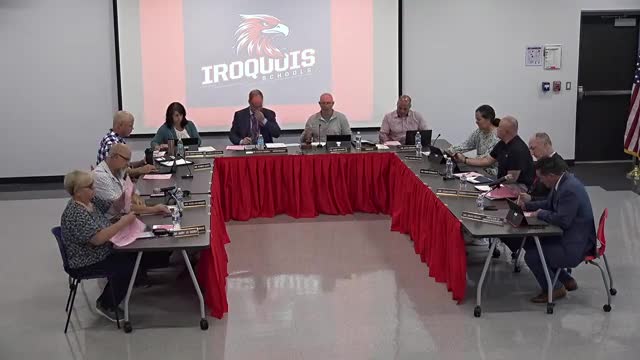
Summary
The Iroquois Central School District Board agreed to stagger building-level school report-card presentations beginning in October and asked administrators for an upfront overview of what the state report card measures and data sources.
The Iroquois Central School District Board of Education agreed to stagger building-level presentations of the state school report card and local assessment data, beginning in October, and requested an explanatory overview from administrators before the first presentation. Board members said they want primary, intermediate, high school and middle school results presented in separate meetings so they can review building-level trends and the district’s comparative data. Heather Becker, board member, and Mary Jo, an administrator who monitors district assessment data, outlined a proposed timetable and the types of measures that will be presented. Board members said the schedule will start with primary schools in October, intermediate in November, high school in December and middle school in January, followed by a districtwide review. They asked that presentation packets be emailed at least one week before each meeting so board members have time to review the materials. The board asked administrators to provide a September briefing explaining what the New York State school report card measures and how those measures compare with local assessments such as AIMSweb. Mary Jo said the state’s 2025 data have been released but will not be finalized until September; she offered to prepare the informational overview in September and to include AIMSweb data for primary grades (noting the state report card primarily reports grade 3 assessment results at the primary level). Board members discussed the time window used for historical comparisons. Several members suggested starting with five years of data because changes during the COVID period make longer trend lines harder to interpret, while one member said the district has used 10 years historically and may return to a longer window later. The board also asked administrators to number comparative districts in presentations instead of naming them, to respect other districts’ preferences. Mary Jo provided a list of comparison districts the district typically uses when assembling comparative data. Board members directed staff to make materials available a week before each presentation, allow time in meeting agendas for focused discussion of a small number of data points, and to be flexible about follow-up work sessions if the initial presentation requires deeper unpacking. Looking ahead, the board asked that reading program updates and math indicators be woven into the primary-level presentations and left open the option to schedule additional work sessions if a presentation raises more substantive questions.