Get Full Government Meeting Transcripts, Videos, & Alerts Forever!
Get email alerts on the Self Funded Health Plan topic
No spam. Unsubscribe anytime.
McAllen ISD trustees pause vote on proposed 2025–26 self‑funded health plan changes
Summary
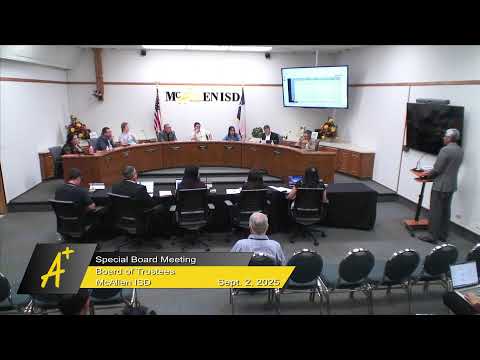
Trustees of McAllen ISD on Sept. 2 discussed proposed changes to the district’s self‑funded medical and pharmacy plan for the 2025–26 plan year but voted unanimously to take no action and asked staff to return with other options by the end of September.
Trustees of McAllen ISD on Sept. 2 discussed proposed changes to the district’s self‑funded medical and pharmacy plan for the 2025–26 plan year but voted unanimously to take no action and asked staff to return with other options by the end of September.
The administration, represented by Andy Silva, the district’s director for employee benefits and safety risk management, presented seven strategies intended to reduce a projected deficit and sustain the plan. Silva said the district had already increased the employer contribution by $55 per employee per month (a step included in the budget) and described proposals that would move the district to a single plan, adjust deductibles and specialist copays, add an inpatient hospital copay, and create a fourth pharmacy tier specifically for GLP‑1 medications.
The proposals were framed as a response to the fund’s losses: Silva told trustees the plan would end the just‑ended fiscal year with an approximately $850,000 deficit and that, without changes, the next plan year could show a $4.8 million shortfall. He said the employer contribution increase would yield about $2 million and that, combined with the recommended design changes, the fund could move to roughly $1.3 million in the black. Silva also reported a recent cluster of high‑cost claims: “In a span of 1 weekend, Friday and Monday, I had 5 notices that collectively was $3,500,000 on 5 claims.”
Trustees pressed staff on details and effects for employees. Questions focused on how many employees use GLP‑1 drugs, the likely out‑of‑pocket impact of a proposed 30 percent coinsurance for that specialty tier, and the fairness of moving all employees into one plan. Silva said the analysis identified about 102 employees on the targeted GLP‑1 product for the modeling and that a 30 percent coinsurance scenario could save roughly $278,000; he noted coupons, manufacturer assistance and specialty pharmacy sourcing could reduce individual costs for some members. Trustee Sofia raised concerns that the inpatient copay change—adding a $300 inpatient copay where previously admitted patients had the ER copay waived—could deter needed hospital care: “That would deter someone from going if they needed to go.”
Trustees discussed alternatives such as closing enrollment to the richest “state” plan, negotiating additional concessions with the incoming third‑party administrator UnitedHealthcare, pursuing direct contracting with local providers, or increasing employee premiums. Silva said the modeling in the presentation used Blue Cross Blue Shield data and that conversations with UnitedHealthcare could produce additional network or pricing options for future plan years. Trustees requested more detailed modeling and vendor negotiations before approving any benefit‑design changes.
After discussion, Trustee Pena moved to take no action “and proceed as discussed.” Trustee Haddad seconded. President Rivera called the vote; trustees voted 7‑0 in favor of taking no action. The board directed staff to return with additional options and further modeling no later than the end of September so the district can finalize materials for open enrollment and any plan design changes for an effective date of Jan. 1, 2026.
Votes at a glance
• Motion: No action on proposed changes to the self‑funded medical and pharmacy plan for plan year 2025–26; proceed as discussed. Mover: Trustee Pena. Second: Trustee Haddad. Outcome: Approved 7‑0.
Silva and administration said the district must make changes or continue using fund balances and budget amendments to cover shortfalls; he told trustees an ideal reserve for the self‑insured fund would be about $6 million, and that the fund was currently in the red by roughly $858,100. Trustees asked staff to return with additional modeling that includes potential savings from UnitedHealthcare, options for preserving coverage for employees with high ongoing costs, and an analysis of impacts by plan and by employee group.
The trustees’ decision to take no action leaves the current plan terms in place for now while staff completes further analysis and vendor negotiations and returns to the board before open enrollment.