
District presents bullying‑prevention process, adds "unknown perpetrator" tracking and training changes
Get AI-powered insights, summaries, and transcripts
Subscribe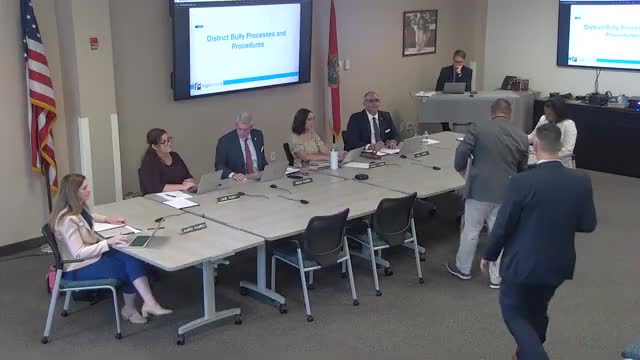
Summary
Academic services presented the district’s bullying definitions, reporting channels, investigative checklist and new Skyward 'unknown perpetrator' reporting; staff outlined training, counseling referrals and changes to data reporting to address community concerns about transparency.
Academic services staff reviewed Flagler County Schools’ bullying and harassment procedures for the board on Aug. 26 and described changes to reporting and training designed to improve transparency and tracking. “Bullying includes cyberbullying and means systematically and chronically inflicting physical hurt or psychological distress on 1 or more students,” said Mr. Glasgow of Academic Services, reading the district definition used for investigations.
Why it matters: families have questioned how the district distinguishes misconduct, harassment and bullying and whether serious reports receive full investigations. Staff described both the review process and how outcomes are recorded to clarify those differences.
Glasgow and Mr. Fanelli outlined how reports arrive and are handled: the district’s online “report bullying” form routes complaints to student services, an initial screening (bullying screener) helps staff determine whether a full investigation is required, and schools complete a standardized investigation checklist. Glasgow said, “All students are interviewed separately” during investigations and schools collect written statements, photos, videos and witness input. He explained that Skyward is used to transmit incident reports to the state and that the district added an “unknown perpetrator” entry so incidents can generate an incident number even when a specific student cannot be identified.
District data: staff reported 135 bullying screener responses so far this year; about 44% of those did not require further investigation and did not violate the code of conduct, 31% did not require a full bullying investigation but did meet another code‑of‑conduct threshold, and 13% required a full investigation. Staff said the district retains investigation materials at the school and notifies both families in writing of initial reports and final outcomes. Glasgow emphasized FERPA limits on sharing disciplinary details about other students but said families may request follow‑up information or contact student services for more context.
Training and practice changes: staff said annual CESSOR training, a start‑of‑year student‑services training and quarterly dean trainings are in place. Mr. Fanelli said the district split trainings by elementary and secondary scenarios this year to make role‑based scenarios more relevant. Glasgow described post‑investigation options ranging from facilitated conversations and schedule changes to referrals to counseling, behavior contracts, MTSS supports, out‑of‑school suspension or alternate placement when incidents are substantiated.
Board concerns and next steps: board members asked how the initial screening decision is quality‑assured and whether spot checks or centralized reviews occur; staff responded that student services will support schools with fact‑finding and that the district will perform spot checks and follow‑up as cases escalate. Staff also agreed to review site practices where few reports appear in the system to ensure consistent school use of the screener.
No formal board action was taken. The presentation clarified reporting channels (district landing pages, Fortify Florida, school staff and anonymous reporting), explained how outcomes are coded in Skyward and outlined training and data‑tracking changes meant to respond to community concerns about transparency and repeat incidents.