Get Full Government Meeting Transcripts, Videos, & Alerts Forever!
Get email alerts on the Elementary Assessment Reporting topic
No spam. Unsubscribe anytime.
School Committee approves streamlined elementary report card, aligns literacy to state frameworks
Summary
The Franklin School Committee voted unanimously to adopt revised K–5 elementary report cards that realign literacy standards to the Massachusetts frameworks, reduce redundant line items and change how some rating codes are used.
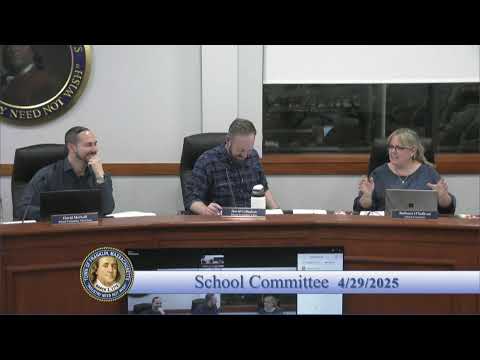
The Franklin School Committee voted unanimously to approve revisions to the elementary K–5 report card that align literacy standards with the Massachusetts Curriculum Frameworks and simplify how student progress is reported.
Committee members approved the change after presentations from district curriculum staff who described a multi-year process of teacher and specialist review. The updated report card groups literacy into three domains—reading, reading foundational skills, and writing and language—reducing redundant line items while giving families a clearer, vertically aligned view of student learning.
The revisions stem from a curriculum review and committee work that began in 2023 and continued through this school year. Dr. Tim Frazier, who led the literacy committee’s review, said teachers and literacy specialists met throughout the fall and winter and solicited teacher feedback during common planning time before bringing a final recommendation to the committee.
Among the specific changes approved: the committee removed the “I” rating (previously inconsistently used) and redefined “N” to mean “not yet addressed / not yet assessed” (indicating a standard either has not been taught yet in the year or there is insufficient data to report). The committee also recommended removing “progress” and “effort” as individual items from literacy, and aligning science and social studies reporting to the same approach used for math and arts in prior revisions.
Dr. Frazier showed a vertical-alignment document illustrating how standards grow in complexity from kindergarten through fifth grade and explained how some component skills previously split into multiple report-card lines were consolidated to reduce redundancy while giving a more comprehensive picture of student performance.
Assistant administrators said the district will create user guides and parent-facing materials explaining the new report card language and where families can find sample questions to ask teachers. Staff said those materials will be posted on the Office of Teaching and Learning pages and that the district expects to have forward-facing explanatory materials available to families by 2026.
Motion and vote: A motion to approve the proposed changes carried on a roll-call vote with all members present voting yes: Gallagher; Charles; McNeil; O’Sullivan; Sam Polley; Griffith; Callahan. The motion’s recorded mover and seconder were not specified in the public transcript.
The committee framed the change as a district effort to make reporting more consistent across subjects and easier for families to interpret; staff emphasized this is a reporting change that comes with additional teacher supports and implementation resources to ensure consistent use across schools.