Get Full Government Meeting Transcripts, Videos, & Alerts Forever!
Get email alerts on the Budget Override topic
No spam. Unsubscribe anytime.
School leaders lay out consequences for Franklin schools if June 3 town override fails
Summary
Superintendent and finance staff presented an executive summary showing that the district’s FY26 spending plan depends on a $3.8 million town structural deficit solution; without it the schools could face 15–20 staff reductions, larger class sizes and cuts to programs and fees reductions.
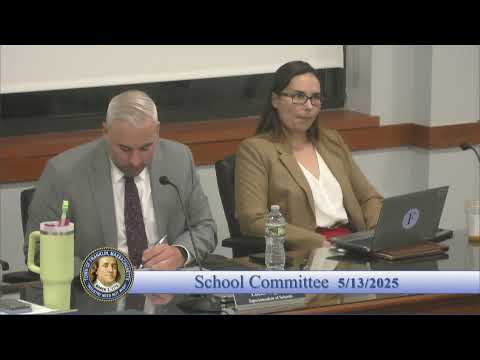
Superintendent Lucas and district finance staff on May 30 briefed the Franklin School Committee on an executive summary that ties the district’s FY26 budget to the town’s proposed June 3 override, warning that the district’s approved budget is contingent on resolving a roughly $3.8 million municipal structural deficit.
Why it matters: the school committee approved an FY26 budget of $80,395,338 that preserves class sizes, restores some positions lost after last year’s failed override and funds programs the district has prioritized. The superintendent and budget staff said the approved spending plan assumes the town will close its structural gap; if the town does not, the district would have to reduce staff and programs.
What the presentation said: district staff quantified that an unfunded scenario of about $1.5–$2.0 million in additional reductions would likely translate to roughly 15–20 full‑time positions removed or reassigned and would jeopardize restored classroom staffing, some co‑curricular activities, late buses and district plans to reduce certain user fees. Director of finance and district presenters noted that the $500 bus fee covers less than half the per‑pupil cost of busing and that lowering the fee was proposed as a strategy to increase ridership, not to fully cover bus costs.
Superintendent Lucas said the budget document was intended as an evidence‑based explanation of trade‑offs so residents can make an informed decision at the special election. “This budget represents preserving our class sizes. It restores some critical areas of staffing,” he said, adding that the district has worked to keep mental‑health and instructional supports in place.
Timing and process: district leaders said they had vetted the summary with the state Office of Campaign and Political Finance so it could be shared as factual background. The school committee’s evaluation and approvals will continue into June: committee members will complete superintendent evaluation materials by June 1 and the superintendent evaluation subcommittee will meet on June 3.
What would change if the override fails: presenters warned that cuts would create ripple effects — including staff reassignments that can force teachers into unfamiliar roles, higher class sizes, fewer clubs and reduced transportation options — and that the district would need to rework schedules and staffing to accommodate changes. The presentation included a direct request to parents and community organizations to share the district’s factual summary and to vote on June 3.
Speakers quoted in this article are Superintendent Lucas and district finance staff; public materials and the district’s executive summary were cited as the primary sources for the numbers and scenarios described.