Get Full Government Meeting Transcripts, Videos, & Alerts Forever!
Get email alerts on the Property Taxes Millage topic
No spam. Unsubscribe anytime.
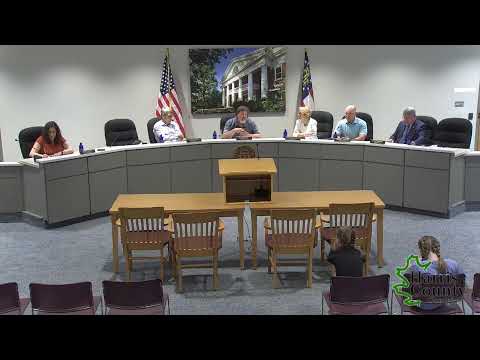
Harris County opens first of three public hearings on tentative 2025 millage increase
Summary
The Harris County Board of Commissioners opened the first of three state-required public hearings on a tentative 2025 millage rate that county staff say would raise the countywide millage to 9.13 mills.
The Harris County Board of Commissioners opened the first of three state-required public hearings on a tentative 2025 millage rate that county staff say would raise the countywide millage to 9.13 mills, producing a 2.97% increase in property tax liability in much of the county and a 2.58% increase in the West Point area.
The hearing, described by county staff as the first of three required before the county may set a final millage rate, included public comments from residents concerned about rising property taxes and an explanation from the county tax office about state rules that govern annual revaluations.
The county presented the proposed figures: a tentative countywide millage of 9.13 mills (an increase of 0.263 mills from the rollback-based rate of 8.867), and a West Point area millage of 5.478 mills (an increase of 0.138 mills from a rollback-based rate of 5.34). County staff gave example impacts: a homesteaded home with a fair-market value of $250,000 would face an increase of about $26.30 under the tentative countywide rate; a non-homesteaded property at $175,000 would see an increase of about $18.41. In the West Point area, staff said a homesteaded $175,000 home would face about $9.66 more, and a non-homesteaded $125,000 property about $6.90 more.
Public commenters urged the commission to seek other revenue sources rather than rely on repeated property tax increases. "Why are we increasing their rates? 90%, a lot of Harris County is senior citizens now," said Evan Culberson, who identified himself as a Hamilton resident and said his in-laws are senior citizens. Victor Clover, a Catawba resident, told commissioners that "62% go to our schools" and asked what the county and the Chamber of Commerce are doing to attract business and diversify revenue streams.
Aaron Gillis, a resident of Georgia Highway 208, asked rhetorically, "How much taxes is too much taxes for any 1 citizen?" and raised questions about reassessments, the possibility of states eliminating property taxes, and whether exemptions or relief should be income- rather than age-based. Lance Boyles, another resident, said his property tax has increased repeatedly and asked the board to consider a cap.
Shelly, identified by the chairman as the county's tax appraiser, described the legal constraints that govern valuations and exemptions. "As far as having to revalue homes that have been sold, that's just required by the state," Shelly said, explaining that the Department of Audits and Accounts tests county valuations against market sales each year and that failure to meet the state's ratio standards can trigger penalties. She said the state revenue commissioner sets an annual percentage that caps changes to taxable value for homesteaded properties and that, "this year, it was 0." Shelly also said residents who do not yet have a homestead exemption have three more days to apply to make the exemption effective for the current year and that the standard homestead exemption applies to one home and up to five acres.
Commissioners and staff responded to questions about economic development and the role of commercial property in easing the tax burden on homeowners. The chairman said the county has not increased the millage rate in recent years and noted the commission hired the county's first economic development director; commissioners said businesses in the county's business park are starting to come off tax abatements and that a recently announced new employer is expected to create about 120 jobs. Commissioner Andrews (title recorded as commissioner) emphasized that market forces drive property values and that the commission and the school board do not control those market sales.
After public comments and staff responses, the hearing was closed. The commission then recessed the meeting and later approved a motion to adjourn until the board's regular evening meeting; the motion carried after a voice vote with no recorded roll call.
Two additional public hearings are required by state law before the board may set a final millage rate; county staff said those hearings will occur before the commission adopts a final rate. The county's tentative figures and the state-mandated ratio study will remain factors in the commission's forthcoming decisions.
Votes at a glance
- Motion to adjourn meeting until evening session: motion made and seconded; voice vote taken and approved (no roll-call tally recorded in the transcript).