Get Full Government Meeting Transcripts, Videos, & Alerts Forever!
Get email alerts on the School Budget topic
No spam. Unsubscribe anytime.
Franklin School Committee adopts $78.31 million FY26 budget after $2 million shortfall forces staff and program reductions
Summary
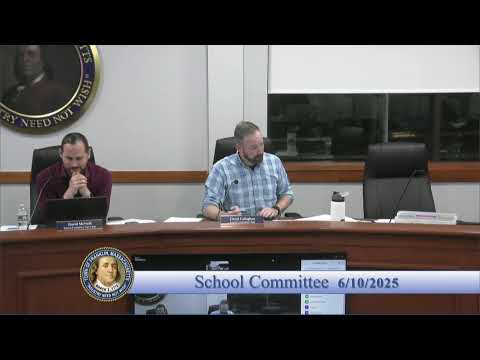
The Franklin School Committee on a unanimous roll-call vote approved a final fiscal 2026 budget of $78,309,495, adopting a set of reductions to cover a $2 million funding shortfall after the town council’s final allocation.
The Franklin School Committee on a unanimous roll-call vote approved a final fiscal 2026 budget of $78,309,495, adopting a set of reductions to cover a $2 million funding shortfall after the town council’s final allocation.
The vote, taken after a lengthy public meeting and discussion with district leaders, moves the district past a prolonged budget process and implements cuts the administration says preserve core instructional programs while trimming operating costs and some positions.
Superintendent Lucas said the budget package was built to protect the instructional core and essential student services while addressing the shortfall: “We will continue to do that with the resources we have available to us,” he told the committee.
The approved plan reduces primarily non‑salary accounts (about two‑thirds of the reductions) and includes specific operating and personnel changes documented by district staff during the meeting. Major elements the committee cited include:
- Total FY26 appropriation: $78,309,495; the district identified a $2,000,000 gap after the town council’s allocation and proposed the reductions to balance the budget ahead of the July 1 fiscal year start.
- Non‑salaried reductions: a 22% reduction in the daily substitute pool; a 15% reduction across district and school supply accounts; a $110,000 cut to textbooks and software in the Office of Teaching and Learning (partially to be offset by lost‑book revolving accounts); reduced funds for summer work and committees; and unspecified reductions to non‑instructional stipends (clubs and activities).
- Revolving funds and fees: the plan shifts $380,000 of athletic costs into the athletic revolving account and leaves $200,000 in the operating budget, using accumulated revolving funds to smooth the hit this year. District staff warned that ongoing reliance on revolving funds is not sustainable indefinitely and will require replenishment or higher fees in future years.
- Transportation and potential fee pressure: district staff reported 2,408 total riders in the referenced year, with about 1,600 paying riders and 800 riders eligible for free or reduced service. The current transportation contract cost cited at the meeting was roughly $1.6 million; the district collected about $802,000 in bus revenues in the example discussed. Staff told the committee that if transportation were fully self‑funded the per‑rider cost could reach roughly $1,000–$1,030 per student.
- Salaried position changes: the budget removes or leaves unfilled several positions, including one K–5 student‑services administrator (one unfilled position that had been budgeted), a reduction of elementary science/STE positions from two to one (the remaining position focused primarily on fifth grade), a reduction in the high‑school EL (English Learner) department, elimination of a technology support position, three eliminated Educational Support Professional (ESP) positions (two of which were retirements), and a facilities administrative assistant role absorbed by the director of operations. Building‑based substitute coverage is reduced from 11 to 9 full‑time equivalents, and some grade‑level classroom sections were reduced (for example, some classes move from seven sections to six, increasing class sizes by one to three students in affected grades).
- Instructional intervention pool: the district reduced the tier‑2 interventionist pool used for small‑group remediation. Staff said the pool was reduced from about $320,000 to $220,000 (a $100,000 reduction), which will reduce the number of students eligible for small‑group, targeted intervention hours.
- English Learner services: the committee was told reductions at the high‑school level will change scheduling and reduce co‑teaching opportunities for EL students, producing less in‑class EL support and a greater range of learner needs in individual sections.
Committee members and the public pressed district leaders on implementation details and the effects of shifting costs into revolving funds or increasing fees. Committee member Gallagher voiced concern about immediate classroom impacts: “I’m concerned about the cuts that are being detailed to staff and further to supplies, preventing already strapped teachers from having even just the physical supplies that they need,” she said during the discussion.
Superintendent Lucas and staff said many decisions about which clubs and activities will run, and which supplemental hours or positions will be restored, will be made in the fall after the district completes placement and scheduling work and assesses programmatic needs. The administration emphasized it tried to limit layoffs by using attrition, reassigning staff where licensed vacancies exist, and absorbing some duties into existing roles when possible.
What this means going forward
District leaders and committee members repeatedly warned the community that this budget is balanced using some one‑time reserves and revolving funds and that continued use of those sources without replenishment would require either higher fees or further reductions in coming years. The committee directed staff to continue developing policy and budget options—particularly around fees for transportation, athletics and extracurriculars—and to return with recommendations in the fall.
The budget vote comes after a multi‑month public process that included an earlier reorganization and a failed override election; members said the prior reorganization limited the scale of cuts needed now, but cautioned the district’s financial outlook remains constrained. The committee approved the budget in a roll‑call vote with each member answering “yes.”
Ending
Committee and district leaders said they will publish detailed budget documents and a FAQ for families and staff and plan further discussion of fee policies and program prioritization over the summer and into the fall so schools can prepare for the new year.