Get Full Government Meeting Transcripts, Videos, & Alerts Forever!
Get email alerts on the Property Taxes Millage topic
No spam. Unsubscribe anytime.
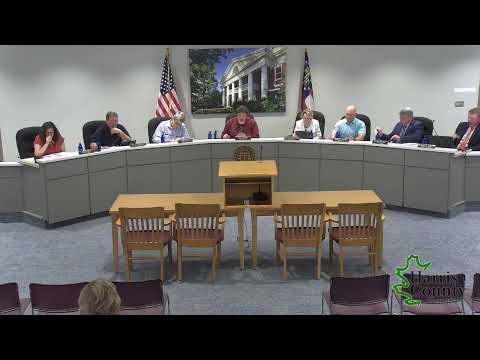
Harris County holds required second hearing on proposed 2025 millage; commissioners say county rate will stay at 9.13 mills
Summary
At a second of three required public hearings, county officials explained a tentative 2025 millage of 9.13 mills and answered residents' concerns about rising property taxes, exemptions, FLPA grants and homestead filings. The board said it is leaving the county millage unchanged.
Harris County held the second of three public hearings on Tuesday on a proposed 2025 millage rate that the county says will result in a 2.97% property tax increase countywide and a 2.58% increase in the West Point area.
The hearing matters because the tentative countywide millage — 9.13 mills, an increase of 0.263 mills over the rollback rate — determines how much property owners will pay if the commissioners adopt it. The county explained the same tentative millage was adopted as in the prior year and offered specific cost examples for homeowners.
At the start of the hearing Chairman Rob Grant opened discussion on the notice of intent and asked whether staff had comments. Kenny Mander, a county staff member, told the board that “the millage rate that is proposed, is 9.13, which is the same millage rate as the prior year.”
Tax examples provided to the public noted that the proposed increase would add about $26.30 to the annual tax bill on a home with a fair market value of $250,000 and about $18.41 for non-homesteaded property valued at $175,000. For the West Point area the county presented a tentative millage of 5.478 mills and said a home valued at $175,000 would see about a $9.66 increase.
Residents used the five-minute public-comment slots to press the county on how the increase was calculated and on alternatives. Brian McKeen, a resident who reviewed the PT-32.1 rollback computation form posted on the county website, told commissioners his calculation showed the proposed rollback reduction should produce about $484,686 in additional revenue and urged the board to account for projected state grants tied to the Forest Land Protection Act (FLPA) to reduce the proposed rollback from 0.263 mills to 0.063 mills.
“Has the projected increase in state grants relative to the current reassessment of agricultural lands that are in the Forest Land Protection Act conservation been considered in these calculations?” McKeen asked. He argued that increased state FLPA grants tied to rising assessed values could cover most of the revenue the county expects to gain.
Shelley Shiley, identified as the chief appraiser in the tax assessor’s office, told the hearing the FLPA grant is not entered on the PT-32.1 rollback sheet because the payment is a state grant rather than tax revenue and the timing of payments varies by county. “That grant calculation is not put into the PT 32.1, which is that rollback sheet, and I’m not sure why. I would think because it’s not actually considered tax revenue,” Shiley said. She added that counties often do receive the grant in a later year after Department of Revenue audits and that “you may get it on January 1 or you may get it on December 31.”
Shiley also explained state oversight of appraisal and valuation work and urged residents to file homestead exemptions or appeals if they believe valuations are incorrect. “If you don’t agree with your valuation of your property, you have until Friday at 05:00 to come in and talk to us,” she said, adding the office had received more than 120 homestead applications and about 68 appeals at the time of the meeting.
Several commenters said rising tax bills were squeezing residents on fixed incomes and asked the board to cap taxes for seniors or scale back county spending. “Leave it alone. Get the same amount you’re getting now in 2025 or 2026, but scale try to scale stuff back,” one resident said during public comments.
Chairman Rob Grant closed the public hearing by telling the room that the county was not changing its millage rate at this meeting. “The millage rate for the county is not changing. It is exactly the same as it was last year,” he said, and then closed the hearing.
No formal vote to change the millage rate occurred during the hearing; the county said one more public hearing is required before the final millage is set.
Community members who spoke and staff who responded urged residents to check homestead status and file timely exemptions or appeals. Shiley repeated the filing deadline guidance for people who believed their status or valuation should be adjusted.
The county provided multiple explanatory figures during the hearing — including rollback calculations and sample taxpayer impacts — and said the final millage will be set after the third required hearing and any additional administrative actions.
For residents unsure of their exemption status, Shiley directed them to contact the tax assessor’s office and to file appeals by the posted deadlines.