
Lakewood board sets timeline for possible elementary repurposing; residents urge pause and more data
Get AI-powered insights, summaries, and transcripts
Subscribe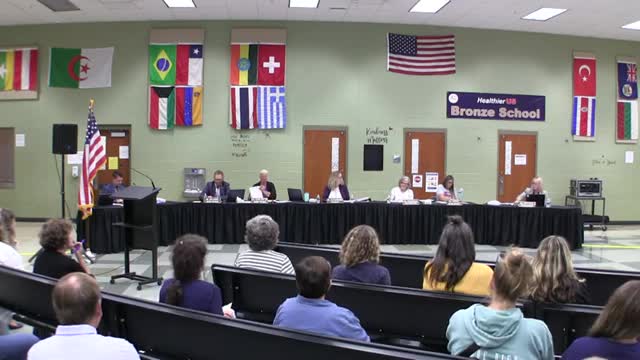
Summary
Superintendent announced dates for community meetings and a board vote on potential elementary school repurposing. Residents and task force members at the Sept. 2 meeting pressed the district for clearer data on capacity, enrollment projections and the impact on walkability and preschool access, and urged delaying any final action.
The Lakewood Board of Education on Sept. 2 outlined a timeline for the district’s review of possible elementary-school repurposing and drew a steady stream of public comment asking the board to pause the process and provide more analysis before any formal decision. Superintendent (name not specified in the record) told the board, “On September 15, I'll identify information at the board meeting and I will share what data and information we will be that I will be using in order to make my recommendation,” and said the district will hold a community tabletop conversation on Sept. 29, present a first reading on Oct. 6, and seek a board vote on Oct. 20.
Why this matters: The proposals being discussed would change neighborhood school assignments and preschool locations, affecting daily travel patterns, teacher assignments and likely long-term enrollment. Residents told the board those consequences deserve more scrutiny, especially given post-pandemic enrollment shifts and what several commenters described as unclear capacity math in the district’s consolidation scenarios.
Task force data, walkability and preschool access drove the most pointed public remarks. Zach Robach, a member of the elementary task force, said the district’s modeled scenarios contain a basic feasibility problem: "None of the district's 6 scenarios proposed can be implemented because at least 1 school in each case requires more classrooms than it has available," and he cited district slides showing, for example, that a scenario repurposing Lincoln would require Horace Mann to provide 18 classrooms while Horace Mann has 15 classrooms available because several rooms are reserved for CHAMP special-education programming. Robach said the specific slide references are the March 12 PowerPoint (slides 18–20) and the Feb. 19 PowerPoint (slide 11).
Parents and stakeholders asked the board for more time to evaluate enrollment trends and policy implications. Kelly Moyer urged the board to “halt the decision on closing an elementary school until we have more complete post-COVID enrollment data,” noting that children born during the height of the pandemic are now entering kindergarten and that patterns of family moves during COVID could still affect short-term projections. Emily Lindbergh told the board that centralizing preschool into a single building would "undermine the very goals the district is just starting to pursue around safe routes to school," arguing neighborhood preschools enable families to walk or bike together rather than driving.
Other speakers asked the board to improve transparency around communications and public records. One board member and members of the public discussed public-records requests: the district has responded to numerous requests since April 2025 and, by the board's account, has printed and emailed about "10,000 pages of public records," a workload that board members said requires staff and legal review to protect family privacy and consumes district resources.
Not every speaker urged delay. Angela Yaeger, a resident, framed the controversy as part of a larger national debate and urged the board to resist outside pressure and remain focused on public education. Several speakers urged civility and collaboration while saying the district should prioritize student learning and teacher stability when contemplating facility changes.
What the board directed and what remains undecided: The superintendent described the forthcoming public meeting schedule and said staff would consider venue size if turnout is larger than expected. Board members asked the superintendent to circulate alternative November meeting dates (the district is considering Nov. 10 or Nov. 23/24 to avoid a conflict with the Ohio School Boards Association conference). No formal board action to repurpose or close any elementary school was taken at the Sept. 2 meeting.
Next steps: The district will provide additional materials on Sept. 15, hold a community tabletop conversation Sept. 29 (described by the superintendent as a community meeting rather than an official board meeting), present a first reading Oct. 6 and expect a board discussion and vote Oct. 20. Residents and task force members asked the district to delay any irreversible steps until the board can publish clearer boundary math, classroom-capacity calculations and enrollment projections.
Ending: Several speakers tied the issue to the upcoming levy, warning that rushed or poorly explained decisions could affect voter support. The board will reconvene at its regularly scheduled meetings and at the community tabletop session; no closures or repurposings were approved on Sept. 2.