
Local coalition proposes citywide walk-audit repository; staff to refine template and funding plan
Get AI-powered insights, summaries, and transcripts
Subscribe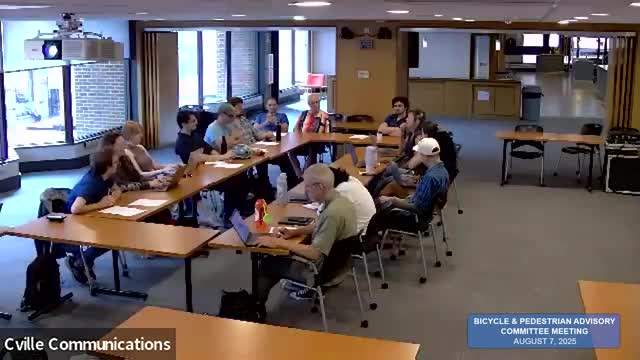
Summary
Charlottesville Area Alliance proposed creating a standardized, searchable repository of neighborhood walk audits funded by an AARP technical grant; city staff agreed to test a template, check liability and funding options and coordinate next steps with BPAC.
Charlottesville Area Alliance volunteers told the Bike‑Ped Advisory Committee on Tuesday that they want to build a standardized, citywide repository of neighborhood walk audits and seek AARP technical grant support to pay leaders and consolidate data.
The pitch was aimed at improving how the city captures neighborhood‑level, seasonal and time‑of‑day observations about sidewalks, crossings and access to transit so staff can retrieve consistent information when a project advances in a corridor.
A representative of the Charlottesville Area Alliance said the group has used the AARP walk‑audit template in pilots and that “AARP grants run up to $50,000. The technical grants are usually somewhere around 10 to $20,000.” She said the funding could cover a local consultant or pay designated neighborhood leads to run multiple seasonal audits and to consolidate results into a searchable spreadsheet or database for city staff.
City staff and committee members discussed three core implementation questions: liability for volunteer‑led walks, how to structure compensation for a neighborhood lead, and what data elements the template should include. Tommy (city staff) advised the committee to coordinate with risk management and noted, “Everything's under the city,” when explaining how the city has sponsored similar volunteer audit work in the past.
Committee members and staff identified additional goals for a consolidated audit system: capturing bus‑stop catchment and multimodal access, collecting observations at different times of day and seasons, and supporting city project managers who need quick neighborhood context.
Staff said a first step will be to adapt the existing AARP walk‑audit guide to include transit‑access questions and offer a draft template and role descriptions back to BPAC. Committee members suggested a pilot neighborhood, compensating a local lead (rather than paying every volunteer), and using existing ARP or AARP funds where allowable. The health department noted it has modest remaining ARP funds—about 100 small gift cards used previously for engagement—that could be repurposed for pilot compensation, subject to rules.
There was no formal vote. Participants agreed to return to BPAC with a draft template, a list of potential roles (data manager, neighborhood lead, seasonal volunteers) and a recommended grant approach so the committee can decide whether to help execute or only promote the project.
If funded, proponents said the repository would let staff say, for example, “here is community input for Rose Hill” when a corridor project is scoped, and it would preserve community observations that change by season or time of day — details that short single‑walk observations can miss.
Next steps recorded in the meeting: staff will draft a template that includes bus‑stop access questions, consult risk management about volunteer liability and compensation, and circulate the neighborhood fact sheets and draft roles for BPAC review.