Legislative Audit Commission approves 2025 program-evaluation topics, sets fall selection process
August 29, 2025 | Legislative Audit Commission, Commissions, Joint, Committees, Legislative, Minnesota
This article was created by AI summarizing key points discussed. AI makes mistakes, so for full details and context, please refer to the video of the full meeting. Please report any errors so we can fix them. Report an error »
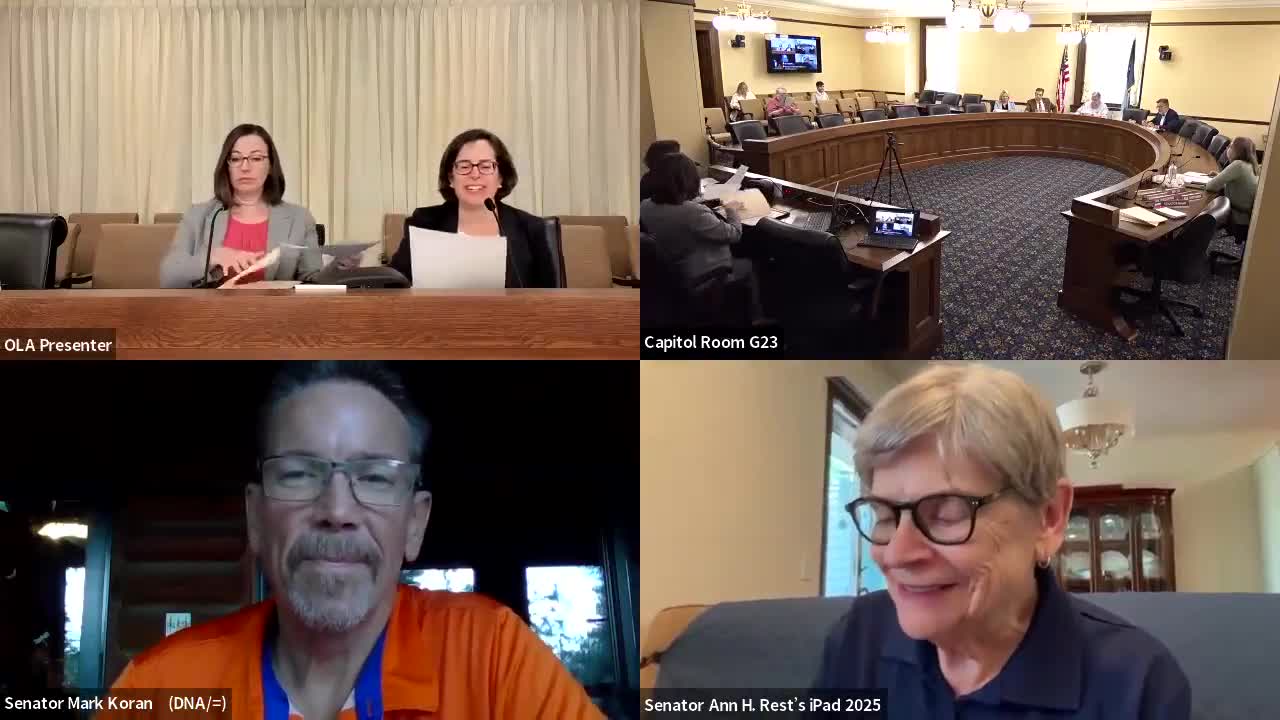
The approved list includes four topics the Office of the Legislative Auditor (OLA) will begin soon: assisted-living facility licensing (Minnesota Department of Health), the Minnesota Agricultural Water Quality Certification Program, an office for ombudsperson for families, and voter registration with a Secretary of State and county focus. The commission also approved starting the following items in the fall or near future: implementation of automatic voter registration (Department of Public Safety focus), the Minnesota Board of Public Defense, and the Board of Animal Health oversight of companion animals.
The decision matters because the OLA plans to stagger larger program reviews and smaller examinations to manage staff resources and provide timely oversight on matters legislators flagged as priorities. Jody Munson Rodriguez, deputy legislative auditor for OLA’s Program Evaluation Division, told the commission the evaluation subcommittee began with a long list of more than 100 candidate topics, narrowed it to 11 semifinalists, and recommended seven topics in April. Munson Rodriguez said the subcommittee recommended starting four immediately and holding three for fall initiation. She told the commission the semifinal process included OLA staff rankings and a legislative survey.
Members asked why two voter-related projects were included in the same cycle. Munson Rodriguez explained the two topics have different agency focuses: "voter registration" will look primarily at the Secretary of State and county registration activities, while "automatic voter registration" will focus on Department of Public Safety processes that feed registrations into the Secretary of State’s system. Several members urged that topics submitted since the spring survey be held for the next session so the full membership can consider them through the agreed selection process.
Representative Quam noted the legislative survey that informed the spring rankings had participation from 148 legislators of 201. Munson Rodriguez said of the survey response, "it was 148." The subcommittee chair, Senator Dibble, explained that because of timing constraints at the end of session some projects began informally earlier but needed ratification from the full commission.
On procedure, the commission approved a fall topic-selection process proposed by OLA: the evaluation subcommittee will hold two meetings in the fall. In meeting one the subcommittee will select roughly six additional topics from OLA’s full candidate list (the packet included roughly 120 items when new suggestions are counted). OLA staff will prepare background papers for those six plus the four topics carried forward from spring, presenting a set of up to ten to the subcommittee in a second meeting; the subcommittee will then recommend four of those to the full commission for approval. The commission’s motion specified that new topics submitted since the spring survey would generally be held for consideration in the next session so that the full membership has an opportunity to review them.
The commission approved both the subcommittee’s recommended topics and the proposed fall-selection process by voice vote after several members described the rationale for sequencing reviews to balance workload and member input. Senator Drazkowski moved to adopt the April recommendations from the evaluation subcommittee; Senator Dibble moved the fall process as described in OLA’s document titled "2025 fall program evaluation topic selection process proposal." Both motions prevailed by voice vote.
The commission also directed OLA to work with the subcommittee to schedule fall meetings (Senator Dibble indicated September–October as anticipated timing) and to prepare background materials for the topics the subcommittee will evaluate. OLA told commissioners roughly two dozen new topics had been submitted since the spring, bringing the full candidate list to about 120.
This action separates discussion — questions about survey timing, member input, and agency focus — from the formal decisions the commission made to approve topics and the fall selection procedure. The commission did not adopt any additional topics outside the subcommittee’s recommendation at this meeting.
View the Full Meeting & All Its Details
This article offers just a summary. Unlock complete video, transcripts, and insights as a Founder Member.
30-day money-back guarantee
Sponsors
Proudly supported by sponsors who keep Minnesota articles free in 2026

