
Residents press to protect Ercolano’s; council tables Fayette‑Broadway (Puccini) redevelopment amendment
Get AI-powered insights, summaries, and transcripts
Subscribe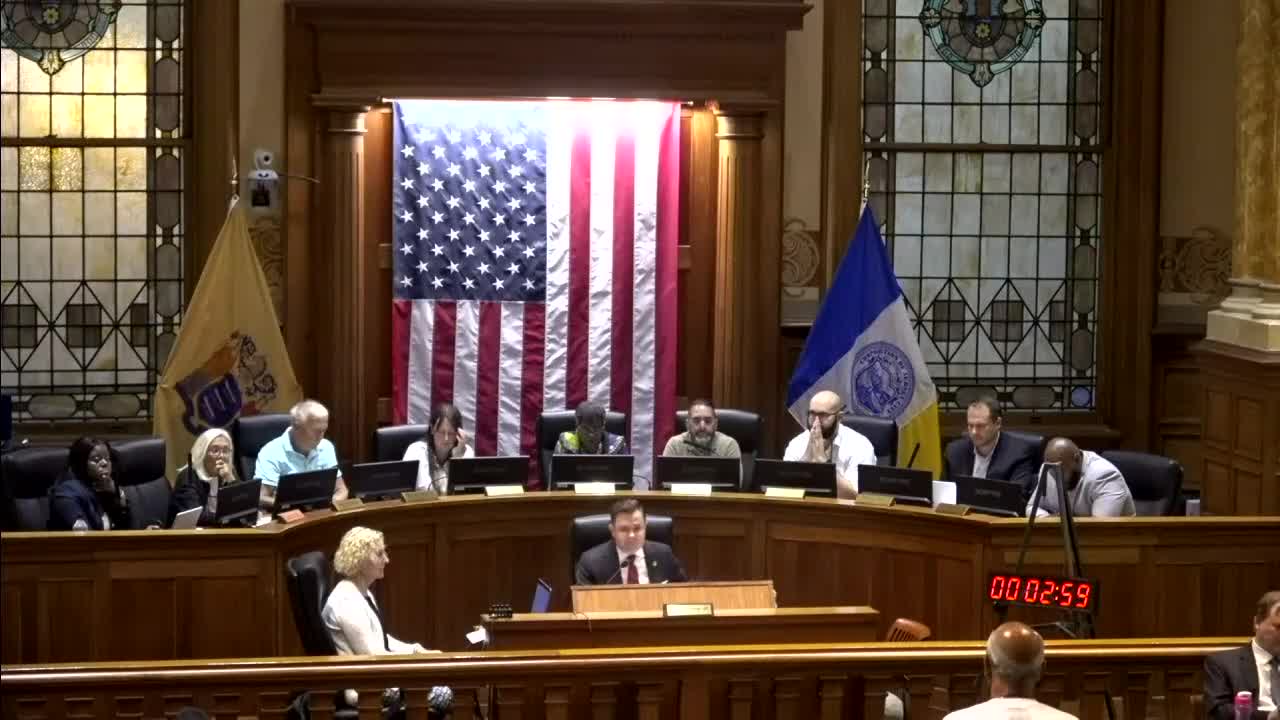
Summary
After a public hearing centered on the fate of Ercolano’s deli and neighborhood traffic impacts, the council unanimously tabled an amendment to the Fayette‑Broadway redevelopment plan tied to the Puccini project, asking the developer to return with binding commitments.
The council tabled ordinance 25‑087, an amendment to the Fayette‑Broadway redevelopment plan commonly discussed as the Puccini project, after a public hearing in which neighborhood residents, business owners and the developer debated whether promised community benefits would be preserved.
Project summary and objections: The project involves a site on Broadway between Giles and West Side (near Marion/Journal Square). The developer seeks to adjust the redevelopment plan to allow larger rear towers set back from Broadway, preserve retail and historic facades at the street, and provide housing that includes a portion of affordable units. Community members objected to what they described as a bait‑and‑switch: they said earlier agreements limited development on a neighboring lot to retail and that the community supported the project on that understanding.
Ercolano’s and community space: Local residents and organizers said Ercolano’s deli and the adjoining Puccini banquet hall are critical community meeting places and that the developer’s current amendment could result in loss of that space. Natalie Limon, who organized neighborhood sign‑in sheets and requested a traffic study, said community promises included retail‑only use for the parcel next door and relocation assurances for the deli; she urged the council to table the amendment until the deli’s future and traffic impacts were resolved.
Developer response and documents: The developer’s counsel, Eugene Paolino of Genova Burns, provided the council with documentation of construction actions and said the project is proceeding under prior approvals for the west side project and a plaza on a vacated portion of West Side Avenue. Attorney Paolino said he circulated materials that day showing construction measures and public‑realm commitments. Developer Rafael Mandelbaum told the council his team had already invested in infrastructure upgrades, preservation and pipe improvements, and that he had negotiated a “very favorable” lease for Ercolano’s proprietor — a lease the developer said was ready but unsigned because the tenant’s counsel wanted minor edits.
Union and construction complaints: Speakers noted repeated road closures, early‑morning construction and union protests. Residents and a local redevelopment participant said they had documented what they consider numerous construction violations and complaints about staging and closures.
Council action: After testimony from neighborhood groups and the developer, Councilmember Gilmore moved to table the ordinance; the motion was seconded and the council adopted the motion to table unanimously (recorded 9‑0). Several council members said they wanted to see a written, enforceable commitment on Ercolano’s lease and a traffic‑study before moving forward.
Why it matters: The Fayette‑Broadway site sits at the edge of a longstanding, mixed‑use neighborhood. Residents said they supported limited development so long as retail and community spaces were preserved and promised traffic mitigations were delivered. Developers said the amendment was intended to facilitate a public plaza, off‑street parking and significant infrastructure investments.
Next steps: The council asked planning staff and the developer to return with written commitments (a signed lease or binding relocation plan for Ercolano’s), a traffic study and documentation of construction compliance. Because the item was tabled rather than rejected, the developer can revise and resubmit the amendment.