Get Full Government Meeting Transcripts, Videos, & Alerts Forever!
Get email alerts on the Community Benefits Program topic
No spam. Unsubscribe anytime.
Arcadia planning commission resumes debate on community benefits program, defers final recommendation to March 11
Summary
The Arcadia Planning Commission reviewed the Gateway Area Plancommunity benefits framework, discussed how it would interact with state density bonus law, and directed staff to return an updated, consolidated list for the March 11 meeting.
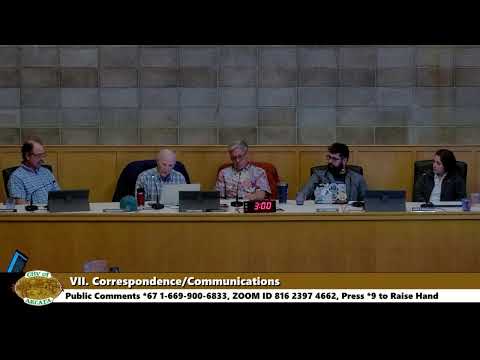
The Arcadia Planning Commission on Feb. 25 reviewed a draft community benefits program intended to implement a portion of the Gateway Area Plan and to be deployed citywide for future form-based code districts. Commissioners and staff discussed how the programwhich scores and requires a set number of community-benefit "points" from larger projectswould operate and how it might interact with state density bonus rules.
The program is meant to trade certainty and faster, ministerial permitting for a package of community benefits. Community Development Director David Loya told the commission the benefits list was culled from extensive public engagement dating to the planincluding an earlier, longer draft and planning-commission rankings. The draft before commissioners includes roughly 30 benefit categories, a points system tied to building height and size, and examples such as affordable housing, alternative-transportation infrastructure, publicly accessible open space and cultural spaces.
Commissioners said the goals are to preserve community priorities identified in prior public outreach while avoiding requirements that would make projects financially infeasible. Several commissioners and members of the public raised the state density bonus law as a practical constraint: developers who provide affordable units may claim density bonus and obtain concessions, and under recent state changes can assert cost infeasibility to avoid local requirements. Loya said that legal interaction is not fully tested and recommended caution when finalizing the local program.
Discussion centered on a subset of "bike-rack" items the commission flagged previously as needing additional work, including whether to require showers and lockers for employees in mixed-use buildings, project-based electric bike-share programs, cultural space dedicated to local tribal governments, on-site publicly accessible open space and a proposed payment-in-lieu contribution equal to 1.5% of project construction cost to fund transportation or public-space improvements. Commissioners also reviewed greyed items the commission had considered dropping or converting into baseline code requirements (for example, bike parking standards now partly required citywide).
Commissioners agreed to remove a redundant item (citywide bike-parking already adopted into the general plan/code) and to keep several items for further refinement. Several commissioners asked for clearer, objective standards for benefits that remain on the list (for example: duration limits for bike-share requirements, minimum sizing or maintenance terms for public art or cultural spaces, and a clear valuation method for 1.5% payment-in-lieu proposals). Loya acknowledged some numeric thresholds in the draft (1.5% fund payment, 10,000 square-foot open-space proposals, a 15% energy-efficiency target in earlier drafts) were arbitrary or in need of clearer definition and said staff will work to refine them.
Public commenters who spoke during the early-communications period included Lulu Michelson, a professor at Cal Poly Humboldt, and Jo Anne McGarry, a resident; both urged attention to public engagement and the local character of Arcadia as the commission refines policy. Commissioners asked staff to circulate the most recent consolidated spreadsheet and supporting materials before the next meeting so newly appointed commissioners can review earlier deliberations.
The commission did not take a final vote on a community benefits resolution. Instead it agreed to continue deliberations and directed staff to email the updated list to commissioners and agendize the item for the March 11 meeting, when the commission expects to revisit the full, revised list and consider forwarding a recommendation to the City Council.