
Sheriff’s office touts autism training and new equipment as school resource officer program named a state flagship
Get AI-powered insights, summaries, and transcripts
Subscribe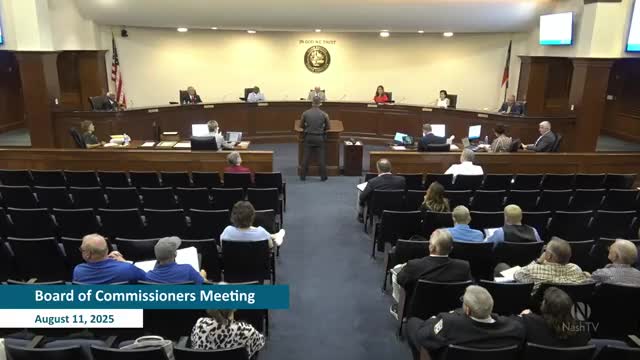
Summary
The Nash County Sheriff’s Office presented its school resource officer (SRO) program as a state flagship, highlighting autism‑specific training, partnerships with mental‑health providers, ballistic shields and breaching shotguns for SROs. Commissioners praised a proactive focus on threat assessment and mental‑health partnerships.
NASHVILLE, N.C. — The Nash County Sheriff’s Office briefed commissioners Aug. 11 on steps to expand training and equipment for school resource officers (SROs) after the program was recognized by the Center for Safer Schools as a statewide flagship.
Sergeant Kevin Biss told the board the department had pursued additional training above the state baseline, including autism‑specific instruction in partnership with the Autism Society and hands‑on rotations with a local therapy provider to better prepare deputies for interactions with students with disabilities. SROs also completed crisis intervention training and behavioral‑threat‑assessment instruction in coordination with the FBI’s behavioral threat assessment agents.
“Across the board, our deputies are well‑rounded,” Biss told commissioners, and the sheriff’s office is expanding partnerships with Trillium Health for youth and adult mental‑health training. The office has purchased ballistic shields for SROs and conducted active‑shooter training to enable SROs to advance and respond in school hallways. The department has also purchased specialized breaching shotguns and training, which the sheriff’s office said allow SROs to defeat barricades with minimally penetrating rounds.
Commissioners commended the mix of equipment and a renewed focus on early behavioral‑threat assessment, home‑visit follow up and non‑criminal interventions that can lead to support services rather than arrests. Commissioner Howell urged the county to explore putting SROs in all county schools, subject to school‑system state funding outcomes.
Why it matters: The sheriff’s office framed the measures as prevention and de‑escalation, pairing tactical preparation with behavioral‑health partnerships and specialized disability training. Commissioners said they hoped to avoid crisis by investing in front‑line prevention and training.
What’s next: The sheriff’s office said it will continue the rollout of training and equipment. Commissioners asked county staff to follow up with the school system on state‑funding results and to consider potential county support for expanding SRO coverage.