Get Full Government Meeting Transcripts, Videos, & Alerts Forever!
Get email alerts on the Local Coastal Program topic
No spam. Unsubscribe anytime.
Arcata planning commissioners align to move Local Coastal Program edits to public hearings; staff to refine parking, access and lighting language
Summary
The Arcata Planning Commission on May 13 reviewed final edits to the city’s Local Coastal Program and indicated it was comfortable moving the draft to noticed public hearings after clarifying parking, access and lighting language.
The Arcata Planning Commission on May 13 reviewed final edits to the city’s Local Coastal Program and signaled support for moving the document to noticed public hearings, with commissioners raising specific edits on parking, universal access and lighting standards.
Community Development Director David Loya told the commission the most recent track-changes versions incorporate earlier commissioner feedback and public comment. “If you want to make any additional changes to this language, more than happy to address that and update it on the web,” Loya said, noting a clean version is posted online and the packet includes a track-changes copy.
Loya described two substantive adjustments included in the draft presented to the commission. First, in response to public comment, staff revised parking language to reflect that the city has parking maximums rather than minimums; the draft now reads that off-street parking for new development shall adhere to parking maximums and “shall not exceed the parking maximums,” rather than referring to reductions of a nonexistent minimum. Second, Loya said language about universal access to coastal trails through private sites was rewritten to require alternatives where on-site physical access is infeasible—examples cited include vista points, resting areas or other alternatives to trail access and accommodations such as braille signage.
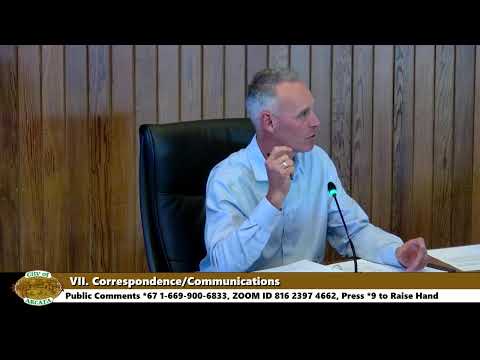
Commissioner Peter pressed staff on outdoor lighting language and energy-efficiency wording. Peter said modern outdoor efficiency typically uses LED fixtures and suggested either specifying LEDs or instructing applicants to use “the most energy efficient lighting technology possible.” He added that LEDs exist that meet international dark-sky standards. Loya responded that the city’s building code already includes detailed energy-efficiency requirements and recommended removing parenthetical examples from the LCP to avoid redundancy. Peter also suggested defining “warm” lighting; he said, “Typically, warm lighting is 3,000 kelvin or less.”
Commissioners expressed support for the adjustments that staff described. Commissioner Abby said she was “supportive of the changes to the language” that were shown on the screen but not yet in the printed packet. Loya outlined the next steps: a public hearing in July at the commission’s first July meeting, a recommendation to the City Council that same month, council introduction and adoption of the coastal zoning ordinance and local coastal element, and a second reading at the council’s next meeting in August. After city action, Loya said the documents would be submitted to the California Coastal Commission for review and certification; staff estimated the overall process could extend through early 2026.
Loya also noted the Creeks and Wetlands Committee would consider a recommendation to the Planning Commission at its meeting next Thursday; any recommendation would be brought forward during the hearing process. He said the commission should consider any additional clarifying edits now, and use the upcoming joint study session with City Council—currently targeted for June 30—for further policy alignment prior to hearings.
There was no formal motion or vote recorded to adopt language at this meeting. Commissioners indicated they were “in alignment” with staff’s proposed next steps; staff will publish the revised clean and track-changes versions online and proceed with noticing public hearings if no further substantive edits are submitted.