
Jordan School District board discusses Wayfinder SEL curriculum after open houses, asks for pilot and donor details
Get AI-powered insights, summaries, and transcripts
Subscribe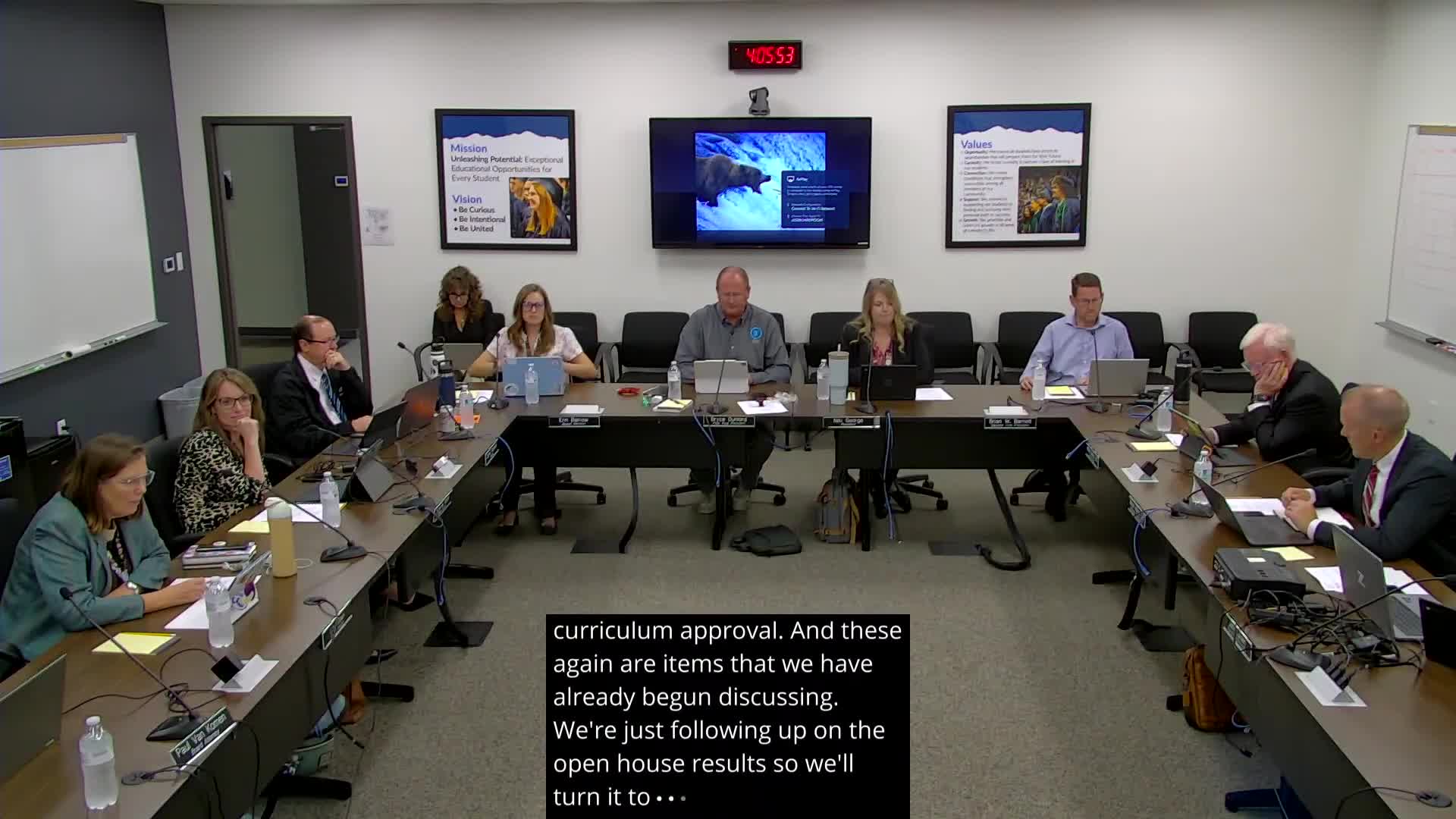
Summary
Board members reviewed results from Wayfinder open houses and debated cost, ownership, opt-out, donor support and whether to pilot the program before approving districtwide adoption; item was placed on the next business meeting for action.
Board members reviewed results from a two-day open house for the Wayfinder social-emotional learning curriculum and asked staff to return with additional information, including donor details and a possible pilot, before a final approval vote.
District staff reported that Wayfinder open houses held Aug. 13–14 drew about 65 parents; three raised concerns, two remained opposed and the remainder were supportive, according to the presentation. Staff said the product includes lesson-level pre- and post-assessments and a parent portal to view lessons taught.
Board members pressed staff on several points: how often counselors and other staff would use the curriculum; whether Jordan could develop its own curriculum rather than buy a subscription product; the mechanism for parents to opt students out; the sole-source procurement process used for this curriculum; and the scope of donor support. Staff answered that elementary counselors frequently “push in” to classrooms for short tier-1 lessons, said that some schools already use a variety of SEL programs, and confirmed that a donor has offered one year of funding but not ongoing support.
Several board members said they were sympathetic to counselors’ requests for a centralized tool, but wanted more information before committing district funds. Concerns included: duplication with existing school-level programs, long-term subscription costs versus one-time development costs to create in-house curriculum, transparency around the donor and the term of the donation, and ensuring parent opt-out procedures are explicit and visible at registration.
Staff explained the district used a sole-source procurement path for Wayfinder because of the program’s embedded pre-/post-assessments and alignment to the district portrait-of-a-graduate framework; the process posted a sole-source letter and allowed competing vendors one week to respond. Staff said two Jordan schools already use Wayfinder at secondary levels and the district would consider a pilot for elementary counselors if the board favors that approach.
After extended discussion, the board agreed there was not an urgency to vote that night. Members asked staff to collect and return donor documentation, provide clearer cost projections for pilot versus districtwide adoption, and draft a pilot plan with evaluation questions (frequency of use; counselor support; whether the product reduces counselors’ need to supplement). The board directed staff to place the item on the next business meeting agenda for vote after the requested follow-up.
The board also asked that any districtwide communications clarify opt-in/opt-out steps for parents (registration forms were identified as the current opt-out mechanism) and that staff outline how teachers could access lessons if counselors make them available.