Get Full Government Meeting Transcripts, Videos, & Alerts Forever!
Get email alerts on the Land Use And Transportation topic
No spam. Unsubscribe anytime.
Resident warns traffic study shows intersection failures; council discusses road‑service agreements and developer bonds
Summary
A resident presented a traffic impact study for the proposed Strutman Farms development showing unmitigated Level‑of‑Service F at key intersections; council and staff discussed road‑service agreements, per‑road bonds, split‑road responsibilities with the township and requirements that developers repair construction damage and fund mitigation.
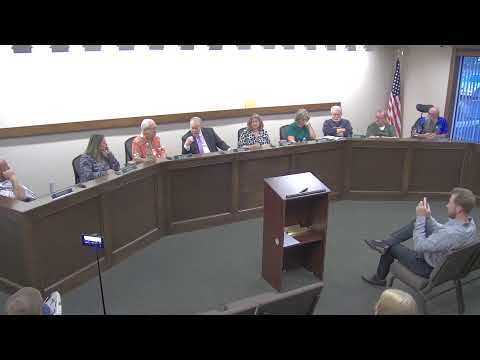
A resident public commenter, Corey Wasmus, presented pages from a developer‑commissioned traffic impact study for the Strutman Farms proposal and warned that, without mitigation, nearby intersections would operate at Level‑of‑Service F and lengthy delays. Corey said the study shows seven proposed new subdivision entrances on Gibson Road and warned the mitigation—turn lanes, signals, pavement widening—could cost millions unless the developer is required to pay. The topic matters because, according to commenters and council members, if the developer is not required to fund mitigation and long‑term maintenance, the costs could fall on village and township taxpayers through local road repairs and higher service costs. Corey told council the study shows "unmitigated traffic failures, level of service F" and said the difference between unmitigated and mitigated scenarios is large: "Mitigation means doing the fixes, adding those turn lanes, widening the pavement, putting in signals, and that's where the real cost come in." He urged council to require guarantees from developers before annexation. Council members and staff discussed approaches the village has used or could use: per‑road agreements, three‑party agreements with the township, developer bonds or maintenance guarantees that require the developer to maintain or repair roads for a set number of years (one council member suggested 10 years) and per‑road letters of intent when roads are split between jurisdictions. One council member said "that builder goes in, they're gonna maintain that road for, like, 10 years until we start getting enough tax revenue in to afford it." Another emphasized that where roads are split the county or commissioners may require a specific letter and that the village's form is intended to be completed per instance. Village engineer provided related updates on local developments: Foxfire Subdivision Section 32 walk‑throughs will be performed before returning performance bonds; industrial park Lot 5 is under construction (BJ's distribution site) and Lot 10 (Scannell property) requires a storm sewer trunk line under State Route 104 and a new design due to a 12‑inch gas main; Chestnut Commons has stormwater runoff issues and staff will meet with adjacent property owners and the HOA to develop options and designs. Council and staff said the village should ensure any road‑service agreement or annexation condition requires the developer to cover construction damage and to provide bonds or maintenance assurances, especially on roads that cross township and village jurisdictions. No formal vote on a road‑service agreement or annexation occurred; council directed staff to continue negotiating per‑road agreements and to use bonds or multi‑party arrangements where appropriate. The resident urged council to read the full traffic impact study; council members repeatedly said they intend to require developer assurances in writing before accepting maintenance responsibilities.