
Findlay staff proposes first zoning fee increases in years; committee asks for sharper scenarios
Get AI-powered insights, summaries, and transcripts
Subscribe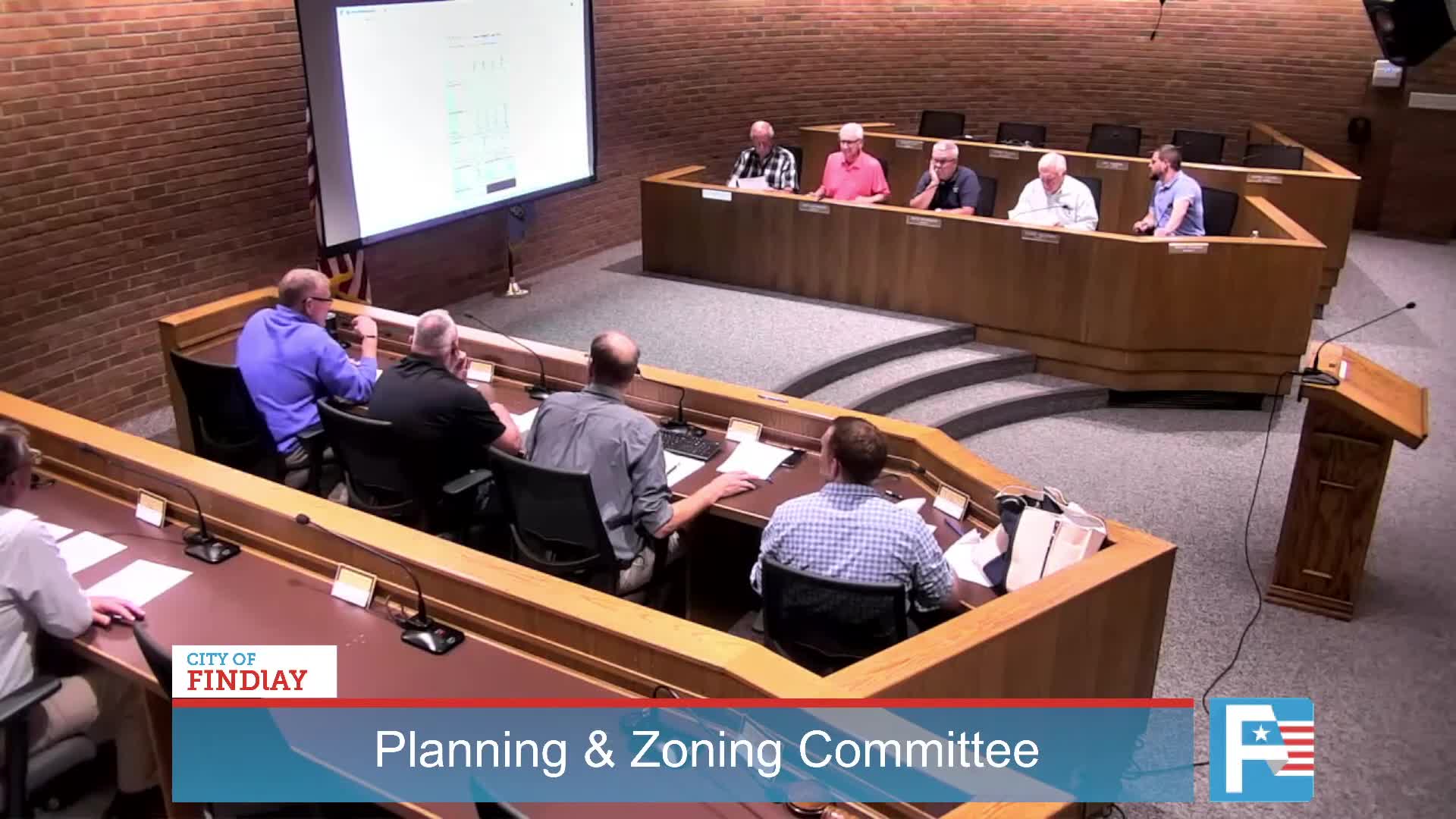
Summary
City staff presented a proposal to raise zoning and permit fees after a three-year utilization and cost analysis; committee members asked for cleaner fee categories, comparative scenarios (20%-40%), and follow-up proposals to recover a larger share of department operating costs over time.
City planning staff presented proposed changes to Findlay's zoning permit and fee schedule, the first comprehensive review in more than a decade, seeking to increase revenues and better align fees with department workload.
Staff told the committee they computed a three-year average (2022-2024) of permit activity to smooth variability and compared current fees to similarly sized municipalities. The presentation said the planning department's operating budget is roughly $300,000, and current fees recover an estimated 20% of operating costs. The staff proposal would move the city partway toward closing the gap; one scenario shown in the packet illustrated tripling fees (not recommended) to demonstrate the revenue required to fully cover operating expenditures.
Committee members questioned specific items such as penalties for work without a permit, which the code currently sets at triple the permit fee (e.g., a $30 fence permit becomes $90 for work without a permit). Several members said that steep penalties that are small in absolute dollars can be ineffective as deterrents. Councilman Grant Russell and others asked staff to consolidate permit categories (for example, group single-family and small multi-family residential accessory permits) to simplify the schedule and focus fee increases on work that requires substantial staff site visits.
Committee feedback included proposals to be more aggressive than the initial proposal: several members suggested scenarios that would move fee recovery from roughly 20% toward 40% of operating costs, with staged increases and updated comparisons to peer communities. Staff agreed to return with cleaner categories, more aggressive scenarios for residential vs. commercial permit types, and projected revenue impacts; no ordinance was advanced at this meeting.
Why it matters: zoning and permit fees affect the cost of development and the planning department's ability to fund inspections and reviews. Staff emphasized they do not want to be the highest-cost jurisdiction but said fees have not been updated in about 15 years and are not keeping pace with operating expenses.
Next steps: staff will prepare revised scenarios, consolidate categories (residential accessory, commercial, commercial accessory), and return to the committee for further guidance before transmitting an ordinance to council.