Get Full Government Meeting Transcripts, Videos, & Alerts Forever!
Get email alerts on the Special Faculty Permits topic
No spam. Unsubscribe anytime.
Committee recommends approval of two special faculty permit applicants from USC and Stanford
Summary
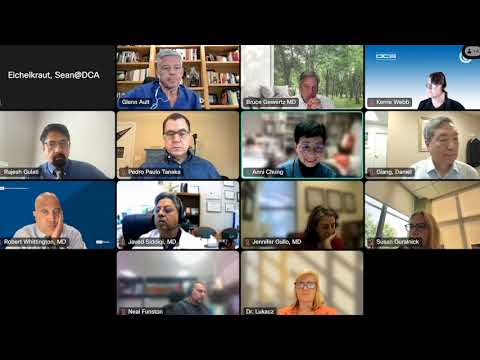
Annie Chong, vice chair of the Special Faculty Permit Review Committee, said the committee reviewed two applications for special faculty permits during a Webex meeting and would forward the committee’s recommendations to the board at its December 2025 quarterly meeting.
Annie Chong, vice chair of the Special Faculty Permit Review Committee, said the committee reviewed two applications for special faculty permits during a Webex meeting and would forward the committee’s recommendations to the board at its December 2025 quarterly meeting.
The recommendations follow presentations on each applicant’s qualifications and a closed-session review. The committee considered an application submitted through the University of Southern California’s Keck School of Medicine and a separate application submitted through Stanford University School of Medicine; after reviewing both files in closed session, the committee recommended approval of each applicant’s special faculty permit.
Why this matters: Special faculty permits authorize out-of-state or internationally trained physicians to hold faculty positions while engaging in specified clinical, teaching or research activities under California law. The committee cited the meeting packet and applicants’ reference letters in its review and noted the applications were submitted under a provision the presenters identified as “section 21 68.1 of the California Business and Professional Code” (as cited in the meeting record).
USC nominee: A presenter for the University of Southern California summarized the USC-nominated applicant’s curriculum vitae and reference letters, noting an MD earned in 1993, postgraduate training in multiple countries, more than 90 peer-reviewed publications and international recognition in oculoplastic and orbital surgery. The presenter described research support from major grants and the candidate’s role in developing surgical and biologic therapies for orbital disease; those details were drawn from the application packet rather than from additional committee discussion.
Stanford nominee: Dr. Tanaka, a committee member who presented the Stanford nomination, summarized the Stanford-nominated candidate’s record in pediatric heart failure, thoracic transplantation and mechanical circulatory support, noting a professorship at the Università Cattolica del Sacro Cuore (Catholic University of the Sacred Heart) in Rome, board certifications in cardiovascular medicine and surgery, and more than 100 peer-reviewed publications listed in the packet.
Committee process and public participation: Committee members moved the agenda item into a closed session for review and recommendation. There were no substantive public comments on the applications during the open meeting; one caller identified themselves only to check attendance. After returning to open session the committee announced it had reviewed each candidate’s file and recommended approval to the board. The committee did not record a roll-call vote or motion text for those recommendations in the open session transcript; the record shows only that the committee “recommends approval” and that the committee’s packet will be provided to the board in December 2025.
Next steps: The committee will forward its recommendations and application packets to the full board for action at the board’s December 2025 quarterly meeting. Final approval of the special faculty permits is subject to whatever further review or formal vote the board requires.
Less-critical detail: The meeting was conducted by Webex; the committee used roll-call voice voting for other agenda items earlier in the session and handled attendance issues (a member joined by phone after audio problems).