Get Full Government Meeting Transcripts, Videos, & Alerts Forever!
Get email alerts on the Budget topic
No spam. Unsubscribe anytime.
Hollywood Park EDC approves 2025–26 budget after debate over police animal-control vehicle
Summary
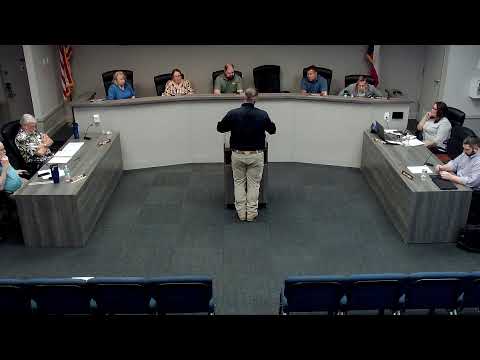
The Hollywood Park Economic Development Corporation voted to approve its proposed fiscal year 2025–26 budget after a lengthy debate about whether to include funding for a police vehicle outfitted for animal-control duties.
The Hollywood Park Economic Development Corporation voted to approve its proposed fiscal year 2025–26 budget after a lengthy discussion over a police department request to fund a vehicle outfitted for animal-control duties. The board briefly moved into executive session under Texas Government Code §551.071 to consult the city attorney; members said no formal action resulted from that session.
The budget vote followed more than an hour of debate about process, scope and whether the EDC should allocate money before seeing a full plan for animal-control operations. “We put the dollar amounts in here. We can approve this budget or adjust it,” said Fred, the member who presented the packet to the group. Several members urged the police department to provide a complete project description — including operations and future expense estimates — before EDC funds are committed.
Why it matters: the EDC controls discretionary sales-tax revenues earmarked for economic development projects and initiatives. Members said placing capital items in the budget signals intent to fund projects and can create public expectations; others argued a line item does not obligate immediate spending and can be amended later.
Most discussion centered on one capital request listed in the packet: a replacement truck for police use that members said would be outfitted to support animal-control activities. Several members requested a fuller analysis of how a vehicle purchase fits into any broader plan for animal care, housing or ongoing operating costs. Chief Pritchard (Police Chief) and other staff said the item was in an exploratory phase and that grant or seizure funds were being considered as additional sources.
One board member moved to defer inclusion of the animal-control vehicle pending more information; that motion did not receive a second. A different motion to approve the budget “as is” carried on a voice vote; a board member voiced opposition during the roll call but names were not given in the meeting transcript.
The board had earlier reviewed financial statements for the 10 months ended July 31. Fred told members the EDC had roughly $864,000 in total cash and a net worth of about $895,000. He reported month-to-date revenues of $17,005.52 and year-to-date revenues of approximately $185,000; he said the organization’s Texas Class investment pool held $810,009.42 earning about 4.25 percent and a Plains sweep account held $43,000.88 earning about 2.85 percent.
During the discussion a member repeatedly argued for more complete project-level documentation when public funds are sought, saying the EDC should review full financial and operational plans for capital requests rather than approving piecemeal items. Other members responded that the budget is advisory to city council and can be amended later.
Decision and next steps: the EDC approved the proposed 2025–26 budget and forwarded it to city council. The animal-control vehicle request remains in the approved budget as a line item; members said staff and the police department will be asked to provide a comprehensive plan if they later seek a specific funding allocation or a budget amendment.
Context: the board said they had moved the animal-control discussion into executive session under Texas Government Code §551.071 to receive legal advice about a related budget item; the board stated no action was taken during that closed session. The EDC president said any budget changes can be made later by amendment, and multiple members emphasized they were seeking greater clarity on long-term operating costs before approving project expenditures that could expand municipal obligations.